
Researching peptides for fitness goals like muscle growth, weight loss, and skin health can feel overwhelming. With countless products, varying purity standards, and evolving science, fitness enthusiasts often struggle to find trustworthy, evidence-based guidance. This comprehensive guide cuts through the confusion by explaining what peptides are, how to research them safely, and where to find quality suppliers. Whether you're exploring growth hormone secretagogues or collagen peptides, you'll gain the practical knowledge needed to make informed decisions and maximize your research outcomes.
Table of Contents
- Key takeaways
- Understanding peptides and their benefits
- Preparation: essential knowledge and requirements for peptide research
- Step-by-step guide to conducting peptide research for fitness goals
- Common challenges and how to verify peptide research results
- Explore trusted peptide suppliers for your research needs
- FAQ
Key Takeaways
| Point | Details |
|---|---|
| Peptide benefits | Peptides can support muscle growth, fat metabolism, and tissue healing when guided by evidence based research and sourced from reputable suppliers. |
| Research prerequisites | Before starting peptide research, you need knowledge of peptide types, access to purity testing, proper storage, reconstitution procedures, dosing precision, and documentation. |
| Quality sourcing | Choose safe, vetted suppliers and ensure products meet quality and regulatory standards to minimize risk and maximize reliability. |
| Storage and handling | Storage conditions and handling practices dramatically affect peptide stability and effectiveness, including temperature control and correct reconstitution methods. |
Understanding peptides and their benefits
Peptides are short chains of amino acids, typically containing 2 to 50 amino acid units linked by peptide bonds. These molecules serve as critical signaling agents in cellular communication, influencing everything from hormone release to tissue repair. Unlike proteins, which contain hundreds or thousands of amino acids, peptides are small enough to penetrate cell membranes and interact with specific receptors to trigger biological responses.
The mechanism behind peptide effectiveness centers on receptor targeting. When a peptide binds to its corresponding receptor on a cell surface, it initiates a cascade of intracellular events. For fitness applications, this interaction can stimulate muscle repair and growth by enhancing protein synthesis pathways. The specificity of peptide-receptor interactions explains why different peptides produce distinct effects, from accelerated recovery to improved metabolic function.
Research demonstrates that peptides offer multiple benefits and effects relevant to fitness enthusiasts:
- Growth hormone secretagogues like ipamorelin and CJC-1295 promote natural growth hormone release, supporting muscle development and fat metabolism
- Collagen peptides enhance skin elasticity and joint health while accelerating healing processes
- BPC-157 shows promise for tissue repair and reducing inflammation in tendons and muscles
- Melanotan peptides influence melanocortin receptors affecting metabolism and body composition
- Thymosin beta-4 supports cellular migration and wound healing for faster recovery
Peptide therapy has emerged as a growing field within sports science and wellness. Athletes and fitness enthusiasts increasingly turn to these compounds to optimize performance, accelerate recovery, and achieve body composition goals. The appeal lies in peptides' targeted action and relatively favorable safety profiles compared to traditional performance enhancers. Understanding peptides for muscle and fat loss requires recognizing that these molecules work with your body's existing systems rather than replacing natural hormones.
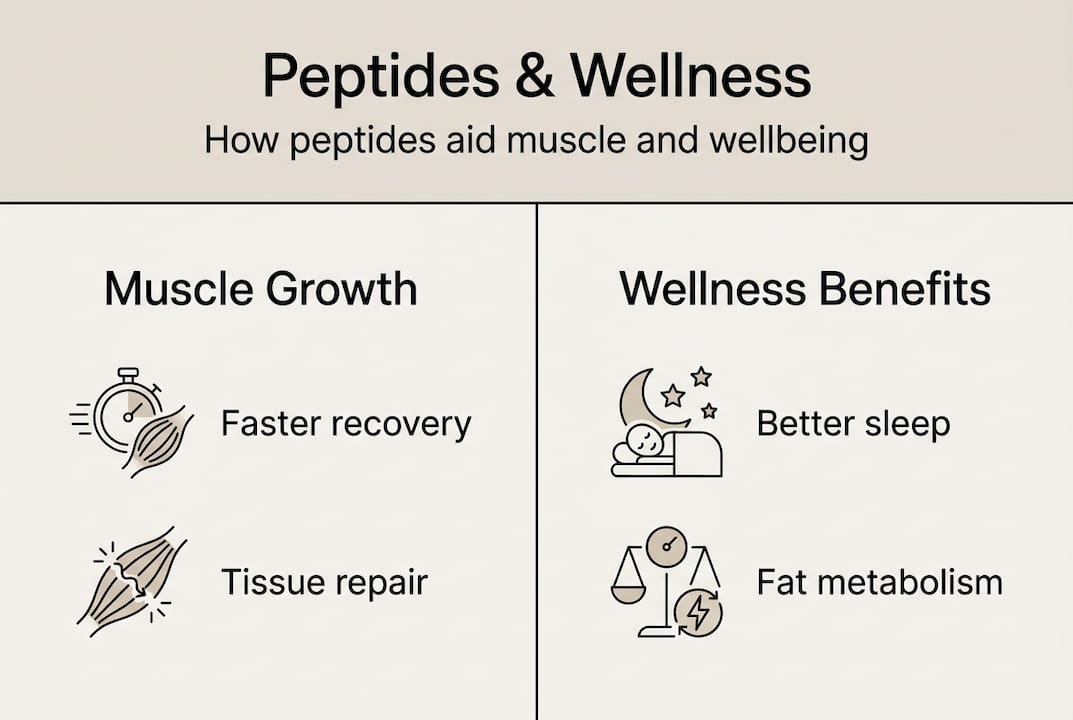
The versatility of peptides extends beyond muscle building. Some peptides improve sleep quality, which indirectly supports recovery and muscle growth. Others enhance immune function or reduce oxidative stress from intense training. This multifaceted potential makes peptides valuable research subjects for anyone serious about optimizing fitness outcomes through evidence-based approaches.
Preparation: essential knowledge and requirements for peptide research
Successful peptide research demands thorough preparation before you handle any compounds. Understanding prerequisites ensures your research yields valid, reproducible results while maintaining safety and compliance.
Before starting peptide research, you need:
- Comprehensive knowledge of specific peptide types, their mechanisms, and expected outcomes
- Access to analytical tools or third-party testing services to verify peptide purity
- Proper storage equipment maintaining required temperature ranges
- Familiarity with reconstitution procedures using bacteriostatic water
- Understanding of dosing calculations and measurement precision
- Documentation systems for tracking research protocols and observations
Storage conditions critically impact peptide stability and potency. Different peptides have varying stability profiles that determine optimal storage parameters:

| Peptide Type | Storage Temperature | Shelf Life (Lyophilized) | Shelf Life (Reconstituted) | Potency Considerations |
|---|---|---|---|---|
| Growth Hormone Secretagogues | 36-46°F (2-8°C) | 24-36 months | 30-45 days refrigerated | Minimize freeze-thaw cycles |
| Collagen Peptides | Room temperature acceptable | 18-24 months | Use immediately or refrigerate | Moisture-sensitive |
| BPC-157 | 36-46°F (2-8°C) | 24 months | 14-21 days refrigerated | Light-sensitive |
| Melanotan Peptides | 36-46°F (2-8°C) | 18-24 months | 30 days refrigerated | Oxidation-prone |
Proper peptide storage prevents degradation that compromises research validity. Temperature fluctuations, light exposure, and contamination represent the primary threats to peptide integrity. Always store lyophilized peptides in their original sealed vials in a dedicated refrigerator away from food items. Once reconstituted, peptides become more vulnerable to degradation and typically require use within weeks.
Regulatory considerations vary by jurisdiction but generally classify research peptides as compounds intended for laboratory investigation rather than human consumption. Fitness enthusiasts must understand peptide regulations in their region to ensure compliance. In the United States, peptides sold as research chemicals fall outside FDA approval for therapeutic use. This classification affects how peptides can be marketed, labeled, and discussed.
Quality certifications provide assurance about peptide authenticity and purity. Reputable suppliers provide certificates of analysis from independent laboratories showing peptide identity confirmation via mass spectrometry and purity percentages typically exceeding 98%. These documents should accompany every peptide purchase, offering transparency about what you're researching.
Pro Tip: Always verify supplier quality certifications and storage instructions before purchasing peptides to maintain compound integrity throughout your research.
Understanding peptide half-lives informs research design. Short half-life peptides require more frequent administration in protocols, while longer-lasting compounds offer convenience but less flexibility in adjusting approaches. This knowledge shapes realistic expectations and appropriate research timelines.
Step-by-step guide to conducting peptide research for fitness goals
Executing peptide research systematically ensures reliable results and meaningful insights. Follow this structured approach to investigate peptides for muscle growth, fat loss, or skin health applications.
-
Define specific research goals: Identify precisely what outcomes you want to investigate, whether muscle protein synthesis rates, body composition changes, or recovery markers. Clear objectives guide peptide selection and measurement strategies.
-
Conduct comprehensive literature review: Examine published studies on your chosen peptides, focusing on mechanisms, dosing ranges, and documented effects. Prioritize peer-reviewed research over anecdotal reports.
-
Evaluate and select suppliers: Compare multiple vendors based on purity certifications, customer reviews, shipping practices, and transparency. Verify peptide storage guidelines are clearly communicated.
-
Obtain samples and verify authenticity: Purchase small quantities initially and request certificates of analysis. Consider independent testing if investing in larger quantities.
-
Establish baseline measurements: Document starting points for relevant metrics like body composition, strength levels, or skin quality before beginning peptide protocols.
-
Implement controlled protocols: Follow consistent dosing schedules, reconstitution procedures, and administration methods. Maintain detailed records of every variable.
-
Collect and record data systematically: Track objective measurements and subjective observations at regular intervals. Use validated tools like DEXA scans or standardized strength tests.
-
Analyze results against baselines: Compare endpoint data to starting measurements, looking for statistically meaningful changes rather than normal fluctuations.
-
Draw evidence-based conclusions: Interpret findings conservatively, acknowledging limitations and confounding variables that might influence results.
Research methodologies vary in complexity, cost, and applicability:
| Methodology | Advantages | Disadvantages | Typical Use Cases |
|---|---|---|---|
| In Vitro Assays | Controlled environment, isolate specific mechanisms, cost-effective | Limited real-world applicability, misses systemic interactions | Initial screening, mechanism studies |
| In Vivo Animal Studies | Whole-organism responses, safety screening, dose-response data | Ethical concerns, species differences, expensive | Preclinical efficacy and safety |
| Human Clinical Trials | Direct applicability, regulatory acceptance, comprehensive data | Extremely expensive, time-intensive, regulatory hurdles | Establishing therapeutic efficacy |
| Personal Research Protocols | Individualized, practical insights, cost-accessible | Uncontrolled variables, subjective bias, limited generalizability | Personal optimization, anecdotal evidence |
Understanding clinical applications of peptides provides context for interpreting research findings. Peptides investigated in controlled clinical settings offer the strongest evidence base, though personal research protocols can still yield valuable individual insights when executed carefully.
Peptide receptor interactions determine biological outcomes. Growth hormone secretagogues bind to ghrelin receptors in the pituitary gland, triggering growth hormone pulses that subsequently activate IGF-1 production in the liver. This cascade promotes muscle protein synthesis and lipolysis. Understanding how peptides work at the receptor level helps predict effects and potential interactions.
Measurement precision matters enormously in peptide research. Body composition changes from peptide use often occur gradually over weeks or months. Using inconsistent measurement methods or infrequent assessments can mask real changes or create false impressions. Invest in reliable measurement tools and maintain consistent testing conditions.
Pro Tip: Keep detailed lab notes and use validated measurement tools for reproducible results that you can confidently interpret.
The relationship between peptide receptors and fitness outcomes extends beyond simple cause and effect. Receptor density, sensitivity, and downstream signaling efficiency vary between individuals based on genetics, training status, and nutritional factors. This biological variability explains why identical peptide protocols produce different results across research subjects.
Common challenges and how to verify peptide research results
Even well-designed peptide research encounters obstacles that can compromise data quality and interpretation. Recognizing these challenges early allows you to implement corrective measures.
Frequent peptide research challenges include:
- Contamination from improper handling or non-sterile reconstitution practices compromising peptide integrity
- Incorrect storage exposing peptides to temperature extremes or light degradation
- Data misinterpretation attributing normal fluctuations or placebo effects to peptide activity
- Supplier inconsistencies where peptide purity or identity varies between batches
- Inadequate baseline measurements making it impossible to detect real changes
- Confounding variables like simultaneous training or diet changes obscuring peptide-specific effects
- Unrealistic timelines expecting dramatic changes before peptides could biologically produce effects
Verifying peptide identity and purity protects research validity. Certificates of analysis should show mass spectrometry results confirming the peptide sequence matches the labeled product. High-performance liquid chromatography data demonstrates purity levels, ideally exceeding 98%. If suppliers cannot provide these documents, consider the peptides unreliable for serious research.
Following established safety guidelines and regulatory frameworks protects both your health and research integrity. Compliance ensures your findings remain ethically sound and legally defensible while minimizing personal risk from contaminated or mislabeled compounds.
Cross-referencing results strengthens confidence in findings. If your research suggests a particular peptide enhances recovery, compare your observations to published clinical data. Consistent findings across multiple contexts suggest real effects rather than coincidence or bias. Divergent results warrant investigation into methodology differences or individual response variations.
Pro Tip: Always cross-reference results with multiple reliable sources and replicate tests when possible to confirm findings before drawing conclusions.
Replication represents the gold standard for verifying research results. If you observe an effect during one research cycle, can you reproduce it in a subsequent trial? Reproducibility distinguishes genuine peptide effects from random variation or uncontrolled variables. While personal research rarely achieves the rigor of formal clinical trials, incorporating replication principles strengthens your conclusions.
Maintaining peptide safety and compliance throughout research prevents common mistakes that invalidate findings. Using peptides from unverified sources introduces unknown variables that make result interpretation impossible. Similarly, deviating from established protocols without documenting changes creates confusion about which factors produced observed outcomes.
Transparency and ethical standards matter even in personal research contexts. Document your methods honestly, acknowledge limitations, and avoid overstating conclusions. If sharing findings with others, clearly distinguish between controlled clinical evidence and personal observations. This intellectual honesty builds credibility and contributes to the broader peptide research community.
Ensuring peptide purity through verified suppliers eliminates a major source of research variability. Impure peptides containing manufacturing residues, bacterial endotoxins, or incorrect amino acid sequences produce unpredictable effects that render research meaningless. The modest cost difference between verified high-purity peptides and questionable alternatives represents a worthwhile investment in data quality.
Documentation practices separate casual experimentation from legitimate research. Maintain dated records of peptide sources, lot numbers, storage conditions, reconstitution procedures, dosing schedules, and all measurements. This paper trail allows you to identify patterns, troubleshoot unexpected results, and confidently interpret findings months or years later.
Explore trusted peptide suppliers for your research needs
Finding reliable peptide sources streamlines your research while ensuring compound quality and authenticity. Pept offers a comprehensive platform connecting fitness enthusiasts with vetted research peptide suppliers who meet strict quality standards. Our research peptide directory features detailed listings with purity data, pricing comparisons, and user reviews to simplify sourcing decisions.

Top suppliers like Royal Peptides and Ascension Peptides have earned reputations for consistent quality, transparent testing, and reliable shipping. These vendors provide certificates of analysis, maintain proper storage throughout the supply chain, and offer responsive customer support. By purchasing through established suppliers, you minimize contamination risks and ensure your research starts with authentic, high-purity compounds.
FAQ
What are peptides and how do they support muscle growth?
Peptides are short amino acid chains that stimulate specific receptors to promote muscle repair and growth. This receptor interaction enhances protein synthesis pathways and accelerates recovery from training stress. They function as signaling molecules influencing key biological processes related to muscle development and body composition.
How should I store peptides to maintain their effectiveness?
Store peptides refrigerated between 36-46°F as recommended by your supplier, avoiding temperature fluctuations and light exposure. Follow peptide storage guidelines carefully to prevent degradation and potency loss. Reconstituted peptides typically remain stable for 2-6 weeks when refrigerated, while lyophilized peptides last 18-36 months.
What should I consider when choosing a peptide supplier?
Verify supplier credentials, quality certifications, and product purity data before purchasing from any vendor. Check customer reviews and third-party laboratory test results to confirm authenticity and regulatory compliance. Choose peptide suppliers with transparent sourcing, proper storage protocols, and responsive customer support.
Are peptides safe for use in fitness-related research?
Safety depends primarily on sourcing peptides from compliant suppliers offering verified purity and proper handling throughout the supply chain. Following peptide research safety guidelines and regulatory best practices reduces health risks and improves data reliability. Always research specific peptides thoroughly and understand potential interactions before beginning any protocol.
How long does it take to see results from peptide research?
Timelines vary significantly based on the specific peptide, dosing protocol, and outcome measures being tracked. Growth hormone secretagogues typically show body composition changes over 8-12 weeks, while recovery-focused peptides may demonstrate effects within 2-4 weeks. Realistic expectations aligned with biological mechanisms prevent premature conclusions from normal fluctuations.
Can I combine different peptides in my research protocols?
Many researchers investigate peptide combinations, or stacks, to target multiple pathways simultaneously for synergistic effects. However, combining peptides increases complexity and makes isolating individual effects more difficult. Start with single peptide research to establish baseline responses before investigating combinations, and always research potential interactions between compounds.