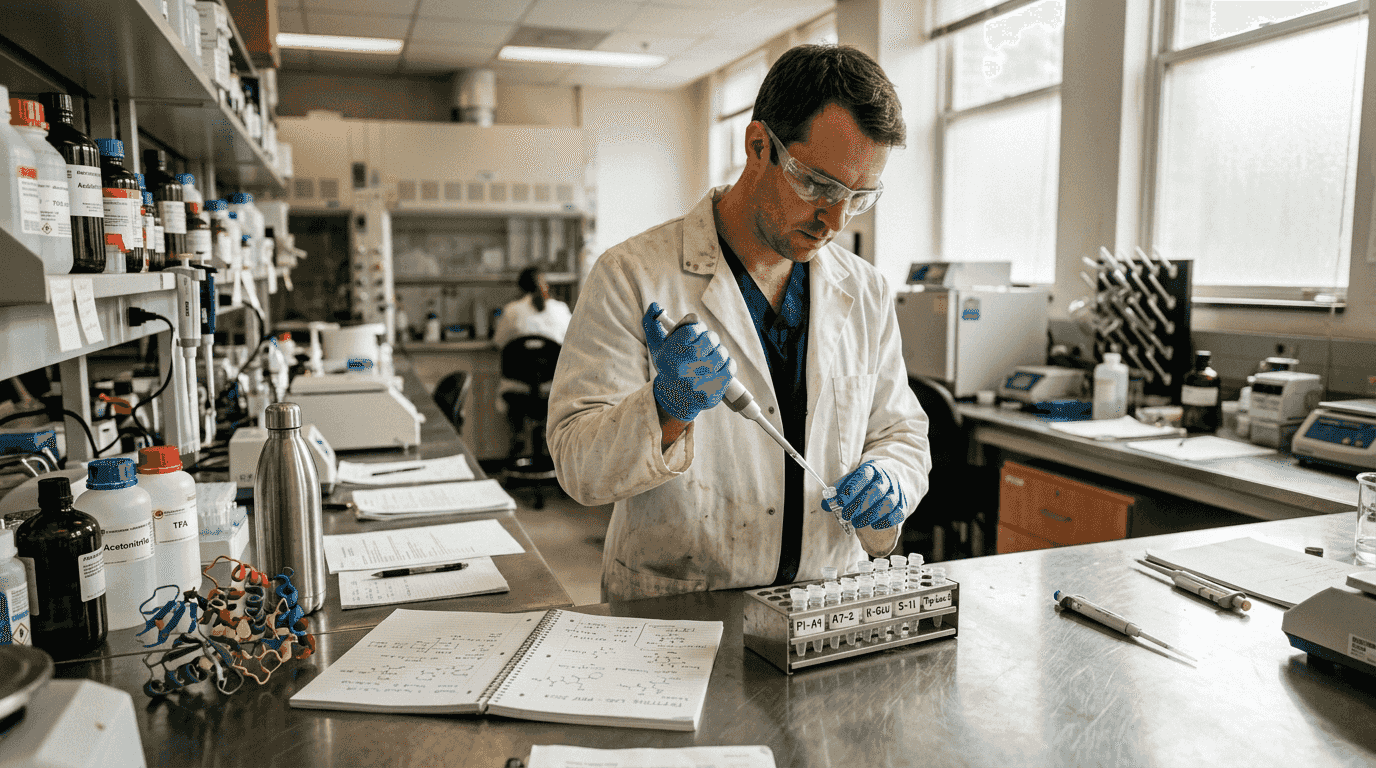
Fitness enthusiasts researching peptides for muscle growth, fat loss, and recovery face an overwhelming selection of compounds with varying potency, mechanisms, and safety profiles. Choosing the right peptide requires understanding how receptor affinity, half-life, and delivery methods impact results. This article examines three widely studied peptides backed by research: IGF-1 LR3 for hypertrophy, BPC-157 for tissue repair, and TB-500 for anti-inflammatory recovery. You'll learn evaluation criteria, mechanisms of action, and practical applications to make informed decisions aligned with your fitness goals in 2026.
Table of Contents
- How To Evaluate Peptides For Muscle Growth And Recovery
- IGF-1 LR3: Powerful Peptide For Muscle Hypertrophy
- BPC-157: Versatile Peptide For Tissue Repair And Recovery
- TB-500: Peptide For Enhanced Repair And Anti-Inflammation
- Comparing Widely Studied Peptides: IGF-1 LR3, BPC-157, And TB-500
- Explore Trusted Peptide Suppliers And Research Resources
- Frequently Asked Questions About Widely Studied Peptides
Key takeaways
| Point | Details |
|---|---|
| IGF-1 LR3 drives hypertrophy | This peptide delivers 3-fold greater potency than native IGF-1 with a 20-30 hour half-life for sustained muscle growth. |
| BPC-157 accelerates tissue repair | Derived from gastric proteins, it upregulates growth hormone receptors by 7-fold and can be taken orally or injected. |
| TB-500 reduces inflammation | Synthetic thymosin beta-4 fragment promotes cell migration and angiogenesis for faster wound healing and muscle recovery. |
| Evaluation criteria matter | Assess peptides by potency, stability, mechanism, safety status, and delivery methods before selecting for specific goals. |
| Goal-driven selection works best | Match peptides to objectives: IGF-1 LR3 for mass, BPC-157 for injuries, TB-500 for inflammation control. |
How to evaluate peptides for muscle growth and recovery
Selecting effective peptides requires a framework beyond marketing claims. Potency measured by receptor affinity determines how strongly a peptide binds to target cells and triggers biological responses. Higher affinity means lower doses produce measurable effects on muscle protein synthesis or tissue regeneration. Understanding peptide potency, stability, and mechanisms forms the foundation for informed choices.
Half-life and stability dictate dosing schedules and convenience. Peptides with longer half-lives require fewer injections per week, improving adherence. Stability affects whether a compound survives oral administration or requires injection. Mechanism of action reveals how peptides influence cellular pathways: some activate growth hormone receptors, others stimulate angiogenesis or protein synthesis directly. This knowledge helps match peptides to specific goals like hypertrophy, recovery, or fat metabolism.
Safety and regulatory status impact legal access and health risks. In 2026, most research peptides fall outside FDA approval for human use, existing in a gray area for personal research. Delivery methods vary by peptide chemistry. Some tolerate stomach acid for oral dosing, while others degrade rapidly and need subcutaneous or intramuscular injection. Your comfort with needles and injection frequency should factor into selection.
A goal-driven approach ensures alignment between peptide properties and desired outcomes:
- Muscle hypertrophy requires peptides activating IGF-1 or mTOR pathways
- Injury recovery benefits from compounds promoting collagen synthesis and angiogenesis
- Fat loss responds to peptides enhancing lipolysis or metabolic rate
- Anti-inflammatory needs suit peptides reducing cytokine signaling
Pro Tip: Start with one peptide at conservative doses to isolate effects and monitor individual response before stacking multiple compounds.
IGF-1 LR3: powerful peptide for muscle hypertrophy
IGF-1 LR3 stands out for muscle building due to modifications that enhance potency and duration. This synthetic variant of insulin-like growth factor-1 includes an arginine substitution at position 3 and a 13-amino acid extension. These changes reduce binding to IGF-binding proteins that normally inhibit activity, resulting in 3-fold greater biological potency compared to native IGF-1. The peptide circulates freely to reach muscle tissue receptors without protein interference.
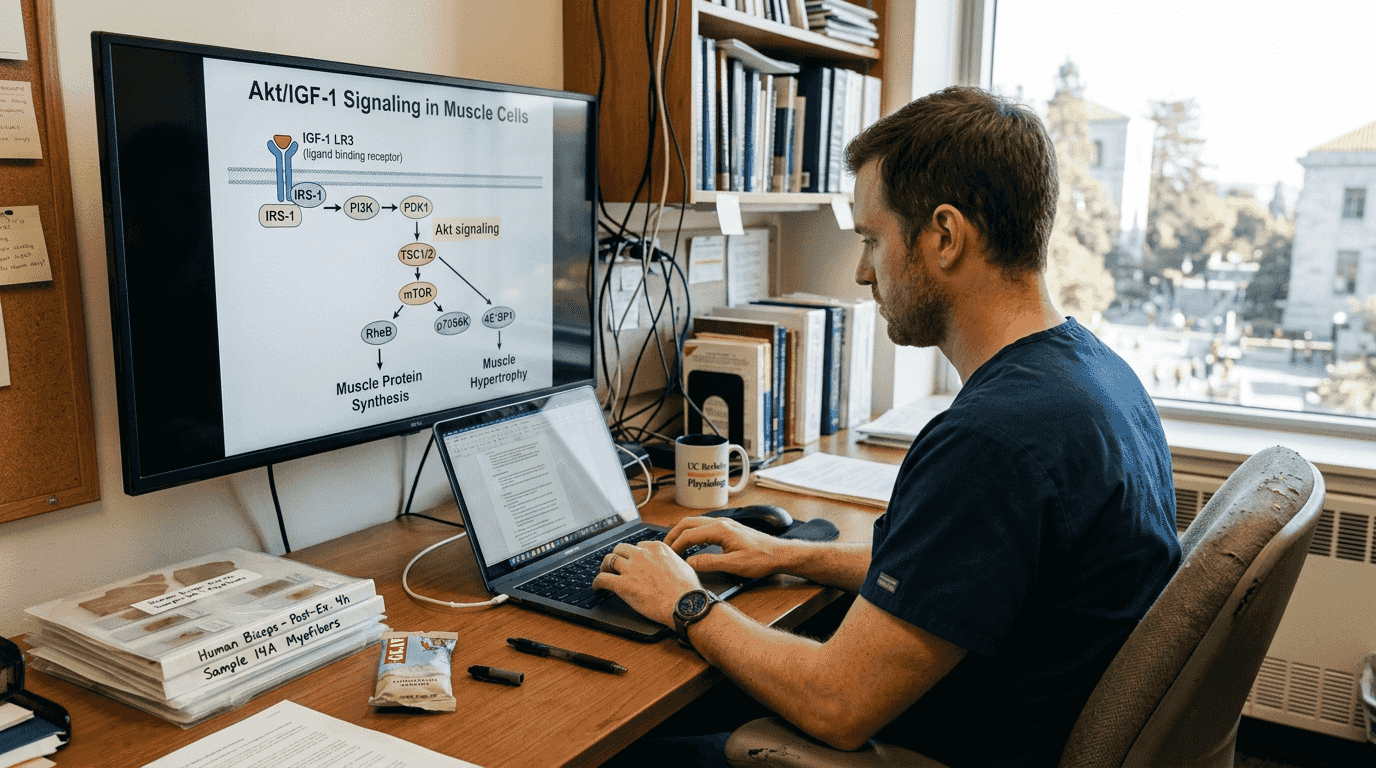
The mechanism centers on Akt-dependent signaling pathways that drive protein synthesis and cell growth. Research demonstrates IGF-1 LR3 induces significant myotube hypertrophy at concentrations as low as 10 ng/mL by activating Akt phosphorylation cascades. This triggers mTOR activation, the master regulator of muscle protein synthesis, while simultaneously inhibiting protein breakdown through FOXO suppression. The dual action creates an anabolic environment favoring muscle mass accumulation.
Half-life represents a crucial advantage for practical use. While native IGF-1 degrades within minutes, IGF-1 LR3's half-life extends to 20-30 hours, enabling sustained receptor activation from single daily doses. This extended duration maintains elevated anabolic signaling throughout the day and night, supporting continuous muscle protein synthesis during growth phases. Bodybuilders typically inject 20-80 mcg daily, with higher doses reserved for aggressive bulking cycles.
Applications focus on hypertrophy phases where maximum muscle growth takes priority. The peptide excels during caloric surplus periods when adequate protein and training stimulus support tissue building. Users report enhanced muscle fullness, improved recovery between workouts, and accelerated strength gains. However, prolonged use may suppress natural growth hormone and IGF-1 production through negative feedback loops, requiring cycling protocols.
Key considerations for IGF-1 LR3 include:
- Requires refrigerated storage to maintain stability
- Subcutaneous injection preferred for consistent absorption
- Best used in 4-6 week cycles to minimize feedback suppression
- Combine with adequate protein intake (1.6-2.2g per kg bodyweight)
Pro Tip: Time injections post-workout when muscle tissue demonstrates heightened insulin sensitivity and receptor expression for maximum anabolic response.
BPC-157: versatile peptide for tissue repair and recovery
BPC-157 originates from a protective protein found in human gastric juice, making it naturally stable in harsh pH environments. This 15-amino acid sequence demonstrates remarkable healing properties across multiple tissue types. Unlike many peptides that degrade in stomach acid, BPC-157 maintains activity through oral administration, though injection provides more targeted delivery to injury sites. Its stability allows oral, subcutaneous, intramuscular, and topical delivery depending on treatment goals.
The primary mechanism involves upregulating Growth Hormone Receptor expression, which amplifies tissue regeneration signals. Studies show a 7-fold increase in GHR levels in tendon cells by day three of treatment, accelerating collagen synthesis and structural repair. This upregulation enhances the tissue's responsiveness to circulating growth factors, creating a more favorable healing environment. BPC-157 also stimulates angiogenesis by promoting VEGF expression, bringing oxygen and nutrients to damaged areas through new blood vessel formation.
Applications extend beyond muscle to include tendons, ligaments, and gastrointestinal tissue. The peptide shows particular effectiveness for injuries with poor blood supply, where natural healing progresses slowly. Tendon strains, ligament tears, and joint inflammation respond well to localized injections near injury sites. Preclinical models confirm accelerated healing of both musculoskeletal and gut tissue, with reduced inflammation markers and faster functional recovery.
Gastrointestinal healing represents a unique application. BPC-157 protects stomach lining, accelerates ulcer healing, and may benefit inflammatory bowel conditions. Oral dosing at 250-500 mcg twice daily targets digestive issues, while injectable protocols use similar doses for musculoskeletal recovery. The peptide's anti-inflammatory effects reduce cytokine signaling without suppressing immune function, maintaining protective responses while controlling excessive inflammation.
Delivery flexibility makes BPC-157 accessible:
- Oral capsules for gut health and systemic effects
- Subcutaneous injection near injury sites for targeted repair
- Intramuscular injection for broader tissue distribution
- Topical application for skin wounds and surface injuries
Pro Tip: For tendon or ligament injuries, inject within 1-2 inches of the affected area to maximize local concentration and healing response.
TB-500: peptide for enhanced repair and anti-inflammation
TB-500 functions as a synthetic fragment of thymosin beta-4, a naturally occurring protein involved in tissue repair and cellular migration. The active fragment contains 43 amino acids responsible for regenerative properties without the full protein's complexity. This peptide specializes in facilitating cell movement to injury sites, a critical step in wound healing that often limits recovery speed. Unlike BPC-157's gastric stability, TB-500 requires injection due to digestive breakdown.
Mechanism of action centers on actin binding and cell migration promotion. TB-500 binds to actin proteins inside cells, enabling cytoskeletal rearrangement necessary for cell movement. This enhances cell migration and displays anti-inflammatory properties by allowing repair cells like fibroblasts and endothelial cells to reach damaged tissue efficiently. The peptide also downregulates inflammatory cytokines, reducing swelling and pain without compromising healing processes.
Angiogenesis stimulation represents another key benefit. TB-500 promotes formation of new blood vessels by upregulating VEGF and other growth factors that signal endothelial cell proliferation. New capillary networks deliver oxygen, nutrients, and immune cells to healing tissue, accelerating recovery timelines. This vascular support proves especially valuable for muscle tears and injuries in poorly vascularized areas.
Research suggests potential cardiac applications beyond musculoskeletal repair. Animal studies demonstrate TB-500's ability to promote heart tissue regeneration following injury, though human applications remain experimental. For athletes and bodybuilders, the primary value lies in faster muscle healing, reduced post-workout soreness, and improved flexibility through reduced scar tissue formation.
Administration typically follows loading and maintenance phases:
- Loading: 2-2.5 mg twice weekly for 4-6 weeks
- Maintenance: 2-2.5 mg once weekly or as needed
- Subcutaneous or intramuscular injection routes
- Rotate injection sites to prevent tissue irritation
| Property | Details |
|---|---|
| Half-life | Approximately 10 days in circulation |
| Primary mechanism | Actin binding for cell migration |
| Anti-inflammatory | Reduces cytokine signaling |
| Angiogenesis | Promotes VEGF and vessel formation |
| Delivery | Injection only (subcutaneous or intramuscular) |
Pro Tip: TB-500 works synergistically with BPC-157, combining cell migration enhancement with growth hormone receptor upregulation for comprehensive tissue repair.
Comparing widely studied peptides: IGF-1 LR3, BPC-157, and TB-500
Understanding differences between these peptides enables strategic selection based on training phase and recovery needs. Each compound offers distinct advantages that align with specific fitness goals, from pure muscle building to injury rehabilitation.
| Peptide | Half-Life | Primary Mechanism | Best For | Administration | Key Feature |
|---|---|---|---|---|---|
| IGF-1 LR3 | 20-30 hours | Akt/mTOR activation for protein synthesis | Muscle hypertrophy during growth phases | Subcutaneous injection daily | 3-fold greater potency than native IGF-1 |
| BPC-157 | 4-6 hours (but stable in gut) | GHR upregulation and angiogenesis | Tendon, ligament, and gut tissue repair | Oral or injection (flexible) | Survives stomach acid for oral dosing |
| TB-500 | ~10 days | Actin binding for cell migration | Inflammation control and wound healing | Injection only (subcutaneous or intramuscular) | Promotes cell movement to injury sites |
IGF-1 LR3 dominates when maximum muscle growth takes priority during bulking cycles. Its sustained anabolic signaling and direct activation of growth pathways make it ideal for bodybuilders focused on size gains. However, the compound requires careful cycling to prevent growth hormone suppression and works best with adequate caloric surplus.
BPC-157 excels for athletes managing chronic injuries or seeking faster recovery between intense training sessions. The oral delivery option provides convenience for users uncomfortable with frequent injections, though targeted injection near injuries delivers superior results. Its dual action on growth hormone receptors and blood vessel formation addresses both structural repair and inflammation.
TB-500 serves users prioritizing anti-inflammatory effects and systemic healing. The long half-life reduces injection frequency compared to other peptides, and the cell migration mechanism complements other recovery strategies. Stacking TB-500 with BPC-157 creates synergistic effects that address multiple healing pathways simultaneously.
For peptide effects on muscle, fat, and recovery, consider your primary limitation: growth capacity, injury recovery, or inflammation management. Many advanced users cycle between peptides seasonally, using IGF-1 LR3 during growth phases and switching to BPC-157 or TB-500 during deload weeks or injury rehabilitation periods.
Explore trusted peptide suppliers and research resources
Transitioning from research to application requires access to quality peptide sources and ongoing education. Pept provides comprehensive resources for fitness enthusiasts exploring peptide use in 2026. Our research peptide suppliers directory connects you with vetted vendors who provide third-party testing, proper storage, and transparent sourcing. Quality matters significantly for peptide effectiveness and safety, making supplier selection a critical decision.
Browse our peptide directory to explore detailed profiles of IGF-1 LR3, BPC-157, TB-500, and dozens of other compounds with research summaries, dosing protocols, and user experiences. Stay current with evolving peptide science through our education platform, where we publish evidence-based guides, compare compounds, and track regulatory developments. Whether you're beginning peptide research or optimizing advanced protocols, Pept serves as your central hub for reliable information and trusted supplier connections.
Frequently asked questions about widely studied peptides
What are the main side effects of IGF-1 LR3, BPC-157, and TB-500?
IGF-1 LR3 may cause hypoglycemia, joint pain, and potential growth hormone suppression with extended use. BPC-157 demonstrates minimal side effects in research, with occasional reports of fatigue or dizziness at high doses. TB-500 rarely produces adverse effects, though some users report temporary lethargy during loading phases. All three lack long-term human safety data, requiring cautious experimentation.
Are these peptides legal to purchase and use in 2026?
Most research peptides including IGF-1 LR3, BPC-157, and TB-500 are not FDA-approved for human use but remain legal to purchase for research purposes. Regulatory status varies by jurisdiction, with some countries restricting peptide sales entirely. Athletes should note that WADA prohibits these compounds in competitive sports. Review peptide legality and FDA approval status before purchasing.
How long should I cycle these peptides for optimal results?
IGF-1 LR3 works best in 4-6 week cycles followed by equal time off to restore natural hormone production. BPC-157 can run 4-8 weeks targeting specific injuries without requiring breaks. TB-500 typically follows a 6-week loading phase with maintenance dosing as needed. Cycling prevents receptor desensitization and allows assessment of baseline function between protocols.
Can I combine multiple peptides for enhanced effects?
Stacking peptides targeting different pathways often produces synergistic results. BPC-157 and TB-500 combine well for comprehensive tissue repair, addressing both growth factor signaling and cell migration. Adding IGF-1 LR3 during growth phases amplifies muscle-building while recovery peptides handle tissue stress. Start with single compounds to establish individual responses before combining multiple peptides.