
After age 30, your body's growth hormone production drops 14% each decade, directly impacting muscle mass and skin elasticity. This decline drives many people toward peptides, but confusing terminology often blocks informed decisions. Understanding peptide language helps you evaluate options for muscle building and skin improvement with confidence. This guide breaks down essential peptide terms using scientific evidence so you can make smart choices in 2026.
Table of Contents
- Understanding Basic Peptide Terminology
- Peptide Categories And Their Roles In Muscle And Skin Health
- Key Peptide Examples: CJC-1295, Matrixyl, And Argireline Explained
- Applying Peptide Terminology To Your Fitness And Skin Routine
- Explore Trusted Peptide Resources And Suppliers
- FAQ
Key takeaways
| Point | Details |
|---|---|
| Peptides are amino acid chains | Short sequences performing specific roles in fitness and skin health |
| Categories define function | Signal peptides, growth hormone releasing hormones, and neurotransmitter inhibitors serve distinct purposes |
| Evidence varies by peptide | CJC-1295 and Matrixyl have strong clinical backing for muscle and skin benefits |
| Terminology enables evaluation | Understanding terms helps assess product claims and supplier quality |
| Combined approaches work best | Peptide supplementation with resistance training maximizes muscle strength gains |
Understanding basic peptide terminology
Peptides are short chains of amino acids, typically containing 2 to 50 amino acids linked by peptide bonds. Unlike proteins, which contain hundreds or thousands of amino acids, peptides remain small enough to signal specific biological responses without triggering immune reactions. This size difference matters because it determines how your body absorbs and uses these compounds.
The peptide directory organizes compounds into functional categories that reveal their mechanisms. Signal peptides communicate instructions to cells, telling them to produce collagen or release growth hormone. Growth hormone releasing hormones (GHRH) stimulate your pituitary gland to increase natural hormone production. Neurotransmitter inhibitors block specific signals, like the acetylcholine release that causes muscle contractions and expression lines.
Knowing these categories helps you match peptides to your goals. If you want muscle recovery support, you'll focus on GHRH analogues. For wrinkle reduction, signal peptides that boost collagen become your target. Without this terminology foundation, marketing claims about "revolutionary peptide formulas" remain meaningless noise.
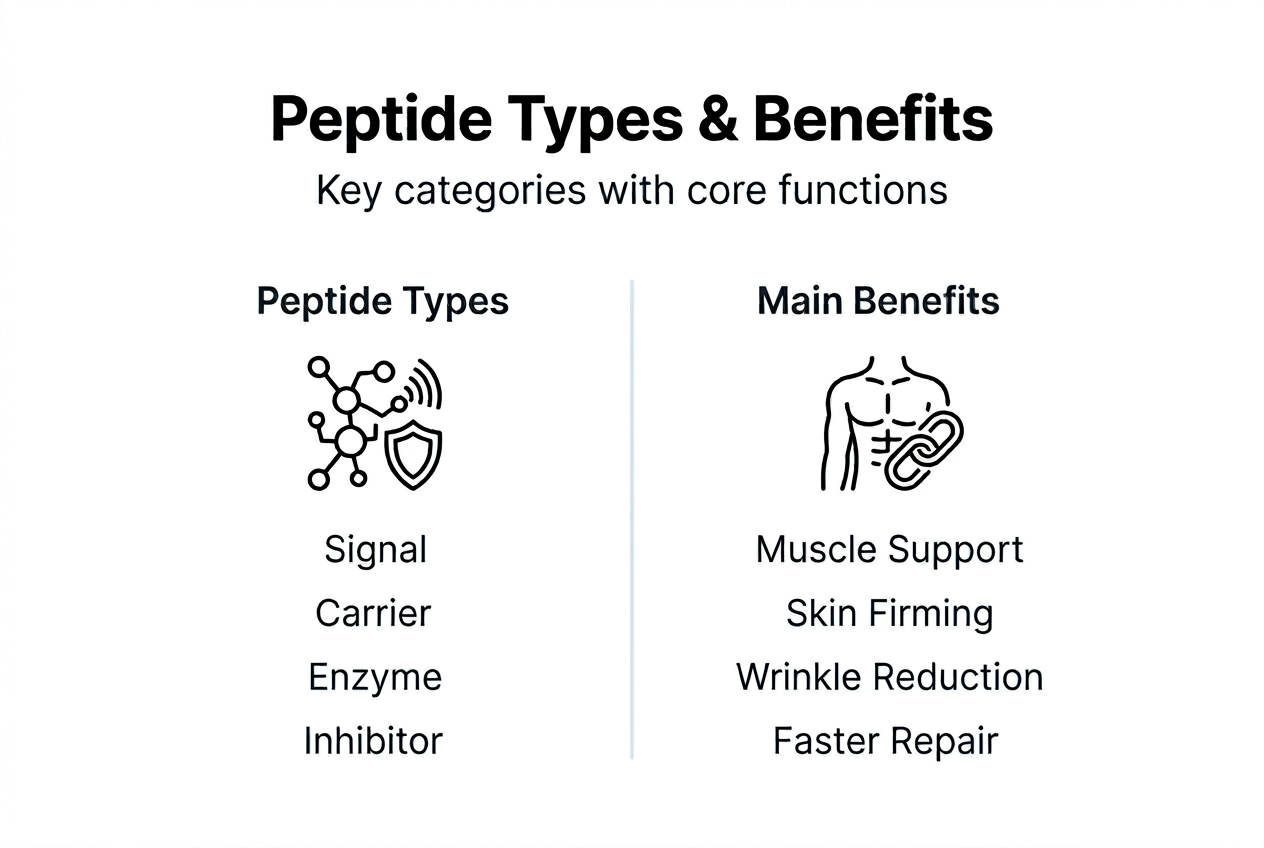
Common peptide classes include:
- Signal peptides that trigger collagen and elastin production
- Carrier peptides that deliver trace elements to cells
- Neurotransmitter inhibitors that reduce muscle contractions
- Enzyme inhibitors that slow collagen breakdown
Each class operates through distinct pathways, which explains why combining different peptide types often produces better results than using single compounds alone.
Peptide categories and their roles in muscle and skin health
Cosmetic peptides fall into four functional groups with measurably different effects on aging processes. Signal peptides activate cellular pathways that increase protein synthesis, particularly collagen types I and III in skin tissue. Neurotransmitter inhibitors work by blocking acetylcholine receptors, preventing the muscle contractions that deepen expression lines around eyes and forehead.

Carrier peptides transport essential minerals like copper and manganese directly into cells, where these elements activate enzymes needed for collagen cross-linking and wound healing. Enzyme inhibitors block proteases that break down structural proteins, preserving existing collagen and elastin networks. Understanding how peptides work across these categories reveals why specific combinations outperform single compounds.
Here's how each category impacts your biology:
- Signal peptides stimulate fibroblasts to produce new collagen and elastin
- Neurotransmitter inhibitors reduce dynamic wrinkles by limiting muscle movement
- Carrier peptides deliver trace elements that activate repair enzymes
- Enzyme inhibitors protect existing structural proteins from degradation
Growth hormone releasing hormones represent a fifth category crucial for muscle building. These synthetic analogues mimic your body's natural GHRH, triggering pulsatile growth hormone release that supports muscle protein synthesis and fat metabolism. Unlike direct growth hormone injection, GHRH analogues work with your existing physiological rhythms.
Pro Tip: Focus on peptides with robust clinical evidence in their category. Signal peptides like Matrixyl and GHRH analogues like CJC-1295 have multiple published studies confirming their mechanisms and benefits.
Key peptide examples: CJC-1295, Matrixyl, and Argireline explained
Three peptides demonstrate how terminology translates into measurable benefits. Each operates through distinct mechanisms with different dosing requirements and evidence quality.
| Peptide | Type | Mechanism | Half-life | Key Benefit | Evidence Quality |
|---|---|---|---|---|---|
| CJC-1295 | GHRH analogue | Stimulates growth hormone release | 6-8 days with DAC | Muscle recovery, fat metabolism | Multiple controlled trials |
| Matrixyl | Signal peptide | Activates collagen synthesis | Topical, hours | Wrinkle reduction, skin firmness | Clinical trials with controls |
| Argireline | Neurotransmitter inhibitor | Blocks acetylcholine release | Topical, hours | Expression line reduction | Moderate evidence |
CJC-1295 uses Drug Affinity Complex modification to extend its biological activity from minutes to days. This modification attaches albumin-binding components to the peptide chain, slowing kidney filtration and maintaining stable blood levels. The extended half-life means you can dose twice weekly instead of multiple daily injections, improving compliance and reducing injection site reactions.
The CJC-1295 research shows it amplifies natural growth hormone pulses rather than creating artificial spikes. This pulsatile pattern better mimics youthful hormone rhythms, supporting muscle protein synthesis during recovery periods after resistance training. Studies document increased lean mass and improved sleep quality in users combining CJC-1295 with structured training programs.
Matrixyl stimulates collagen production by signaling fibroblasts through specific receptor pathways. Clinical trials demonstrate significant wrinkle depth reduction and measurable increases in skin firmness after 12 weeks of twice-daily application. The peptide's palmitoyl modification helps it penetrate the stratum corneum barrier, delivering active sequences to deeper dermal layers where collagen synthesis occurs.
Argireline works by relaxing facial muscles, competing with the SNAP-25 protein component needed for neurotransmitter vesicle fusion. This mechanism resembles botulinum toxin but remains reversible and milder, reducing expression lines without causing complete muscle paralysis. Users report softer lines around eyes and forehead with continued topical application.
Pro Tip: Evaluate peptides by checking their half-life and dosing requirements. Longer half-lives indicate more stable blood levels but may accumulate with frequent dosing. Topical peptides need lipophilic modifications to cross skin barriers effectively.
Applying peptide terminology to your fitness and skin routine
Your new terminology knowledge enables smarter peptide selection and safer use. Start by matching functional categories to your specific goals, then verify each peptide's clinical evidence before purchase.
Follow these steps when evaluating peptide options:
- Identify your primary goal (muscle building, skin firmness, wrinkle reduction)
- Match that goal to the appropriate peptide category (GHRH, signal peptide, neurotransmitter inhibitor)
- Review published studies showing efficacy for your target outcome
- Check peptide modifications (like DAC) that affect dosing and stability
- Verify supplier quality through third-party testing certificates
- Understand proper dosing protocols and administration routes
Collagen peptide supplementation combined with resistance training improves muscle strength significantly in elderly sarcopenic men compared to training alone. This synergy works because collagen provides amino acids for connective tissue repair while training signals muscle protein synthesis. Neither intervention maximizes benefits without the other, demonstrating why integrated approaches beat isolated tactics.
Your body's natural growth hormone secretion declines 14% per decade after turning 30, reducing muscle mass and skin elasticity progressively. Understanding this decline explains why peptides that support hormone production or collagen synthesis become more valuable with age. The terminology helps you distinguish between peptides that replace diminished hormones versus those that stimulate your remaining production capacity.
When reading product claims, look for specific peptide names rather than proprietary blends. Terms like "advanced peptide complex" often hide weak ingredients or insufficient concentrations. Quality suppliers list exact peptide sequences, concentrations, and purity percentages. The peptide effects guide explains how to interpret these specifications and compare products objectively.
Consult your physician before starting peptides, especially if you have hormone-sensitive conditions or take prescription medications. Some peptides interact with diabetes medications, thyroid hormones, or corticosteroids. Your doctor can order baseline hormone panels and monitor your response to peptide protocols safely.
Explore trusted peptide resources and suppliers
Navigating peptide options becomes simpler with vetted directories and educational resources. Pept's platform connects you to quality suppliers while providing evidence-based information about peptide mechanisms and applications.

The platform offers several resources supporting informed peptide decisions:
- Peptide directory with detailed research summaries and mechanism explanations
- Vetted supplier listings featuring third-party testing verification
- Educational articles explaining dosing protocols and safety considerations
- Comparison tools helping you evaluate evidence quality across peptides
Pro Tip: Always verify supplier credentials through Pept's vetted directory before purchasing. Third-party purity testing, customer reviews, and business transparency separate legitimate suppliers from questionable vendors.
The Pept platform updates regularly with new research findings and supplier assessments, helping you stay current as peptide science evolves. Bookmark key resources for quick reference when evaluating new peptides or adjusting your protocol.
FAQ
What does peptide terminology mean in fitness and skin care?
Peptide terminology defines the structure and function of amino acid chains that signal specific biological processes. Understanding terms like signal peptides and GHRH analogues helps you select compounds backed by evidence for your muscle or skin goals. This knowledge prevents wasting money on ineffective products with misleading marketing claims.
How does CJC-1295 differ from other peptides?
CJC-1295 features Drug Affinity Complex modification that extends its half-life to 6-8 days versus minutes for unmodified GHRH peptides. This modification allows twice-weekly dosing instead of multiple daily injections while maintaining stable growth hormone stimulation. The CJC-1295 profile details its unique pharmacokinetics and clinical applications for muscle recovery.
Can peptides improve aging skin effectively?
Signal peptides like Matrixyl demonstrate significant wrinkle reduction and improved skin firmness in controlled clinical trials. These peptides stimulate collagen production by activating fibroblast receptors, producing measurable improvements after consistent use. Evidence quality varies across peptides, making terminology knowledge essential for identifying effective options.
How can I choose safe and effective peptides?
Select peptides with published clinical evidence showing efficacy for your specific goal, then purchase from suppliers offering third-party purity testing. Understanding terminology helps you evaluate product claims critically and avoid unsafe or misleading options. The peptide regulations guide explains current compliance standards, while Pept's supplier directory lists verified vendors meeting quality benchmarks.