
You've heard peptides can transform your physique or reverse aging, but separating science from marketing requires navigating complex biology and conflicting claims. Real peptide effects stem from nuanced hormonal pathways and cellular signaling, not miracle formulas. This guide unpacks how peptides influence muscle growth, fat metabolism, and skin health using evidence-based research, debunks persistent myths, and provides practical selection strategies for fitness enthusiasts and bodybuilders seeking informed peptide use in 2026.
Table of Contents
- Introduction To Peptides And Their Relevance In Fitness And Skin Health
- How Peptides Work For Muscle Growth And Fat Loss
- Peptides For Muscle Recovery And Injury Healing
- Peptides In Skin Improvement And Anti-Aging
- Safety, Fda Regulation, And Legal Considerations
- Common Misconceptions About Peptides
- Practical Applications And Choosing The Right Peptides
- Explore Trusted Peptide Resources And Suppliers
- Frequently Asked Questions About Peptide Effects
Key takeaways
| Point | Details |
|---|---|
| Peptides stimulate growth hormone pathways | Growth hormone secretagogues trigger pituitary GH release and liver IGF-1 production, supporting muscle synthesis and fat oxidation over weeks of consistent use. |
| Recovery and skin peptides serve distinct purposes | BPC-157 accelerates muscle fiber repair after injury, while skin peptides boost collagen and elastin production but face absorption challenges. |
| FDA approval remains limited for most fitness peptides | Many muscle and fat-targeting peptides lack full clinical validation, and 2023 compounding restrictions reduced legal access to compounds like CJC-1295. |
| Misconceptions create unrealistic expectations | Peptides work gradually through indirect hormonal pathways, not like steroids, and require training and nutrition to deliver results. |
| Source quality and expert consultation are critical | Contaminated or mislabeled peptides pose safety risks, so purchasing from vetted suppliers and consulting healthcare providers ensures safer experimentation. |
Introduction to peptides and their relevance in fitness and skin health
Peptides are short chains of amino acids, typically containing 2 to 50 amino acid units linked by peptide bonds. Your body naturally produces thousands of peptides that regulate hormone secretion, immune responses, and tissue repair. When you introduce synthetic or bioactive peptides externally, they interact with cellular receptors to amplify or modulate these biological processes.
Fitness and bodybuilding communities focus on three peptide categories. Growth hormone secretagogues stimulate your pituitary gland to release more growth hormone, indirectly boosting muscle protein synthesis and fat metabolism. Tissue repair peptides like BPC-157 accelerate recovery from muscle injuries by enhancing fiber regeneration. Skin-focused peptides signal fibroblasts to produce structural proteins such as collagen and elastin, improving elasticity and reducing visible aging.
Understanding these categories helps you match peptide types to your goals. If you want to build muscle mass, growth hormone pathways offer the most direct route. For faster recovery between training sessions, repair peptides target inflammation and tissue damage. Skin improvement requires peptides formulated for dermal penetration and collagen stimulation.
Peptides gained popularity because they offer targeted biological effects without the broad systemic impact of anabolic steroids. However, this specificity also means results develop gradually and depend heavily on complementary training, nutrition, and recovery protocols. Exploring the peptide directory reveals the diversity of compounds available, each with unique mechanisms and research backing.
How peptides work for muscle growth and fat loss
Growth hormone secretagogues like MK-677, CJC-1295, and Ipamorelin bind to receptors in your pituitary gland, triggering pulsatile growth hormone release. This GH surge stimulates your liver to produce insulin-like growth factor 1 (IGF-1), which directly activates muscle satellite cells and protein synthesis pathways. Growth hormone secretagogues stimulate GH and IGF-1, driving muscle hypertrophy over 8 to 12 weeks of combined use with resistance training.
IGF-1 promotes muscle hypertrophy through multiple mechanisms. It activates the mTOR signaling pathway, which increases ribosomal protein production and accelerates muscle fiber growth. Satellite cells, dormant muscle stem cells, proliferate and fuse with existing fibers to add new nuclei, expanding your muscle's capacity for growth. Simultaneously, GH enhances lipolysis, breaking down stored fat into free fatty acids your body uses for energy, which explains why users often report improved body composition beyond pure muscle gain.
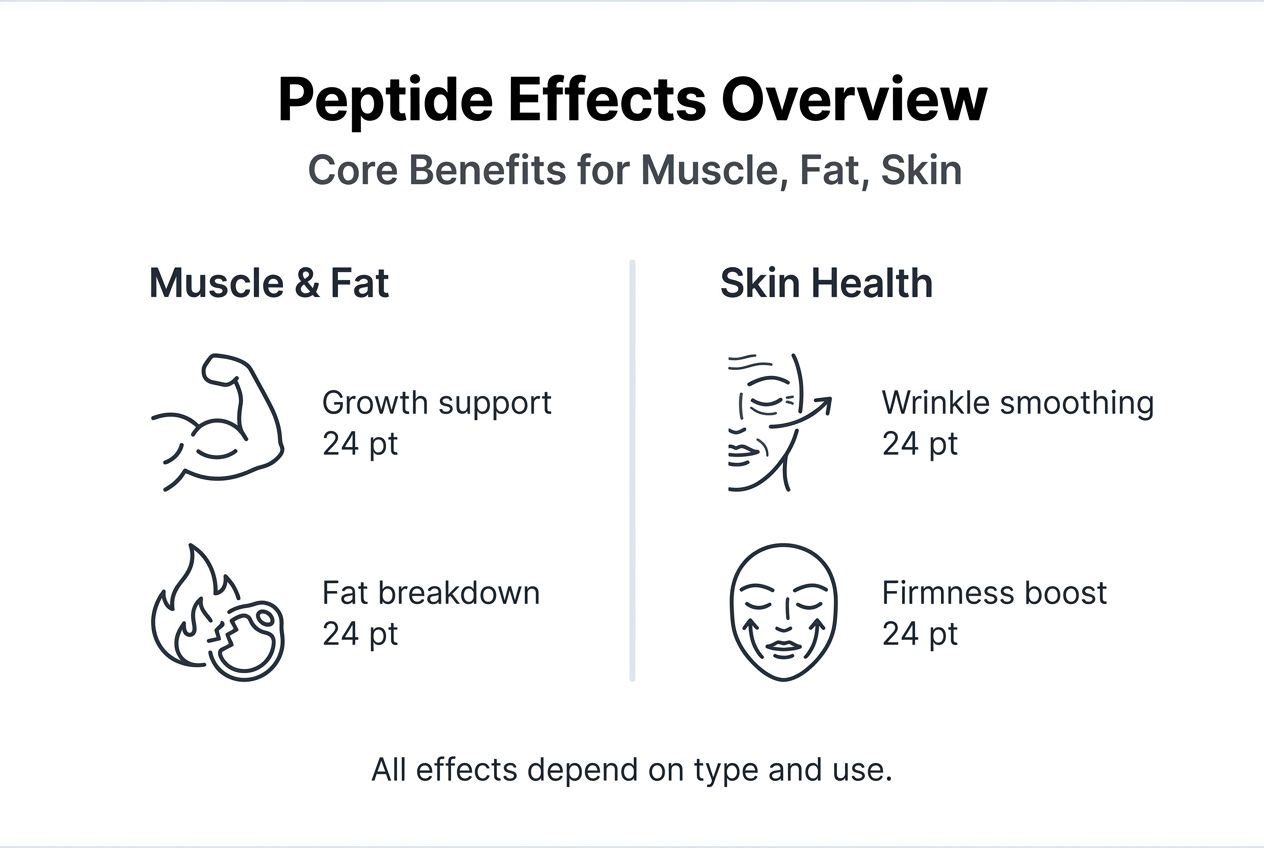
Quantitative evidence supports these claims. Studies show MK-677 users experience measurable lean mass increases and improved nitrogen retention compared to placebo groups. MK-677 preserves nitrogen balance compared to placebo, indicating muscle sparing effects even during caloric deficits. This nitrogen balance shift means your body retains more dietary protein for muscle synthesis rather than breaking it down for energy.
Not all peptides act identically. CJC-1295 and Ipamorelin mimic natural GH rhythms, amplifying GH release with reduced side effects compared to constant synthetic hormone exposure. CJC-1295 extends the half-life of growth hormone-releasing hormone, sustaining elevated GH levels for days. Ipamorelin selectively stimulates GH without affecting cortisol or prolactin, minimizing unwanted hormonal disruptions.
Pro Tip: Combine peptide use with progressive resistance training and adequate protein intake (1.6 to 2.2 grams per kilogram of body weight daily) to maximize muscle protein synthesis and IGF-1 utilization.
Peptide effectiveness varies based on dosing protocols and individual response. Typical regimens involve multiple daily injections timed around workouts or sleep to align with natural GH rhythms. The peptide muscle growth evidence base shows that consistent 12-week protocols paired with training yield 2 to 5 pounds of lean mass gains, though results depend on baseline fitness, age, and hormonal status.
Expected timeline for peptide-driven muscle changes
| Week Range | Physiological Changes | Observable Outcomes |
|---|---|---|
| 1 to 4 | Elevated GH and IGF-1 levels, initial protein synthesis upregulation | Improved recovery speed, reduced muscle soreness |
| 5 to 8 | Satellite cell activation, nitrogen retention improvement | Modest strength gains, slight body composition shift |
| 9 to 12 | Sustained hypertrophy, enhanced lipolysis | Measurable lean mass increase (2 to 5 lbs), visible muscle definition |
Fat loss mechanisms differ slightly. Growth hormone stimulates hormone-sensitive lipase, an enzyme that breaks down triglycerides in fat cells. This process releases fatty acids into your bloodstream, where they're transported to mitochondria for oxidation. The result is reduced subcutaneous and visceral fat, particularly when combined with caloric restriction or cardiovascular exercise.
Understanding these pathways helps set realistic expectations. Peptides don't replace hard work or proper nutrition. They amplify your body's natural responses to training stimuli, making recovery faster and muscle gains more efficient. The peptide directory provides detailed profiles of growth hormone secretagogues, including dosing protocols and research summaries.
Peptides for muscle recovery and injury healing
BPC-157, a synthetic peptide derived from a protective gastric protein, enhances muscle fiber repair and functional recovery after injury. Preclinical studies demonstrate that BPC-157 improves muscle fiber integrity and biomechanics, accelerating recovery in rat severe injury models. The peptide promotes angiogenesis, forming new blood vessels that deliver oxygen and nutrients to damaged tissue, and modulates inflammatory cytokines to reduce excessive swelling without suppressing necessary healing responses.
Animal models show impressive outcomes. Rats with surgically induced crush injuries treated with BPC-157 regain load-bearing capacity and muscle contractility significantly faster than untreated controls. The peptide appears to stabilize cellular membranes and protect against oxidative stress, preserving more viable tissue during the acute injury phase.
TB-500, another recovery peptide, contains a sequence mimicking thymosin beta-4, a naturally occurring protein involved in cell migration and differentiation. It promotes tissue remodeling by upregulating actin polymerization, allowing cells to migrate more efficiently to injury sites. Bodybuilders report faster resolution of tendon strains and muscle tears when using TB-500, though human clinical evidence remains limited. The BPC-157 research overview compiles available studies and user reports.
Pro Tip: Recovery peptides work best when initiated immediately after injury or during intense training phases when microtrauma accumulates, not as a preventive measure during light training periods.
Key distinctions separate recovery peptides from growth hormone secretagogues. BPC-157 and TB-500 target localized tissue repair through anti-inflammatory and pro-angiogenic pathways, while GH peptides systemically boost hormone levels affecting multiple tissues. Recovery peptides don't directly increase muscle mass but allow you to train harder and more frequently by shortening downtime between sessions.
Evidence limitations require acknowledgment. Most recovery peptide data comes from animal studies or anecdotal reports, not randomized controlled human trials. Translation from rodent models to human physiology isn't guaranteed. Dosing protocols remain empirical, based on community experimentation rather than clinical guidelines. The muscle recovery peptide evidence review highlights these gaps while documenting promising preclinical findings.
Practical application involves subcutaneous or intramuscular injection near the injury site or systemically, depending on the peptide and injury type. Users typically cycle recovery peptides for 4 to 6 weeks during rehabilitation, then discontinue once functional capacity returns. Combining recovery peptides with physical therapy, adequate sleep, and anti-inflammatory nutrition optimizes healing outcomes.
Peptides in skin improvement and anti-aging
Skin-focused peptides signal fibroblasts to increase production of structural proteins: collagen, elastin, and fibrillin. Collagen provides tensile strength, elastin allows skin to stretch and recoil, and fibrillin anchors elastic fibers within the extracellular matrix. As you age, production of these proteins declines, leading to wrinkles, sagging, and reduced elasticity. Bioactive peptides counteract this decline by mimicking growth factor fragments that activate fibroblast receptors.

Clinical trials show peptide use reduces wrinkles and improves skin elasticity measurably. Copper peptides, palmitoyl pentapeptide, and matrixyl (palmitoyl oligopeptide) appear frequently in dermatological formulations. These compounds penetrate the epidermis to reach the dermal layer where fibroblasts reside, though penetration depth varies significantly based on molecular size and formulation.
Delivery challenges limit topical peptide effectiveness. Bioactive skin peptides promote collagen, elastin, and melanin production but face delivery challenges due to poor skin permeability. The stratum corneum, your skin's outermost layer, blocks most peptides from reaching target cells. Peptides with molecular weights above 500 Daltons rarely penetrate intact skin without enhancement strategies.
Advanced delivery methods overcome this barrier. Microneedling creates temporary microchannels that allow peptides to bypass the stratum corneum. Lipid nanocarriers encapsulate peptides in fatty vesicles that fuse with skin cell membranes, releasing the payload directly into cells. Iontophoresis uses mild electrical currents to drive charged peptides deeper into tissue. The advanced peptide skin formulations market offers products incorporating these technologies.
Pro Tip: Look for peptide serums with molecular weights below 500 Daltons or those using delivery enhancers like hyaluronic acid, which draws peptides into the skin through osmotic pressure.
Comparison of skin peptide types and their primary effects
| Peptide Type | Primary Mechanism | Key Benefits | Delivery Considerations |
|---|---|---|---|
| Copper peptides | Enhance collagen synthesis, antioxidant activity | Wound healing, firmness improvement | Require stabilization to prevent oxidation |
| Palmitoyl pentapeptide | Stimulate collagen and hyaluronic acid production | Wrinkle reduction, hydration | Fatty acid tail improves penetration |
| Matrixyl (palmitoyl oligopeptide) | Mimic growth factor signaling | Fine line reduction, skin thickness | Effective in concentrations of 3% or higher |
| Argireline (acetyl hexapeptide) | Inhibit neurotransmitter release, muscle relaxation | Expression line softening | Works topically but less dramatically than Botox |
Expectations should remain realistic. Topical peptides produce gradual improvements over 8 to 12 weeks of consistent use, not overnight transformations. They complement, rather than replace, retinoids and sunscreen in comprehensive anti-aging regimens. Injectable peptides like GHK-Cu show more dramatic effects but require professional administration and carry higher costs.
Melanin-regulating peptides also exist, targeting hyperpigmentation and uneven skin tone. These compounds inhibit tyrosinase, the enzyme that catalyzes melanin production, leading to gradual lightening of dark spots. However, results vary widely based on pigmentation depth and skin type.
Safety, FDA regulation, and legal considerations
FDA approval for muscle, fat, and skin peptides remains limited. Many muscle and fat-targeting peptides are not FDA-approved for these uses and primarily supported by animal or limited human data, raising safety concerns. The agency approves peptides for specific medical conditions like growth hormone deficiency or diabetes, but bodybuilding and cosmetic applications fall outside these indications.
Off-label use dominates the fitness peptide market. Peptides like MK-677, CJC-1295, and Ipamorelin circulate through research chemical suppliers and compounding pharmacies, operating in regulatory gray zones. Users assume liability for outcomes, as these compounds haven't undergone comprehensive safety testing for performance enhancement purposes.
Regulatory changes in 2023 tightened access. 2023 FDA compounding restrictions limited use of peptides like CJC-1295 and Ipamorelin despite ongoing off-label applications. The FDA removed several peptides from the compounding bulk substances list, arguing insufficient safety data and potential for misuse. This forced many clinics to discontinue peptide therapy programs or switch to remaining legal compounds.
Safety concerns extend beyond legality. Peptides purchased from unverified sources may contain contaminants, incorrect dosages, or entirely different compounds than labeled. Heavy metal contamination, bacterial endotoxins, and mislabeled concentrations pose real health risks. Without third-party testing, you're trusting supplier claims without verification.
Side effects vary by peptide type. Growth hormone secretagogues can cause water retention, increased appetite, elevated blood glucose, and numbness in extremities. Long-term GH elevation may increase cancer risk in predisposed individuals, though evidence remains inconclusive. Recovery peptides show fewer reported side effects but lack sufficient human data to rule out rare adverse events.
Legal status complicates purchasing decisions. Peptides sold for research purposes only exist in a legal loophole, not explicitly banned but not approved for human consumption. Importing peptides from overseas suppliers risks customs seizure. Possession without prescription may violate state laws, though enforcement focuses primarily on distribution rather than personal use.
Purchase from research peptide suppliers that provide third-party purity testing, clear labeling, and transparent sourcing. Consult healthcare providers before starting any peptide regimen, especially if you have pre-existing conditions or take medications. The FDA peptide safety article details regulatory context and risk factors.
Common misconceptions about peptides
Peptides differ fundamentally from anabolic steroids, yet confusion persists. Peptides are not synthetic steroids and do not cause immediate muscle bulking unlike steroids. Steroids replace or supplement testosterone directly, binding to androgen receptors throughout your body to trigger rapid protein synthesis. Peptides work indirectly by stimulating your body's natural hormone production, producing gradual changes over weeks rather than days.
This distinction matters for side effect profiles and reversibility. Steroid use suppresses natural testosterone production, often requiring post-cycle therapy to restore hormonal balance. Peptide use typically doesn't shut down endogenous hormone production because it enhances rather than replaces natural secretion. However, both compound classes carry risks and should be approached cautiously.
Another misconception involves universal safety and FDA approval. Not all peptides are safe or FDA approved, and effects vary widely by compound and user context. Marketing materials often imply regulatory endorsement that doesn't exist, or cherry-pick animal studies to suggest human benefits without acknowledging evidence gaps. Critical evaluation of peptide claims requires distinguishing between mechanistic plausibility and clinical validation.
Expectations for rapid muscle gain or miraculous skin transformation set users up for disappointment. Peptides require appropriate diet and exercise to be effective. A growth hormone secretagogue won't build muscle if you're not training progressively or consuming sufficient protein. Skin peptides won't erase decades of sun damage in weeks. They optimize your body's natural processes but can't overcome poor lifestyle choices.
"Peptides are signaling molecules that tell your cells to perform specific functions more efficiently. They're enhancers, not replacements for the fundamentals of training, nutrition, and recovery."
Some users believe stacking multiple peptides guarantees superior results. While combining peptides with complementary mechanisms can be effective, it also multiplies unknowns and potential interactions. More isn't always better, and polypharmacy increases the difficulty of identifying which compound causes benefits or side effects.
The common peptide myths resource dispels these and other misconceptions with evidence-based explanations. Understanding what peptides can and cannot do helps you set realistic goals and avoid unsafe experimentation.
Practical applications and choosing the right peptides
Identify your primary goal before selecting peptides. Muscle growth requires growth hormone secretagogues like MK-677 or CJC-1295. Fat loss benefits from compounds that enhance GH and metabolic rate. Injury recovery calls for BPC-157 or TB-500. Skin improvement demands topical peptides with proven dermal penetration or professional treatments. The peptide directory categorizes compounds by primary application, simplifying initial research.
Prioritize peptides with substantial safety data and clinical evidence. MK-677 has undergone multiple human trials for various conditions, providing clearer risk profiles than compounds tested only in animals. Copper peptides for skin have decades of dermatological use. Newer or less-studied peptides may offer theoretical benefits but come with unknown long-term risks.
Peptide selection guide based on fitness and skin goals
| Primary Goal | Recommended Peptide Types | Key Considerations | Typical Duration |
|---|---|---|---|
| Muscle growth | MK-677, CJC-1295, Ipamorelin | Combine with resistance training, adequate protein | 8 to 12 weeks |
| Fat loss | Growth hormone secretagogues | Pair with caloric deficit, cardiovascular exercise | 8 to 12 weeks |
| Injury recovery | BPC-157, TB-500 | Initiate immediately after injury, combine with physical therapy | 4 to 6 weeks |
| Skin anti-aging | Copper peptides, matrixyl, palmitoyl pentapeptide | Use consistently, combine with retinoids and sunscreen | 12+ weeks |
Follow evidence-based usage protocols. Growth hormone secretagogues typically require once or twice daily subcutaneous injections, timed to align with natural GH peaks (post-workout or before sleep). Recovery peptides may be injected near injury sites or systemically. Topical skin peptides apply once or twice daily to clean skin before moisturizers.
Pro Tip: Start with single peptides before stacking to isolate effects and identify individual responses, making it easier to adjust dosages or discontinue if side effects emerge.
Purchase only from vetted suppliers that provide certificates of analysis from independent laboratories. These documents verify peptide purity, concentration, and absence of contaminants. The research peptide suppliers directory lists sources with established reputations and testing transparency. Avoid suppliers making exaggerated claims or lacking verifiable quality control.
Consult qualified healthcare providers before starting peptide protocols. Physicians specializing in hormone optimization or sports medicine can order baseline labs, monitor for side effects, and adjust dosages based on your response. Self-experimentation without medical oversight increases risks, particularly if you have underlying health conditions or take prescription medications that might interact with peptides.
Monitor outcomes systematically. Track body composition changes with DEXA scans or bioelectrical impedance, not just scale weight. Document strength progression, recovery metrics, and subjective well-being. For skin peptides, take standardized photos in consistent lighting to assess changes objectively. This data helps you determine whether a peptide justifies its cost and risks.
The peptide education platform offers comprehensive research summaries, user forums, and expert interviews to support informed decision making. The TB-500 research overview exemplifies the depth of information available for specific compounds, including mechanism explanations, dosing protocols, and safety considerations.
Explore trusted peptide resources and suppliers
Navigating the peptide landscape requires reliable information and quality sources. Our platform consolidates research, user experiences, and vetted supplier directories to simplify your peptide education journey. Whether you're investigating growth hormone secretagogues for muscle gains or skin peptides for anti-aging, centralized resources save hours of fragmented research.

Access the comprehensive peptide directory featuring detailed profiles of dozens of compounds, including mechanisms of action, clinical evidence summaries, typical dosing protocols, and reported side effects. Each entry links to primary research and user discussion threads, allowing you to evaluate compounds from multiple perspectives before making decisions.
Find trusted research peptide suppliers committed to third-party testing and transparent quality control. We vet suppliers based on testing protocols, customer reviews, shipping reliability, and responsiveness to quality concerns. This curation helps you avoid the contaminated or mislabeled products that plague the gray-market peptide space.
Stay current with the peptide education platform featuring regular updates on regulatory changes, emerging research, and community insights. Peptide science evolves rapidly, and 2026 brings new clinical trials, regulatory decisions, and formulation innovations. Bookmark our site to ensure you're making decisions based on the latest evidence, not outdated information.
Frequently asked questions about peptide effects
What's the difference between peptides for muscle growth and recovery?
Muscle growth peptides like MK-677 and CJC-1295 stimulate systemic growth hormone and IGF-1 release, enhancing protein synthesis and satellite cell activation across all muscle tissue. Recovery peptides like BPC-157 target localized tissue repair through anti-inflammatory and angiogenic mechanisms, accelerating healing from specific injuries without directly increasing muscle mass. Growth peptides build new tissue over weeks, while recovery peptides restore damaged tissue faster.
Do peptides work without proper diet and training?
No, peptides optimize your body's response to training and nutrition but can't replace these fundamentals. Growth hormone secretagogues enhance protein synthesis only if you're consuming adequate protein and providing training stimuli that trigger muscle adaptation. Without progressive resistance training, elevated GH and IGF-1 won't translate into meaningful muscle gains. Peptides amplify your effort, they don't substitute for it.
How are peptides different from anabolic steroids?
Peptides work indirectly by stimulating your body's natural hormone production rather than replacing hormones entirely. Steroids bind directly to androgen receptors, causing rapid tissue changes and often suppressing natural testosterone production. Peptides produce gradual changes over weeks and typically don't shut down endogenous hormone synthesis. Side effect profiles differ significantly, with peptides generally causing fewer androgenic effects like hair loss or prostate issues.
Are peptides legal and safe to use in the United States?
Legal status remains complex. Most performance-enhancing peptides aren't FDA approved for muscle, fat, or cosmetic applications and exist in regulatory gray zones. The 2023 FDA compounding restrictions removed several popular peptides from legal compounding lists. Safety varies by compound, with many peptides lacking comprehensive human clinical trials. Purchase from vetted suppliers and consult healthcare providers to minimize legal and health risks.
Why don't topical skin peptides work as well as expected?
Skin peptides face delivery challenges because the stratum corneum blocks most molecules larger than 500 Daltons from penetrating to the dermal layer where fibroblasts reside. Many peptides can't reach their target cells without enhancement technologies like microneedling, lipid nanocarriers, or iontophoresis. Additionally, peptide stability in cosmetic formulations varies, with some compounds degrading before delivering benefits. Choose products with proven delivery systems and realistic concentration claims for better outcomes.