
Peptides can boost muscle protein synthesis by over 20% and increase skin collagen production by more than 60% in just weeks. Yet many people misunderstand how peptides differ from proteins and hormones, limiting their ability to harness these benefits safely. This guide explains peptide mechanisms, types, benefits, and safe use to help you optimize your fitness and skin health journey.
Table of Contents
- What Are Peptides And Their Biological Role
- How Peptides Work: Molecular Mechanisms Of Action
- Types And Categories Of Peptides For Different Benefits
- Roles Of Peptides In Fitness, Muscle Repair, And Skin Health
- Common Misconceptions About Peptides
- Routes Of Peptide Administration And Their Bioavailability
- Safety Considerations And Quality Control In Peptide Use
- Emerging Research And Future Prospects In Peptide Science
- Explore Quality Peptides For Your Health Goals
Key takeaways
| Point | Details |
|---|---|
| Peptides act as precise biological messengers | They bind to specific cell receptors to trigger targeted cellular responses. |
| Different categories target specific functions | Peptide classes address muscle growth, skin repair, metabolism, and neurological health. |
| Administration route affects effectiveness | Injectable peptides offer highest bioavailability while oral and topical forms vary widely. |
| Peptides differ from proteins and hormones | They have unique structures and functions as localized signaling molecules. |
| Quality sourcing is critical for safety | Ensuring peptide purity and proper storage protects health and maximizes benefits. |
What are peptides and their biological role
Peptides are short chains of amino acids, typically containing between 2 and 50 units. This chain length shorter than 50 amino acids distinguishes them from proteins, which contain longer sequences.
These molecules function primarily as biological messengers that regulate precise cellular activities. Unlike proteins that often serve structural or enzymatic roles, peptides specialize in cell-to-cell communication. They also differ from hormones, which typically produce broad systemic effects throughout the body.
Understanding these distinctions helps clarify why peptides can target specific fitness and skin health outcomes without causing widespread hormonal disruption. The peptide education platform offers comprehensive resources to deepen your knowledge of these molecular differences.
Key distinctions include:
- Peptides contain 2-50 amino acids while proteins exceed 50 units
- Peptides primarily signal cells while proteins build structures and catalyze reactions
- Peptides produce localized effects while hormones act systemically
- Peptides bind specific receptors to trigger targeted responses
How peptides work: molecular mechanisms of action
Peptides exert their effects by binding to specific receptors on cell surfaces. This interaction initiates precise cellular responses tailored to the peptide's structure. When a peptide locks onto its receptor, it triggers intracellular signaling cascades that activate specific biological processes.
These signaling cascades include protein synthesis and inflammation modulation pathways. For muscle growth peptides, the cascade stimulates ribosomes to produce more contractile proteins. Anti-inflammatory peptides activate pathways that suppress inflammatory cytokine production.
The specificity of peptide-receptor binding explains why different peptides produce distinct effects. A collagen-stimulating peptide binds fibroblast receptors to boost collagen synthesis, while a metabolic peptide targets adipocyte receptors to enhance fat breakdown. This targeted approach allows you to address specific health goals without affecting unrelated systems.

Our beginners guide peptides breaks down these mechanisms for practical application.
The mechanism follows this sequence:
- Peptide enters bloodstream or tissue
- Peptide binds to specific cell surface receptor
- Receptor triggers intracellular signaling cascade
- Cascade activates target proteins and genes
- Cellular response produces desired physiological effect
Pro Tip: Understanding which receptor a peptide targets helps you predict its effects and potential interactions with other compounds you might be using.
Types and categories of peptides for different benefits
Peptides fall into several functional categories based on their biological targets. Signaling, tissue repair, hormonal, neurotransmitter, and metabolic peptides each address distinct physiological pathways.
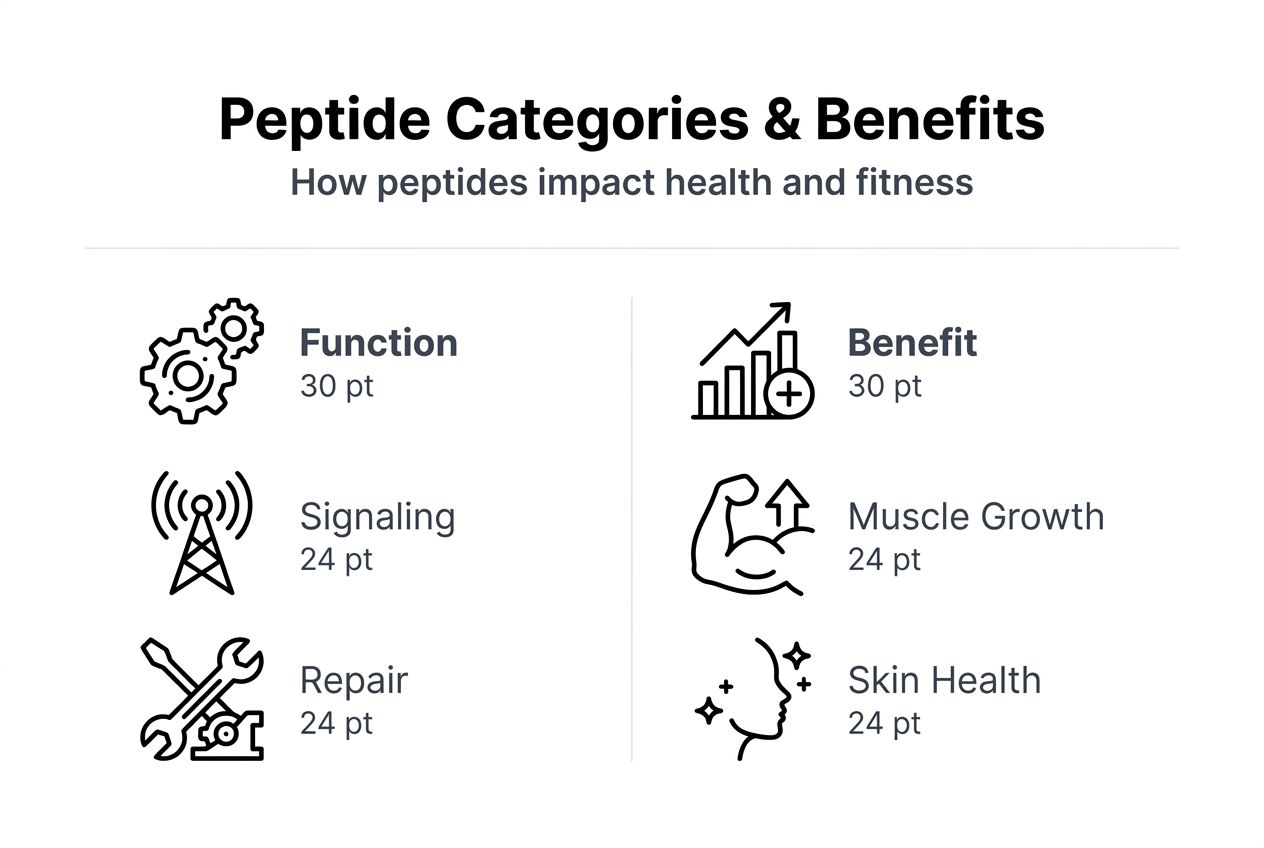
Signaling peptides act as cellular messengers to coordinate complex biological processes. Tissue repair peptides accelerate wound healing and muscle recovery by stimulating regenerative pathways. Hormonal peptides influence hormone-related pathways but maintain localized rather than systemic effects.
Neurotransmitter peptides affect brain chemistry, influencing mood, anxiety, and cognitive performance. Metabolic peptides regulate energy balance and fat oxidation, making them valuable for body composition goals. Each category serves specific fitness and health optimization purposes.
Explore detailed profiles on our peptide education platform to match peptide types with your goals. Our peptide protocols 2026 guide offers targeted application strategies.
Major peptide categories:
- Signaling peptides coordinate cellular communication and responses
- Tissue repair peptides promote healing and muscle recovery
- Hormonal peptides modulate hormone pathways locally
- Neurotransmitter peptides influence brain chemistry and cognition
- Metabolic peptides regulate energy balance and fat metabolism
| Peptide Category | Primary Function | Example Application |
|---|---|---|
| Signaling | Cell communication | Immune response regulation |
| Tissue Repair | Regeneration | Muscle recovery acceleration |
| Hormonal | Hormone pathway modulation | Growth factor stimulation |
| Neurotransmitter | Brain chemistry | Mood and focus enhancement |
| Metabolic | Energy regulation | Fat loss and glucose control |
Pro Tip: Start with tissue repair or metabolic peptides if you're new to peptide use, as their effects are more directly observable and easier to track.
Roles of peptides in fitness, muscle repair, and skin health
Peptides deliver measurable improvements in muscle growth and skin quality. Research shows peptides can stimulate muscle protein synthesis by over 20%, mimicking natural growth hormone effects without systemic hormonal disruption.
For skin health, the results are equally impressive. Collagen-stimulating peptides can increase skin collagen synthesis by 65% within just four weeks. This dramatic boost in collagen production reduces wrinkles, improves elasticity, and accelerates wound healing.
These localized effects make peptides particularly valuable for targeted improvement. Athletes use muscle-building peptides to enhance recovery between training sessions. People focused on anti-aging incorporate collagen peptides into skincare routines for visible rejuvenation.
Learn more about collagen and muscle growth connections and why protein importance for skin extends beyond general nutrition.
| Benefit Area | Mechanism | Measurable Outcome |
|---|---|---|
| Muscle Growth | Enhanced protein synthesis | 20%+ increase in synthesis rate |
| Skin Collagen | Fibroblast stimulation | 65% collagen boost in 4 weeks |
| Wound Healing | Tissue regeneration | Faster recovery time |
| Fat Loss | Metabolic enhancement | Improved body composition |
Key fitness and skin benefits:
- Accelerated muscle recovery reduces downtime between workouts
- Increased protein synthesis supports lean mass gains
- Enhanced collagen production improves skin texture and elasticity
- Faster wound healing aids injury recovery
- Improved metabolic rate supports fat loss goals
Common misconceptions about peptides
Many people incorrectly assume peptides are simply smaller versions of proteins. While both contain amino acids, peptides act as precise signaling molecules rather than structural components. This fundamental difference affects how they function in your body.
Another widespread myth treats peptides as hormones. Though some peptides influence hormone pathways, they primarily act locally rather than systemically. This localized action reduces the risk of widespread hormonal disruption common with actual hormone replacement.
People also believe all peptides work equally well when taken orally. In reality, most peptides break down in the digestive system, dramatically reducing their effectiveness. Bioavailability varies tremendously based on the peptide's structure and the administration route chosen.
Clearing these misconceptions helps you make informed decisions about peptide use. Understanding the true nature of peptides prevents unrealistic expectations and guides you toward effective protocols. Check our peptide legality explained guide for regulatory clarity.
Common peptide myths:
- Myth: Peptides are just small proteins with identical functions
- Reality: Peptides serve distinct signaling roles, not structural functions
- Myth: All peptides act like hormones throughout the body
- Reality: Most peptides produce localized effects at specific tissue sites
- Myth: Oral peptides work as well as injectable forms
- Reality: Most oral peptides have poor bioavailability due to digestion
- Myth: All peptide sources are equally safe and effective
- Reality: Quality varies dramatically, with up to 40% showing issues
Routes of peptide administration and their bioavailability
How you take a peptide dramatically affects its effectiveness. Injectable peptides achieve near 100% bioavailability because they bypass the digestive system entirely. This direct bloodstream access ensures the full dose reaches target tissues.
Oral peptides face significant challenges. Stomach acid and digestive enzymes break down most peptides before absorption, often reducing bioavailability below 15%. Only specially designed oral peptides with protective modifications survive digestion intact.
Topical, nasal, and sublingual routes offer variable absorption. Small peptides may penetrate skin barriers or mucous membranes, while larger molecules struggle to cross these biological barriers. Formulation quality and peptide size determine success rates for these alternative routes.
Choosing the right administration method ensures you get the results you expect from your peptide regimen. Our beginners guide peptides covers practical application techniques. Browse research peptide suppliers offering various formulation options.
| Administration Route | Bioavailability | Best For |
|---|---|---|
| Injectable (subcutaneous/intramuscular) | 95-100% | Maximum effectiveness, precise dosing |
| Oral | 5-15% | Convenience (if peptide is stable) |
| Topical | 10-40% | Localized skin effects |
| Nasal | 20-50% | Brain-targeted peptides |
| Sublingual | 30-60% | Faster absorption than oral |
Administration considerations:
- Injectable forms guarantee consistent absorption and predictable effects
- Oral peptides require protective modifications to survive digestion
- Topical application works best for skin-targeted peptides
- Nasal delivery may benefit brain-active peptides
- Sublingual administration offers compromise between convenience and absorption
Safety considerations and quality control in peptide use
Peptide quality varies alarmingly across suppliers. Independent testing reveals up to 40% of online peptides show quality discrepancies, including incorrect concentrations or contamination. These issues compromise both safety and effectiveness.
Improper storage degrades peptides rapidly. Most peptides require refrigeration to maintain stability. Temperature fluctuations, light exposure, and moisture can break down peptide chains, rendering products ineffective or potentially harmful.
Using vetted suppliers with third-party lab verification protects your health. Look for suppliers who provide certificates of analysis showing purity testing results. Proper handling includes refrigerated storage, sterile reconstitution practices, and attention to expiration dates.
Understanding regulatory status helps you avoid problematic products. While research peptides exist in a gray area, awareness of legal considerations prevents issues. Visit our directory of vetted research peptide suppliers for trusted sources. Learn about specific peptides like BPC-157 safety profile before use.
Safety priorities:
- Purchase only from suppliers offering third-party lab testing
- Verify certificates of analysis before using any peptide product
- Store peptides according to manufacturer specifications, usually refrigerated
- Use sterile technique when reconstituting and injecting peptides
- Monitor for adverse reactions and discontinue if problems arise
- Stay informed about regulatory status in your jurisdiction
Pro Tip: Always start with conservative doses when trying a new peptide, even from trusted suppliers, to assess your individual response before increasing to target doses.
Emerging research and future prospects in peptide science
Cutting-edge peptides are pushing the boundaries of metabolic control. Compounds like retatrutide target multiple receptors simultaneously, offering enhanced fat loss and metabolic regulation beyond single-target peptides. This multi-receptor approach may revolutionize obesity and diabetes treatment.
Ongoing clinical trials explore peptide applications far beyond fitness and skincare. Researchers investigate peptides for neurodegenerative diseases, autoimmune conditions, and tissue regeneration. These studies may unlock therapeutic options unavailable through traditional pharmaceuticals.
Future peptide designs will likely feature improved stability, allowing oral administration of currently injectable peptides. Enhanced specificity will reduce side effects while maintaining potency. Personalized peptide protocols based on genetic profiles may optimize individual responses.
Staying informed about research developments helps you anticipate advances in peptide therapies. As the field evolves, new options will emerge for health optimization. Explore our comprehensive peptide directory to track the latest additions and research updates.
Emerging trends:
- Multi-receptor peptides offering synergistic effects on metabolism
- Brain-penetrating peptides for cognitive and neurological applications
- Longer-acting formulations reducing injection frequency
- Oral delivery systems protecting peptides from digestive breakdown
- Personalized peptide selection based on genetic markers
Explore quality peptides for your health goals
Finding reliable peptide sources makes the difference between results and wasted effort. Quality peptides from reputable suppliers ensure you receive pure, properly dosed products that deliver expected benefits safely.
Our vetted peptide suppliers directory connects you with trusted sources that meet strict quality standards. Each supplier undergoes verification for testing practices, customer service, and product reliability. Browse our comprehensive peptide directory to learn about specific compounds and their applications.

Visit our peptide education platform for detailed guides on peptide science, safety protocols, and best practices. Whether you're targeting muscle growth, skin health, or metabolic optimization, you'll find the resources needed to make informed decisions.
FAQ
What makes peptides different from proteins?
Peptides are shorter amino acid chains containing 2-50 units, while proteins exceed 50 amino acids in length. This size difference determines their primary functions. Peptides mainly act as signaling molecules that trigger specific cellular responses, while proteins serve structural roles and catalyze chemical reactions. Visit our peptide education platform for detailed molecular comparisons.
Are peptides hormones or proteins?
Peptides are neither hormones nor proteins, though they share characteristics with both. They function primarily as signaling messengers producing localized tissue effects rather than systemic hormonal responses. Some peptides can influence hormonal pathways, but this influence remains targeted to specific receptor sites rather than affecting entire endocrine systems like true hormones do.
What is the best way to take peptides for maximum effectiveness?
Injectable administration offers the highest effectiveness with nearly 100% bioavailability, ensuring the full dose reaches target tissues. Oral peptides typically achieve only 5-15% absorption due to digestive breakdown. Topical and nasal routes provide variable results depending on peptide size and formulation quality. For reliable results, injectable forms remain the gold standard. Check our beginners guide peptides for application techniques.
Are peptides safe to use and how can I ensure quality?
Peptide safety depends entirely on product quality and purity. Purchase exclusively from suppliers offering third-party lab testing and certificates of analysis. Proper refrigerated storage maintains peptide stability and prevents degradation. Independent testing shows up to 40% of online peptides have quality issues, making supplier selection critical. Our vetted research peptide suppliers directory features only verified sources meeting strict quality standards.