
You see peptides marketed everywhere online for bodybuilding, weight loss, and skin rejuvenation. But here's the problem: most of these peptides are not FDA-approved for human use, exist in a legal gray area, and carry serious risks. Understanding how FDA regulations classify peptides, what makes them legal or illegal, and how to source them safely is critical if you want to avoid legal trouble and protect your health. This guide cuts through the confusion and shows you exactly what's legal and what's not.
Table of Contents
- Introduction To Peptide Legality In The U.S.
- FDA-Approved Peptides: Legal And Regulated
- Research Peptides: Legal Gray Area And Restrictions
- FDA Compounding Regulations And Category 2 Peptides
- Legal Risks Of Marketing And Usage Of Non-Approved Peptides
- Peptides In Cosmetics: Legal Considerations
- Common Misconceptions About Peptide Legality
- Practical Legal Considerations For Bodybuilding And Weight Loss
- Discover Trusted Peptide Resources And Suppliers
- Frequently Asked Questions About Peptide Legality
Key Takeaways
| Point | Details |
|---|---|
| FDA-approved peptides require prescription | Only FDA-approved peptides like semaglutide are legal for human therapy when prescribed by a licensed provider. |
| Research peptides are not for human use | Most peptides sold online are unapproved and explicitly labeled 'not for human consumption' for legal reasons. |
| Category 2 peptides banned from compounding | FDA prohibits compounding pharmacies from routinely preparing peptides like BPC-157 and CJC-1295 due to safety concerns. |
| Marketing unapproved peptides is illegal | Selling or advertising non-approved peptides with therapeutic claims violates federal law and invites enforcement. |
| Cosmetic peptides legal without drug claims | Peptides in skincare are legal only if marketed as cosmetics without disease treatment or prevention claims. |
Introduction to Peptide Legality in the U.S.
The FDA regulates peptides as drugs if they contain 40 or fewer amino acids, requiring approval before any human use. Legal status hinges on three factors: FDA approval status, intended use (research versus therapy), and how the peptide is marketed. Most peptides you find online are unapproved research chemicals sold with 'not for human consumption' labels to skirt regulations.
Confusion runs rampant because marketing blurs the lines. Sellers use loopholes to promote unapproved peptides for bodybuilding or weight loss without explicitly saying 'for human use.' Compounding pharmacy rules add complexity, with some peptides now banned from routine preparation. Regulations evolve constantly, making it hard to know what's actually legal.
Three key factors determine peptide legality:
- FDA approval status and clinical trial completion
- Intended use declared by the seller and buyer
- Marketing claims made about therapeutic benefits
If you're exploring options, our peptide directory breaks down approval status and legal considerations for each compound. The bottom line: just because you can buy it online doesn't mean it's legal to use.
FDA-Approved Peptides: Legal and Regulated
FDA-approved peptides like semaglutide and tirzepatide undergo rigorous clinical trials and manufacturing oversight before reaching patients. These peptides are only legally available by prescription through licensed pharmacies. Using them without medical supervision violates federal law and puts your health at risk.
Here are FDA-approved peptides relevant to weight loss, bodybuilding, and therapeutic use:
| Peptide | FDA-Approved Use | Legal Access |
|---|---|---|
| Semaglutide (Ozempic, Wegovy) | Type 2 diabetes, weight loss | Prescription only |
| Tirzepatide (Mounjaro, Zepbound) | Type 2 diabetes, weight loss | Prescription only |
| Tesamorelin (Egrifta) | HIV-related lipodystrophy | Prescription only |
| Insulin (various brands) | Diabetes management | Prescription only |
| Bremelanotide (Vyleesi) | Hypoactive sexual desire disorder | Prescription only |
These peptides require ongoing medical oversight. Your doctor monitors bloodwork, adjusts dosing, and watches for side effects. Buying them from unlicensed sources means no quality control, no dosing guidance, and serious legal exposure.
Pro Tip: Before pursuing any peptide therapy, consult a healthcare provider who specializes in peptide treatments. They can assess whether FDA-approved options fit your goals and write legitimate prescriptions. Check our FDA-approved peptide directory to see which compounds have cleared regulatory hurdles.
The difference between legal and illegal peptide use often comes down to one thing: a valid prescription from a licensed medical professional.
Research Peptides: Legal Gray Area and Restrictions
Most peptides sold as 'research peptides' lack FDA approval for human use and carry explicit 'not for human consumption' labels. This labeling protects sellers legally but doesn't make the peptides safe or legal for personal use. Many consumers mistakenly interpret these warnings as proof the peptides work, when they actually signal regulatory non-compliance.

Research peptides are technically legal to sell for laboratory research purposes. However, using them for therapy, bodybuilding, or weight loss crosses into illegal territory. The FDA considers any human use of unapproved peptides a violation, even if you purchased them legally for research.
Common misconceptions about research peptides:
- 'Not for human consumption' labels guarantee product purity (they don't)
- Buying for 'research' protects you legally if you use them personally (it doesn't)
- Online availability means these peptides are safe and legal (absolutely not)
"Research peptides are explicitly prohibited from human use under FDA regulations. The label is a legal shield for sellers, not a safety endorsement for buyers seeking personal use."
Marketing or using research peptides for human consumption invites FDA enforcement actions, including fines, product seizures, and criminal charges in severe cases. The line between legal research supply and illegal human use is crystal clear in FDA eyes, even if sellers blur it deliberately.
If you're considering research peptides, understand the legal exposure you're taking on. Our vetted research peptide suppliers list helps identify sources that maintain higher quality standards, though none can legally sell for human use.
FDA Compounding Regulations and Category 2 Peptides
The FDA Category 2 list bans routine compounding of peptides including BPC-157, CJC-1295, and Ipamorelin due to safety concerns. This means licensed compounding pharmacies cannot prepare these peptides under standard practice, severely limiting legal access even with a prescription.
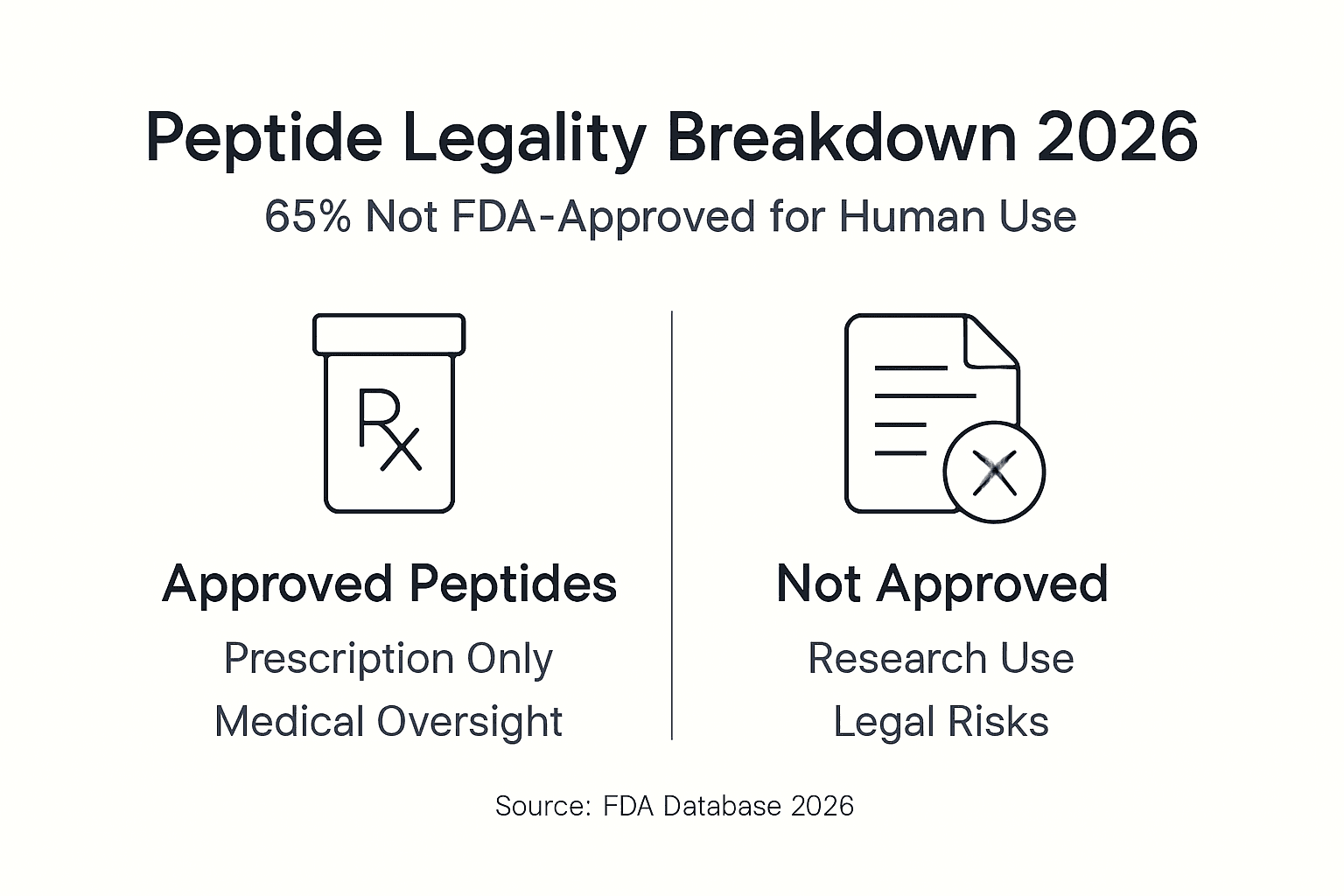
Category 2 restrictions stem from insufficient safety data and concerns about proper dosing and stability. The FDA updates this list periodically, adding peptides that don't meet safety thresholds for routine compounding. Compounding pharmacies that violate these rules face penalties, license suspension, or closure.
Here's how compounding regulations affect peptide access:
| Peptide Type | Compounding Status | Legal Availability |
|---|---|---|
| Category 2 peptides (BPC-157, CJC-1295, Ipamorelin) | Banned from routine compounding | Not legally available through compounding |
| FDA-approved peptides in shortage | May be compounded under specific conditions | Limited legal access with prescription |
| Non-Category 2 unapproved peptides | Compounding allowed under 503A with prescription | Legally gray, requires physician oversight |
| Approved peptides in stock | No compounding allowed | Prescription from commercial pharmacy only |
The distinction matters because many peptides popular for bodybuilding and weight loss now fall under Category 2. Even if you find a doctor willing to prescribe them, legitimate pharmacies cannot legally fill that prescription through compounding.
Pro Tip: Check the FDA's current Category 2 list before pursuing any peptide prescription. The list evolves, and what was available last year may be banned today. Our BPC-157 peptide legal status page tracks these regulatory changes in real time.
Compounding regulations create a bottleneck. Many peptides exist in a zone where they're not approved as commercial drugs but also can't be legally compounded, leaving consumers with no legal access route.
Legal Risks of Marketing and Usage of Non-Approved Peptides
Marketing unapproved peptides with therapeutic claims violates federal law and attracts FDA and FTC enforcement. Since 2023, regulatory agencies have ramped up actions against companies illegally selling peptides, targeting both large suppliers and small online operations.
Enforcement actions take multiple forms:
- Warning letters demanding immediate cessation of illegal claims
- Product seizures at borders and warehouses
- Fines ranging from thousands to millions of dollars
- Criminal charges for egregious violations involving safety risks
Consumers face risks too. Using unapproved peptides carries legal liability alongside health dangers from contaminated or mislabeled products. If you experience adverse effects from an illegal peptide, you have no legal recourse. Insurance won't cover treatments for complications, and you may face questions about how you obtained the substance.
The FDA prioritizes enforcement based on public health risk. Peptides marketed for serious conditions like cancer or diabetes draw immediate attention. Weight loss and bodybuilding peptides receive scrutiny when adverse event reports surface or when marketing becomes too aggressive.
Verifying supplier legitimacy is critical. Look for third-party testing, transparent sourcing, and clear labeling about research-only use. Our Ipamorelin legal risks page details recent enforcement actions and what they mean for consumers.
The legal landscape shifted dramatically in recent years. What sellers got away with in 2022 now triggers enforcement letters. Staying informed about regulatory changes protects you from legal and health consequences.
Peptides in Cosmetics: Legal Considerations
Cosmetic peptides like GHK-Cu are legal in skincare products if marketed without disease treatment claims. The FDA distinguishes cosmetics from drugs based on claims, not ingredients. A peptide cream marketed to 'improve skin appearance' is a cosmetic. The same cream claiming to 'treat wrinkles' or 'prevent aging' becomes a drug requiring FDA approval.
This distinction creates a legal pathway for peptides in beauty products. Manufacturers can legally formulate peptide serums, creams, and masks as long as they avoid therapeutic language. Consumers can purchase and use these products without legal concerns.
Steps to ensure your cosmetic peptides are legal:
- Check product labeling for drug claims about treating or preventing disease
- Verify the manufacturer markets the product as a cosmetic, not a therapeutic treatment
- Look for FDA cosmetic registration (voluntary but indicates compliance awareness)
- Avoid products making specific medical claims about skin conditions
Cosmetic peptides carry less regulatory risk than peptides marketed for internal use. However, you still need to vet products carefully. Some sellers blur lines by making implied therapeutic claims that technically violate regulations.
Using cosmetic peptides falls within legal bounds as long as you're not treating diagnosed medical conditions. If you have a skin disease requiring medical treatment, FDA-approved medications are the legal and safe choice. Browse our cosmetic peptides section to understand which peptides commonly appear in legal skincare formulations.
Common Misconceptions About Peptide Legality
The 'research peptide' label legally prohibits human consumption, contrary to widespread belief that it signals safe personal use. This label exists to protect sellers from FDA enforcement, not to guide consumers toward safe practices. Treating it as a safety endorsement is a fundamental misunderstanding of its legal purpose.
Major misconceptions that trip up consumers:
- Online availability equals legal possession and use (it doesn't)
- Compounding pharmacies can prepare any peptide with a prescription (Category 2 restrictions prevent this)
- Peptides for bodybuilding are available as over-the-counter supplements (they're not; supplements cannot contain peptides making drug claims)
- 'Research only' disclaimers protect buyers legally if used personally (they provide zero legal protection)
These false beliefs lead people into legal trouble and health risks. The FDA doesn't care that you thought something was legal because you could buy it online. Ignorance of regulations provides no defense against enforcement.
"Consumers frequently assume that because research peptides are widely available online, they must be legal to purchase and use. This assumption is dangerously incorrect. Availability reflects regulatory gaps and enforcement limitations, not legality."
Understanding these distinctions protects you from making costly mistakes. Legal ambiguity doesn't create legal protection. When regulations are unclear, the conservative approach is always safest: assume it's illegal unless you have explicit confirmation otherwise.
Practical Legal Considerations for Bodybuilding and Weight Loss
If you're pursuing peptides for fitness or weight management, following legal pathways is non-negotiable. The consequences of using unapproved peptides far outweigh any perceived benefits.
Steps to ensure legal peptide use:
- Consult a licensed healthcare provider experienced in peptide therapy
- Request prescriptions only for FDA-approved peptides like semaglutide or tesamorelin
- Fill prescriptions through licensed pharmacies, never online research chemical suppliers
- Maintain all medical documentation showing legitimate therapeutic use
- Verify your provider's credentials and ensure they practice within legal boundaries
Avoid purchasing research peptides for personal use regardless of labeling or seller assurances. The legal risk isn't worth it. If a peptide lacks FDA approval, no amount of quality testing makes it legal for human consumption.
Pro Tip: If your doctor recommends a peptide not on the FDA-approved list, ask specific questions about its legal status and their liability coverage if complications arise. Many practitioners operating in legal gray areas won't clearly answer these questions, which tells you everything you need to know.
When vetting suppliers for any legal peptide needs, check our vetted peptide suppliers directory. We evaluate sources based on compliance, transparency, and quality standards. However, remember that even the best research peptide supplier cannot legally sell for human use.
The legal path might seem more restrictive and expensive. But it protects you from enforcement actions, ensures product quality, and provides medical oversight that prevents dangerous side effects.
Discover Trusted Peptide Resources and Suppliers
Navigating peptide legality requires reliable information and vetted sources. We built pept.me to solve exactly this problem.
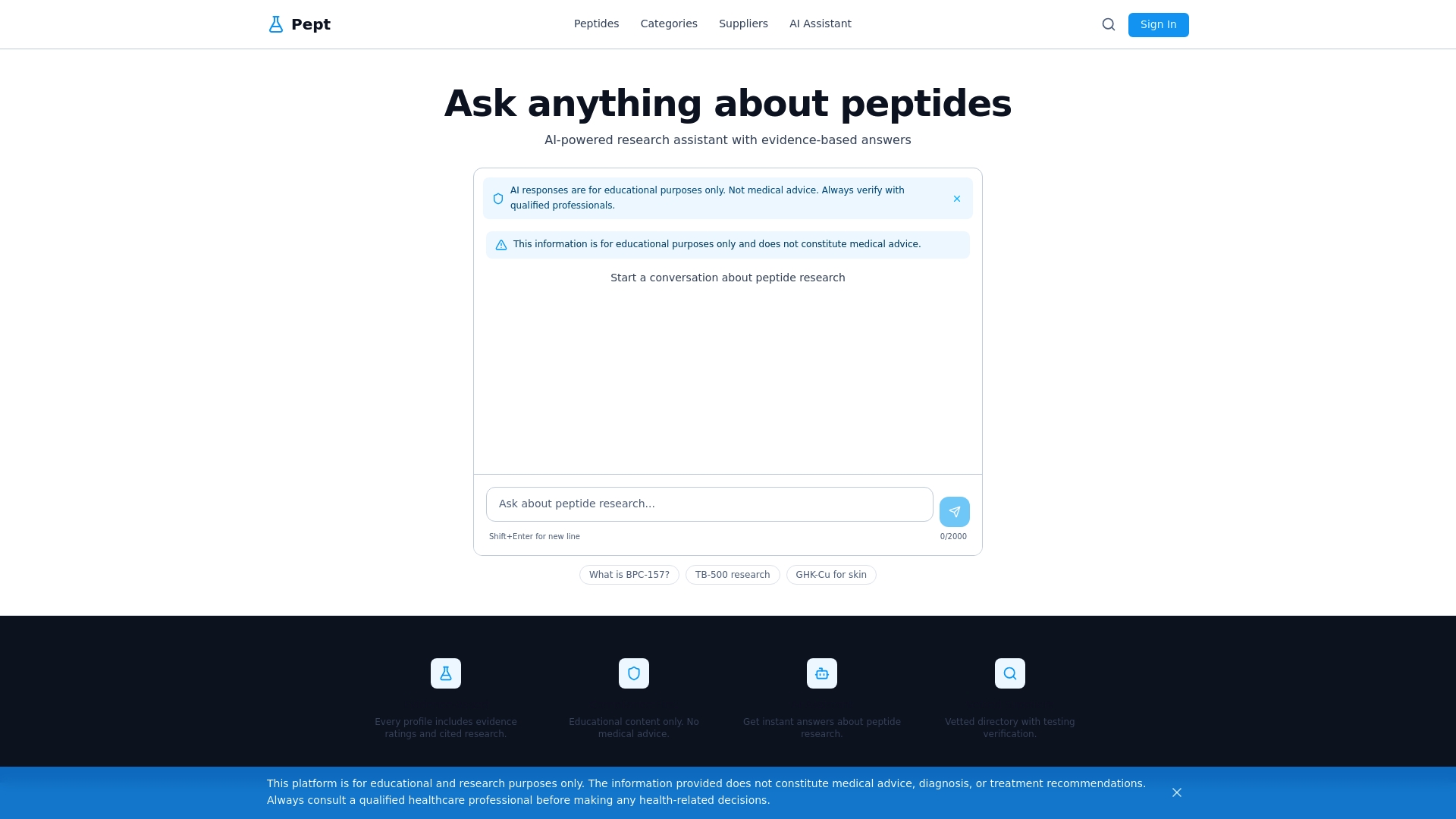
Our research peptide suppliers directory evaluates sources based on testing standards, transparency, and compliance practices. While no supplier can legally sell research peptides for human use, we identify those maintaining higher quality benchmarks for legitimate research applications. Our peptide directory provides detailed legal status breakdowns, FDA approval information, and regulatory updates for every major peptide compound.
Staying informed protects you from legal exposure and health risks. Access our educational resources to track regulatory changes, understand enforcement trends, and learn which peptides have legitimate legal pathways. Knowledge is your best defense in a complex, evolving regulatory landscape.
Frequently Asked Questions About Peptide Legality
What peptides are legally available without a prescription?
No peptides intended for internal therapeutic use are legally available without a prescription in the United States. Cosmetic peptides in skincare products are legal to purchase and use without prescriptions as long as they make no disease treatment claims. Any peptide marketed for bodybuilding, weight loss, or medical therapy requires FDA approval and a valid prescription.
Why are research peptides labeled 'not for human consumption'?
This label provides legal protection for sellers by designating products for laboratory research only. It allows companies to sell unapproved peptides without violating FDA drug marketing regulations. The label doesn't indicate safety for personal use and legally prohibits human consumption regardless of how consumers interpret it.
Can I legally buy peptides online for bodybuilding?
You can legally purchase FDA-approved peptides online with a valid prescription from a licensed pharmacy. Buying unapproved research peptides for bodybuilding is illegal even if sellers ship them. The 'research only' label doesn't create a legal loophole for personal use. Using unapproved peptides for bodybuilding violates federal regulations.
What are the risks of using unapproved peptides?
Health risks include contamination, incorrect dosing, unknown side effects, and lack of medical oversight. Legal risks involve FDA enforcement actions, fines, product seizures, and potential criminal charges for serious violations. You also have no legal recourse if unapproved peptides cause harm or fail to work as marketed.
How do cosmetic peptide regulations differ from drug regulations?
Cosmetic peptides are regulated based on marketing claims rather than ingredients. Products marketed to improve appearance without treating disease are legal cosmetics requiring no FDA approval. The same peptides marketed to treat wrinkles, prevent aging, or address skin conditions become drugs requiring approval. This distinction makes cosmetic peptides more accessible legally than therapeutic peptides.