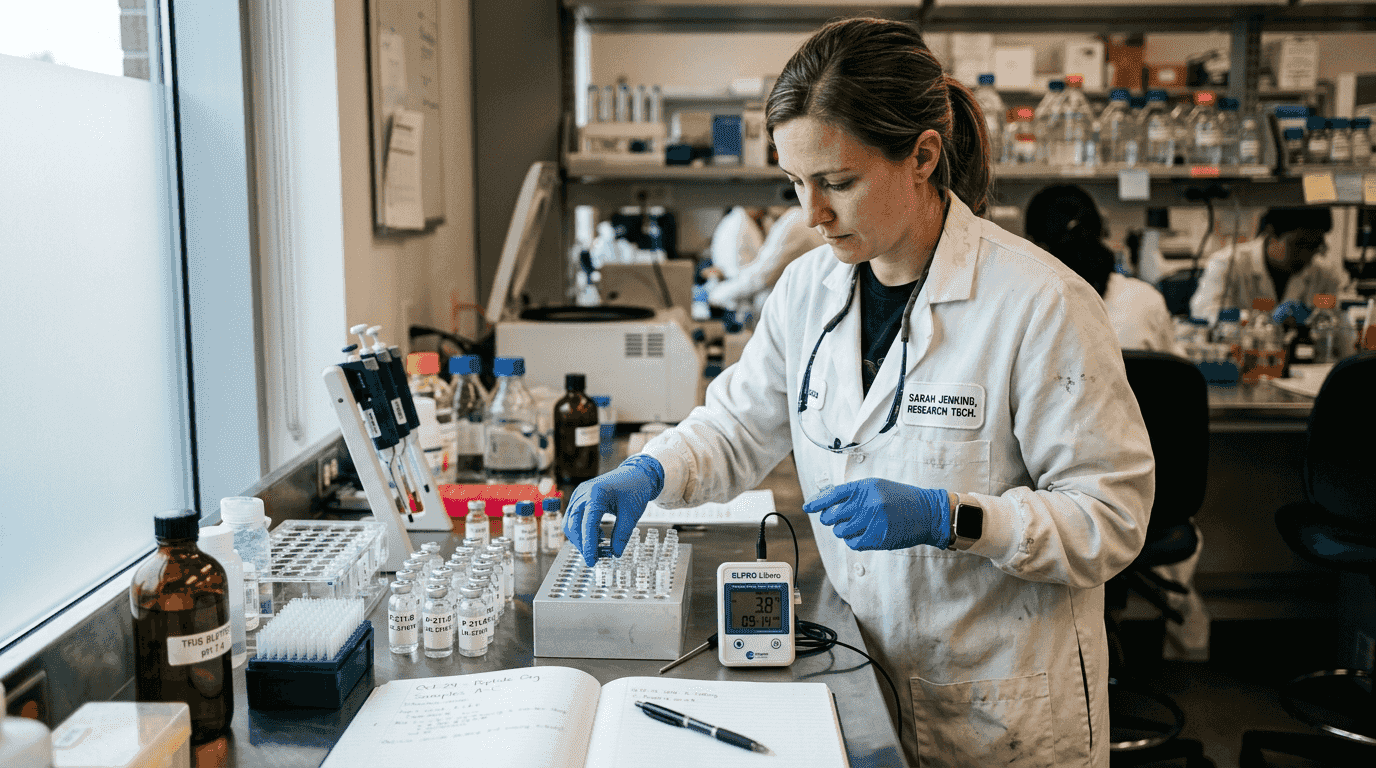
Peptides are powerful tools for muscle building, fat loss, and skin health, but their effectiveness depends entirely on proper storage. Many people unknowingly reduce peptide potency by up to 50% through simple storage mistakes like incorrect temperatures or repeated freeze-thaw cycles. This comprehensive guide walks you through everything you need to know about storing research peptides safely, from the moment they arrive to daily handling practices. You'll learn the exact temperatures required, essential equipment, step-by-step storage procedures, common mistakes to avoid, and how to verify your peptides remain stable and effective throughout their shelf life.
Table of Contents
- What You Need For Proper Peptide Storage
- Step-By-Step Guide To Storing Peptides Correctly
- Common Peptide Storage Mistakes And Troubleshooting
- Verifying Peptide Stability And Expected Results
- Explore Trusted Peptide Suppliers And Resources At Pept
- FAQ
Key takeaways
| Point | Details |
|---|---|
| Temperature control is critical | Lyophilized peptides need freezer storage at -20°C while reconstituted peptides require refrigeration at 2-8°C to maintain potency. |
| Reconstitution creates time limits | Once mixed with bacteriostatic water, peptides remain stable for only 14-28 days even when properly refrigerated. |
| Freeze-thaw cycles destroy peptides | Repeated temperature changes break molecular bonds and significantly reduce peptide effectiveness. |
| Sterile technique prevents contamination | Using sterile gloves, vials, and handling methods protects peptides from bacterial growth that renders them unsafe. |
| Visual inspection reveals problems | Discoloration, cloudiness, precipitation, or unusual odors signal peptide degradation requiring immediate disposal. |
What you need for proper peptide storage
Proper storage requires specific temperature control and sterile equipment to maintain peptide integrity. Setting up your storage system correctly from the start prevents costly peptide loss and ensures you get the full benefits from your investment. The right materials create an environment that preserves molecular structure and prevents contamination.
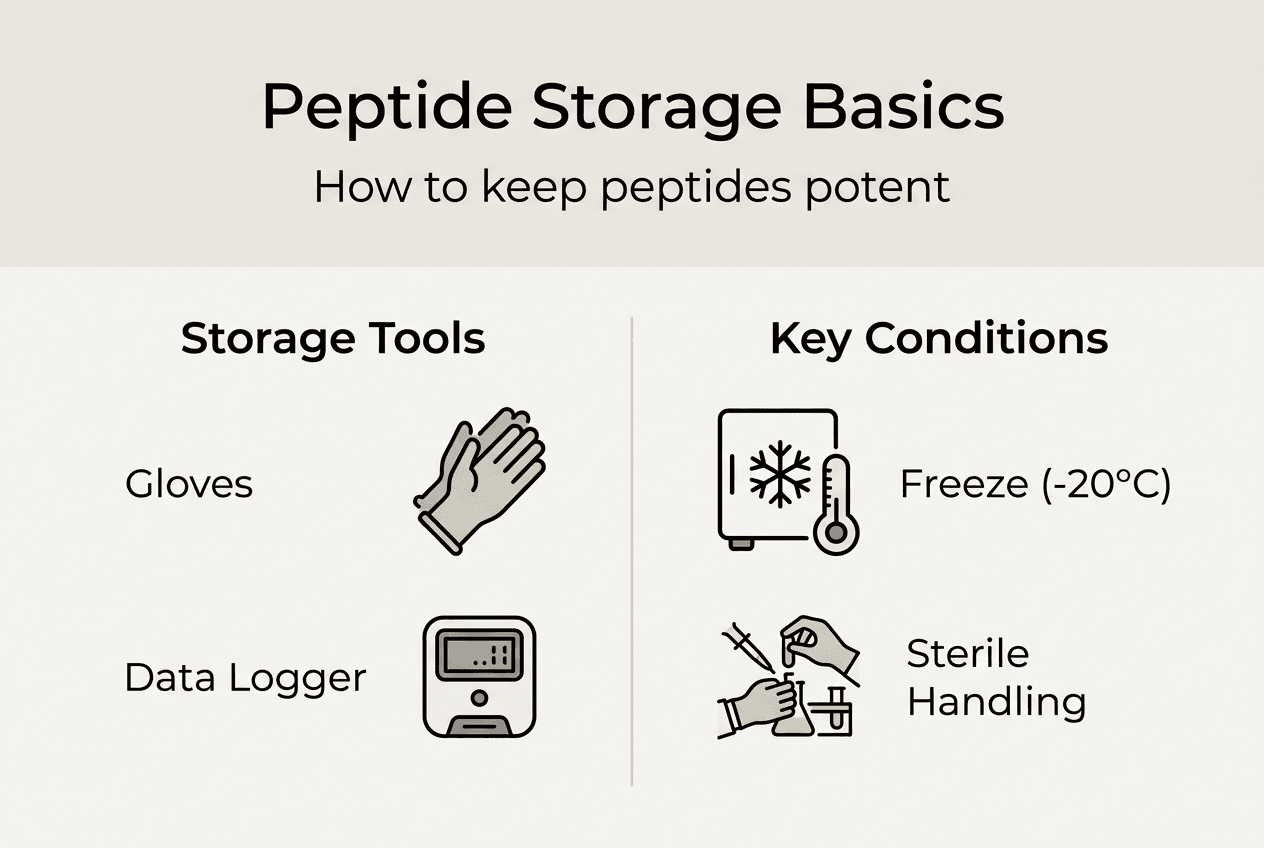
Your essential storage toolkit includes a dedicated refrigeration unit with accurate temperature control, preferably with a digital display showing exact temperatures. A small beverage refrigerator works well for peptide storage because it experiences fewer temperature fluctuations than a kitchen fridge that opens frequently. You'll also need sterile glass vials with rubber stoppers for storing reconstituted peptides, desiccant packets to absorb moisture in storage containers, sterile nitrile gloves for handling, and gel ice packs for transporting peptides if needed.
Temperature requirements differ dramatically between lyophilized and reconstituted peptides. Lyophilized (freeze-dried) peptides arrive as powder and need storage at -20°C or colder in a freezer to maximize shelf life, often remaining stable for 12-24 months. Reconstituted peptides mixed with bacteriostatic water must stay refrigerated at 2-8°C and typically last only 14-28 days. Never store reconstituted peptides at room temperature, as degradation begins within hours.
Pro Tip: Invest in a small temperature data logger that records temperature fluctuations over time, allowing you to verify your storage unit maintains consistent conditions even during power outages or equipment failures.
Sterile handling prevents bacterial contamination that destroys peptides and creates safety risks. Always wear sterile gloves when handling vials, use alcohol swabs to clean rubber stoppers before inserting needles, and work in a clean area away from potential contaminants. Understanding athlete peptide storage research helps you appreciate why professional protocols matter even for personal use.
| Container Type | Advantages | Disadvantages |
|---|---|---|
| Amber glass vials | Protects from light, chemically inert, reusable | Fragile, requires careful handling |
| Clear glass vials | Easy to inspect contents, widely available | Offers no light protection |
| Plastic vials | Unbreakable, lightweight | Some peptides adhere to plastic surfaces |
| Pre-filled syringes | Convenient for single doses | Limited shelf life once filled |
Following peptide storage regulations 2026 ensures compliance with current safety standards while protecting peptide quality.
Step-by-step guide to storing peptides correctly
Proper peptide storage begins the moment your package arrives and continues through every interaction with your vials. Each step builds on the previous one to create a complete system that preserves peptide potency from delivery to final use. Missing even one step can compromise the entire batch.
-
Inspect your lyophilized peptide immediately upon receipt. Check that the vial seal remains intact, the powder appears uniform without discoloration, and no moisture has entered the container. Store unopened lyophilized vials in your freezer at -20°C or colder within 30 minutes of receipt. Keep vials in their original packaging or a sealed container with desiccant packets to prevent moisture exposure.
-
Use sterile techniques when reconstituting peptides. Wash hands thoroughly, put on sterile gloves, and clean your work surface with alcohol. Wipe the rubber stopper of both the peptide vial and bacteriostatic water vial with alcohol swabs. Draw the appropriate amount of bacteriostatic water into a sterile syringe, then slowly inject it down the inside wall of the peptide vial, never directly onto the powder. Gently swirl (never shake) until the powder completely dissolves into a clear solution.
-
Reconstituted peptides have a limited shelf life and should be refrigerated immediately and used promptly. Place reconstituted vials in the refrigerator at 2-8°C within five minutes of mixing. Most reconstituted peptides remain stable for 14-28 days under proper refrigeration, but always verify your specific peptide's stability data. Never leave reconstituted peptides at room temperature for more than 30 minutes total across all uses.
-
Avoid repeated freeze-thaw cycles that destroy peptide bonds and reduce effectiveness. If you must freeze reconstituted peptides, divide them into single-use aliquots in separate vials so you only thaw what you need. Each freeze-thaw cycle can reduce potency by 10-30%, making peptides significantly less effective after just a few cycles.
Pro Tip: Keep a dedicated peptide notebook logging reconstitution dates, concentrations, and storage locations for each vial to prevent accidentally using expired peptides.
-
Label every vial clearly with the peptide name, reconstitution date, concentration in mg/mL, and expiration date. Use waterproof labels or permanent markers that won't smudge when wet. This prevents dangerous mix-ups and helps you track peptide age at a glance.
-
Properly dispose of expired or contaminated peptides by mixing them with an absorbent material like coffee grounds or cat litter in a sealed plastic bag before placing in regular trash. Never pour peptides down drains or flush them, as this contaminates water supplies. Learning about peptide effects and handling helps you understand why proper disposal matters for environmental safety.
"Proper peptide storage isn't just about following rules, it's about respecting the science that makes these compounds effective and ensuring you get the results you're working toward."
Understanding how peptides work reinforces why each storage step directly impacts your outcomes.
Common peptide storage mistakes and troubleshooting
Even experienced peptide users make storage errors that silently degrade their compounds. Recognizing these mistakes early and knowing how to fix them saves money and ensures you're not injecting ineffective or contaminated substances. Most storage problems show clear warning signs if you know what to look for.
The most common mistakes include storing peptides at improper temperatures, such as keeping lyophilized peptides in a refrigerator instead of a freezer or leaving reconstituted peptides at room temperature. Light exposure degrades many peptides, especially when stored in clear glass vials on countertops or in well-lit refrigerators. Moisture contamination occurs when vials aren't sealed properly or when condensation forms during temperature changes. Extended storage after reconstitution beyond recommended timeframes allows bacterial growth and molecular degradation. Contamination from non-sterile handling introduces bacteria that multiply rapidly in peptide solutions.
Symptoms of peptide degradation appear as visible changes you can detect before use. Discoloration ranging from slight yellowing to brown tints indicates oxidation or bacterial growth. Precipitation shows as particles floating in solution or settling at the bottom, meaning the peptide has fallen out of solution and lost effectiveness. Cloudiness in what should be a clear solution signals contamination or degradation. Unusual odors, particularly sour or rotten smells, indicate bacterial contamination requiring immediate disposal.
| Practice | Correct Method | Incorrect Method | Effect of Error |
|---|---|---|---|
| Lyophilized storage | Freezer at -20°C or colder | Refrigerator at 2-8°C | Reduced shelf life, gradual potency loss |
| Reconstituted storage | Refrigerator at 2-8°C, use within 28 days | Room temperature or extended storage | Rapid degradation, bacterial growth |
| Freeze-thaw cycles | Single thaw only, use aliquots | Multiple freeze-thaw cycles | 10-30% potency loss per cycle |
| Light protection | Amber vials or dark storage | Clear vials in bright areas | Molecular breakdown, reduced effectiveness |
| Handling | Sterile gloves, alcohol swabs | Bare hands, reused needles | Bacterial contamination, infection risk |
Solutions to storage problems start with maintaining consistent refrigeration using a dedicated unit that doesn't experience frequent door openings. Protect peptides from light by using amber glass vials or storing clear vials in opaque containers or drawers. Practice sterile handling every single time you interact with peptides, treating each use like a medical procedure. Set phone reminders for reconstitution dates so you never exceed recommended storage times.
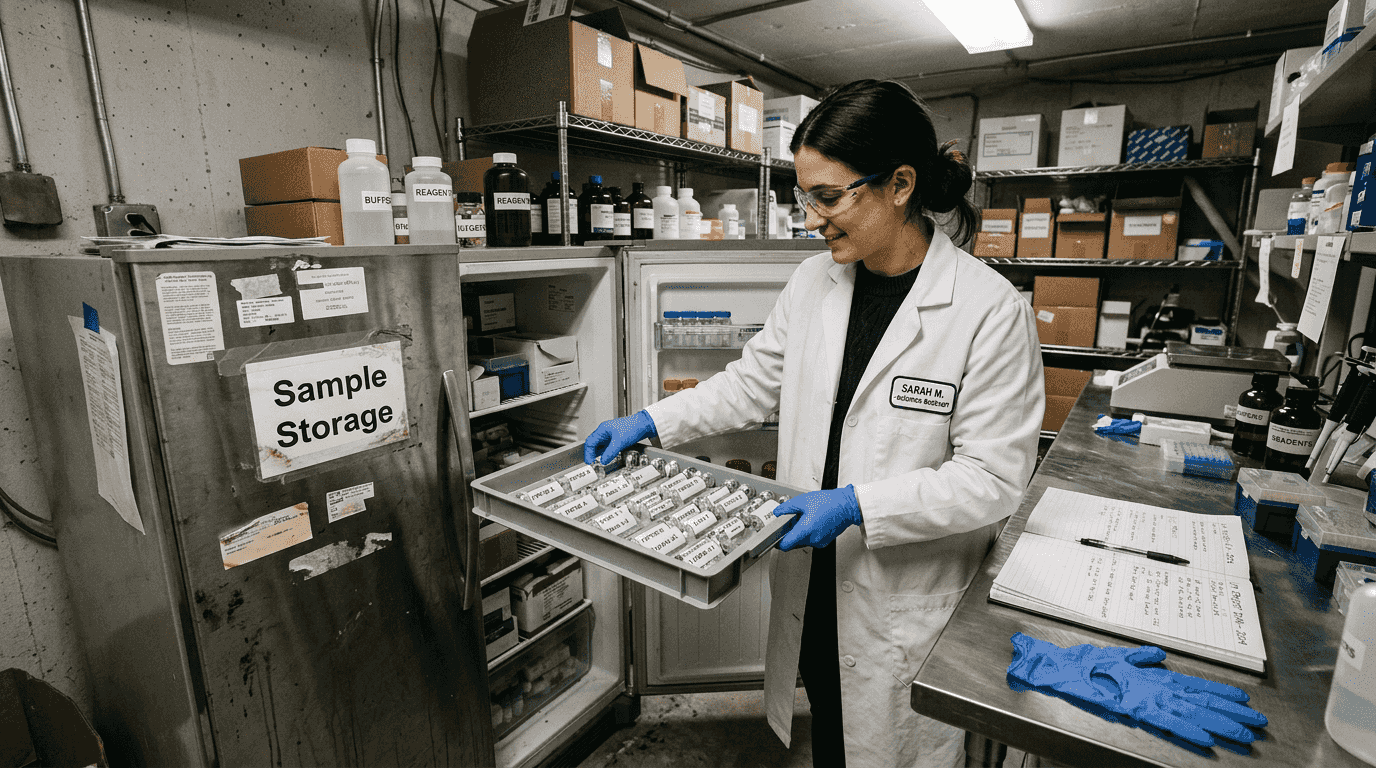
Know when to discard peptides safely rather than risk using degraded compounds. Incorrect storage leads to peptide degradation causing loss of efficacy and possible contamination. Throw away any peptide showing discoloration, cloudiness, precipitation, or unusual odor immediately. Discard reconstituted peptides after 28 days regardless of appearance. When in doubt about peptide quality, disposal is always safer and more cost-effective than risking injection of degraded or contaminated material. Following peptide storage compliance tips keeps you aligned with current safety standards.
Verifying peptide stability and expected results
Confirming your peptides remain stable throughout their storage period protects your investment and ensures you're using effective compounds. While home users can't perform laboratory assays, several practical methods reveal peptide quality and help you set realistic expectations about shelf life and potency.
Visual inspection serves as your first quality check before every use. Examine the solution against a white background in good lighting, looking for complete clarity in what should be transparent liquid. Check for any particles, cloudiness, or color changes from the original appearance. Smell the solution by wafting air from the opened vial toward your nose, never inhaling directly from the vial. Fresh peptides have little to no odor, while degraded or contaminated peptides often smell sour, musty, or otherwise unpleasant.
Stability assays using high-performance liquid chromatography (HPLC) or mass spectrometry provide definitive potency measurements but remain impractical for most individual users due to cost and equipment requirements. Some research facilities or peptide testing services offer third-party testing for a fee, useful when verifying expensive or questionable peptides. These tests measure exact peptide concentration and identify degradation products.
Peptides kept within recommended storage conditions retain up to 90% potency over several months. Lyophilized peptides stored at -20°C typically maintain 90-95% potency for 12-24 months, with some stable for even longer periods. Reconstituted peptides decline more rapidly, dropping to 80-90% potency after 14 days and continuing to degrade thereafter, which is why the 28-day limit exists as a safety margin.
Expected shelf life ranges vary by peptide type and storage method:
- Lyophilized peptides at -20°C: 12-24 months at full potency
- Lyophilized peptides at 2-8°C: 3-6 months with gradual degradation
- Reconstituted peptides at 2-8°C: 14-28 days optimal, discard after
- Reconstituted peptides at room temperature: Hours before significant degradation
Ignoring storage guidelines dramatically impacts peptide effectiveness, often without obvious visual signs. Peptides stored at incorrect temperatures may look fine but deliver only 30-50% of expected results. This leads users to incorrectly assume the peptide itself is ineffective rather than recognizing storage error as the cause. Inconsistent results from the same peptide batch often indicate storage problems rather than product quality issues.
Interpreting potency claims from suppliers requires understanding that stated purity percentages (like 98% or 99%) refer to the proportion of actual peptide versus other substances in the powder, not the biological activity level. A 98% pure peptide stored incorrectly can have significantly reduced biological activity despite high chemical purity. Always request certificates of analysis (COA) from suppliers showing third-party testing results, and verify the testing date is recent. Understanding peptide degradation helps you distinguish between supplier quality and storage issues.
Pro Tip: Take photos of your peptide solutions immediately after reconstitution to create a visual baseline for comparison during later quality checks.
Explore trusted peptide suppliers and resources at Pept
Now that you understand proper peptide storage and handling, finding reliable sources for quality research peptides becomes your next priority. Pept connects you with vetted peptide suppliers directory that meet strict quality and safety standards, eliminating guesswork from your sourcing decisions. Each supplier in our directory undergoes verification to ensure they provide legitimate research peptides with proper documentation.
Browse our comprehensive research peptide directory to explore detailed information about specific peptides, their effects, proper dosing ranges, and storage requirements. Each peptide profile includes scientific background, common applications for fitness and health goals, and links to trusted suppliers carrying that compound. Access our peptide education platform for ongoing learning resources, safety guidelines, and community insights that keep you informed about the latest peptide research and best practices. Whether you're researching peptides for muscle building, fat loss, or skin health, Pept provides the knowledge and supplier connections you need to pursue your goals safely and effectively.
FAQ
How long can peptides be stored after reconstitution?
Reconstituted peptides generally remain stable for 14-28 days when refrigerated at 2-8°C, though you should always follow your specific supplier's guidelines since some peptides have shorter stability windows. Discard any reconstituted peptide showing signs of degradation like discoloration, cloudiness, or precipitation before this timeframe expires. Never extend storage beyond 28 days even if the solution appears clear, as bacterial growth and molecular degradation occur invisibly over time.
What temperature is best for storing lyophilized peptides?
Lyophilized peptides should be stored in a freezer at -20°C or colder to maximize shelf life and preserve full potency for 12-24 months. Some peptides remain stable at even lower temperatures like -80°C for extended periods. Avoid repeated temperature fluctuations by keeping peptides in a dedicated freezer that doesn't undergo frequent defrost cycles, as each temperature swing accelerates degradation.
Can peptides be frozen after reconstitution?
Freezing reconstituted peptides is generally not recommended because freeze-thaw cycles cause ice crystal formation that damages peptide structure and reduces potency by 10-30% per cycle. If freezing becomes necessary for long-term storage, divide your reconstituted peptide into single-use aliquots in separate vials so you only thaw exactly what you need once. Never refreeze a thawed peptide, as this compounds degradation exponentially.
How do I know if my peptide has gone bad?
Look for visual signs including discoloration (yellowing, browning, or any color change), precipitation (particles floating or settled), cloudiness in previously clear solution, or unusual odors ranging from sour to musty. Any of these indicators signals degradation or contamination requiring immediate disposal. Never use peptides showing these warning signs, as they've lost effectiveness and may pose safety risks from bacterial contamination.
Should I store different peptides together?
Store different peptides in separate, clearly labeled containers to prevent mix-ups that could lead to incorrect dosing or dangerous combinations. Keep detailed records of each peptide's reconstitution date, concentration, and expiration in a dedicated notebook or digital log. While multiple peptide vials can share the same refrigerator or freezer space, never combine different peptides in the same solution unless specifically formulated together by a qualified professional.