
Most people think peptide therapy is just another wellness fad, but it's actually a targeted biological approach that taps into your body's natural signaling pathways. Peptides are short chains of amino acids that act as messengers, telling your cells to ramp up collagen production, boost metabolism, or repair muscle tissue. Unlike broad-spectrum supplements, peptide therapy zeroes in on specific receptors to trigger measurable changes in body composition, performance, and skin quality. This guide breaks down the science behind peptide therapy, explores proven benefits for muscle growth and fat loss, examines skincare applications, and clarifies the critical safety and regulatory landscape you need to navigate.
Table of Contents
- Key takeaways
- What is peptide therapy and how does it work?
- Peptide therapy for physical performance and body composition
- Peptides in skincare: improving collagen, elasticity, and hydration
- Risks, regulations, and nuances of peptide therapy
- Explore vetted peptide suppliers and research resources
- Frequently asked questions about peptide therapy
Key Takeaways
| Point | Details |
|---|---|
| Peptide therapy basics | Peptides are short amino acid chains that act as messengers to target specific receptors and influence metabolism, tissue repair, and skin quality. |
| Targeted peptide classes | Different classes such as growth hormone secretagogues, GLP1 receptor agonists, collagen signal peptides, and enzyme inhibitors target muscle growth, fat loss, and skin health. |
| Muscle fat skin benefits | Peptides can promote muscle growth, increase fat oxidation, and improve skin elasticity through enhanced collagen production. |
| Safety and regulation | Non approved peptides carry safety and purity risks, so understanding regulatory landscape and vetting sources is essential. |
| Goal oriented selection | Define your primary goal first and choose peptide classes that specifically support that outcome to avoid unnecessary therapies. |
What is peptide therapy and how does it work?
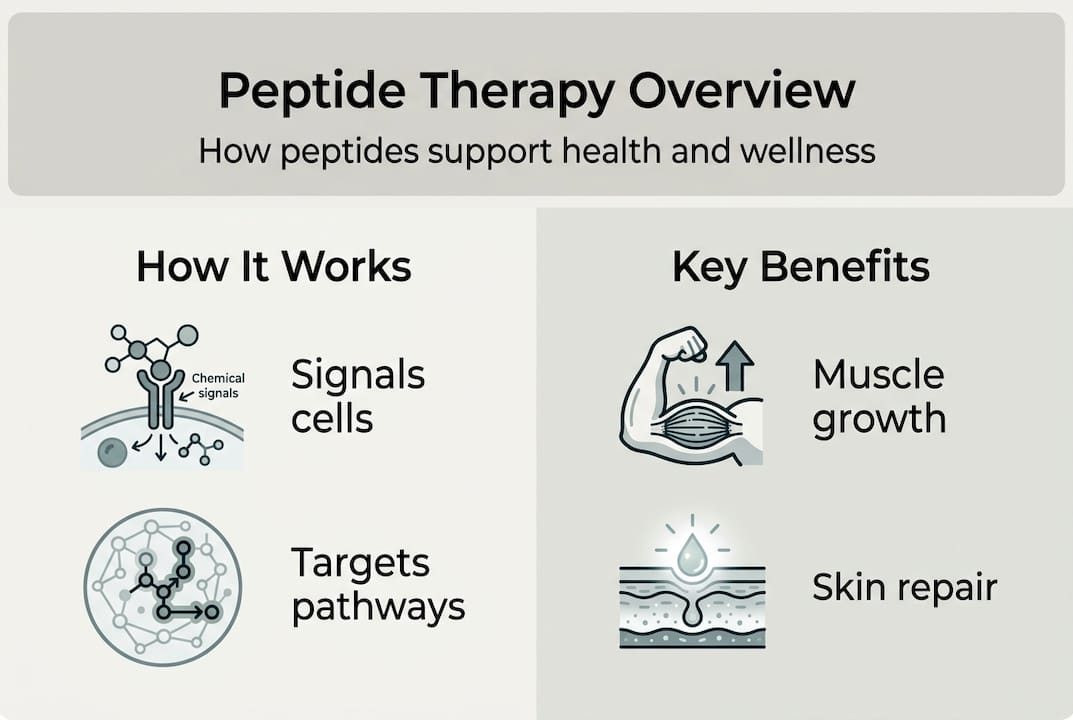
Peptide therapy involves using short chains of amino acids (2-50) to target biological pathways like metabolism, hormone regulation, tissue repair, and immune function. These molecules act as biological messengers, binding to specific receptors on cell surfaces to trigger downstream effects. Unlike proteins, which are large and complex, peptides are small enough to penetrate tissues and stable enough to resist immediate breakdown, making them ideal therapeutic tools.
The therapy works through several distinct mechanisms. Receptor agonism is the most common, where peptides mimic natural hormones to activate cellular responses. GLP-1 agonists like semaglutide bind to receptors that regulate insulin secretion and appetite, leading to blood sugar control and weight loss. Growth hormone secretagogues stimulate the pituitary gland to release more growth hormone, which then promotes muscle growth and fat oxidation. Signal peptides tell fibroblasts to produce more collagen and elastin, improving skin structure. Enzyme inhibitors block the breakdown of beneficial proteins, extending their activity in the body.
Understanding how peptides work helps you match the right therapy to your goal. If you want to build muscle, you need peptides that stimulate growth hormone or activate anabolic pathways. For fat loss, look for peptides that increase metabolic rate or reduce visceral adipose tissue. Skin rejuvenation requires peptides that boost collagen synthesis or inhibit enzymes that degrade the extracellular matrix. The specificity of peptide receptors for muscle and fat means you can target one outcome without affecting unrelated systems.
Pro Tip: Start by identifying your primary goal (muscle, fat loss, or skin) and research which peptide class targets that specific pathway. Generic peptide stacks often waste money on mechanisms you don't need.
Key peptide categories include:
- Growth hormone secretagogues (ipamorelin, CJC-1295) for muscle and fat metabolism
- GLP-1 receptor agonists (semaglutide, tirzepatide) for appetite and insulin regulation
- Collagen signal peptides (GHK-Cu, Matrixyl) for skin repair and elasticity
- Enzyme inhibitors (peptides blocking collagenase) to preserve structural proteins
Each category operates through a distinct biological mechanism, so combining peptides from different classes can create synergistic effects. However, this also increases complexity and potential side effects, which we'll address in the safety section.
Peptide therapy for physical performance and body composition
Growth hormone secretagogues like tesamorelin and ipamorelin have shown remarkable effects on body composition in clinical trials. Tesamorelin reduces visceral adipose tissue, the dangerous fat surrounding internal organs, without significantly affecting subcutaneous fat. Ipamorelin selectively stimulates growth hormone release without raising cortisol or prolactin, avoiding the hormonal disruptions that older peptides caused. These peptides work by binding to ghrelin receptors in the pituitary gland, triggering a controlled pulse of growth hormone that mimics natural secretion patterns.
The fat loss results are substantial. Pep19 reduced visceral fat by 17% in just 60 days in one study, while retatrutide (a triple agonist targeting GLP-1, GIP, and glucagon receptors) produced 28.7% weight loss over 68 weeks. These aren't modest improvements. They represent clinically significant changes that reduce cardiovascular risk and improve metabolic health. The mechanism involves increased lipolysis (fat breakdown) and improved insulin sensitivity, which helps your body use stored fat for energy instead of circulating glucose.
Muscle growth benefits are equally impressive. Growth hormone secretagogues enhance protein synthesis and nitrogen retention, creating an anabolic environment that supports muscle hypertrophy. Studies report significant improvements in lean body mass, strength metrics, and bone mineral density after 12 to 24 weeks of therapy. The effects are most pronounced when combined with resistance training, as the peptides amplify the adaptive response to mechanical stress. You're essentially giving your muscles better raw materials and stronger growth signals during the recovery window.
Pro Tip: Time your peptide doses around workouts to maximize anabolic effects. Growth hormone secretagogues work best when taken 30 minutes before training or before sleep, when natural GH pulses occur.
| Peptide | Primary Effect | Typical Dosage | Timeline for Results |
|---|---|---|---|
| Ipamorelin | Selective GH release, muscle growth | 200-300 mcg daily | 8-12 weeks |
| Tesamorelin | Visceral fat reduction | 2 mg daily | 12-26 weeks |
| CJC-1295 | Extended GH elevation | 1-2 mg weekly | 8-16 weeks |
| Retatrutide | Weight loss (triple agonist) | Escalating to 12 mg weekly | 24-68 weeks |
Endurance athletes also benefit from peptide therapy, though the mechanisms differ. Some peptides improve mitochondrial function and oxygen utilization, extending time to exhaustion. Others enhance recovery by reducing inflammation and accelerating tissue repair. The key is matching the peptide to your specific performance limiter. If you hit a wall due to poor recovery, focus on repair peptides. If you lack power output, prioritize growth hormone pathways.
For more on optimizing these effects, check out peptide performance research 2026 and peptide protocols for fat loss.
Peptides in skincare: improving collagen, elasticity, and hydration
Topical peptides enhance collagen and elastin production by signaling fibroblasts to ramp up synthesis of structural proteins. Signal peptides like palmitoyl pentapeptide (Matrixyl) mimic fragments of damaged collagen, tricking your skin into thinking it needs repair. This activates the wound healing cascade, boosting production of collagen types I and III, which provide tensile strength and elasticity. Carrier peptides like GHK-Cu deliver copper ions that stabilize collagen and elastin structures, while enzyme inhibitor peptides block matrix metalloproteinases that break down these proteins.

The challenge with topical peptides is penetration. Skin is designed to keep molecules out, and peptides are relatively large and hydrophilic, making them poor at crossing the lipid-rich stratum corneum. Advanced delivery systems solve this problem. Nano-encapsulation wraps peptides in lipid vesicles that fuse with skin cells, releasing the payload inside. Microneedle patches create temporary microchannels that allow peptides to bypass the barrier entirely. Chemical penetration enhancers temporarily disrupt the lipid matrix, opening pathways for peptide absorption.
Oral collagen peptides work through a different mechanism. When you digest collagen, it breaks down into small peptides (typically 2-5 amino acids) that enter your bloodstream. These peptides act as signaling molecules, telling fibroblasts throughout your body to increase collagen production. Meta-analyses show that oral collagen improves skin hydration and elasticity, with effects appearing after 8 to 12 weeks of consistent use. The peptides also stimulate hyaluronic acid synthesis, which holds water in the dermis and plumps the skin.
Clinical data backs these mechanisms. OS-01 eye peptide reduced transepidermal water loss by 17%, hydration increased 32%, and elasticity improved after 12 weeks of twice-daily application. These aren't subjective improvements. They're objective measurements of skin barrier function and biomechanical properties. The peptide works by upregulating genes involved in barrier repair and extracellular matrix synthesis.
Comparison of peptide types:
| Peptide Type | Mechanism | Best For | Example |
|---|---|---|---|
| Signal peptides | Mimic collagen fragments to trigger synthesis | Wrinkles, firmness | Matrixyl (palmitoyl pentapeptide) |
| Carrier peptides | Deliver trace elements for protein stabilization | Overall skin quality | GHK-Cu (copper peptide) |
| Enzyme inhibitors | Block collagen/elastin breakdown | Preventing degradation | Peptides targeting MMPs |
| Neurotransmitter inhibitors | Reduce muscle contraction | Expression lines | Argireline (acetyl hexapeptide) |
For optimal results, layer peptides correctly:
- Cleanse to remove oils and debris that block penetration
- Apply peptide serum to damp skin (water enhances absorption)
- Wait 2-3 minutes for peptides to penetrate before adding other products
- Follow with moisturizer to seal in the peptides and prevent evaporation
- Use sunscreen in the morning (UV degrades collagen faster than peptides can rebuild it)
Pro Tip: Combine topical peptides with oral collagen for synergistic effects. Topical targets the epidermis and upper dermis, while oral peptides work systemically on deeper layers.
For more on skin applications, explore peptides for skin health.
Risks, regulations, and nuances of peptide therapy
Unapproved peptides lack safety data and may contain contaminants from unregulated manufacturing. The FDA has banned over 24 peptides from compounding pharmacies due to safety concerns, including risk of contamination, lack of efficacy data, and potential for serious adverse events. Many peptides sold online as research chemicals or wellness products have never undergone rigorous clinical testing. You're essentially experimenting on yourself when you use these substances.
Common side effects include nausea, injection site reactions (redness, swelling, pain), headaches, and water retention. GLP-1 agonists frequently cause gastrointestinal distress as they slow gastric emptying. Growth hormone secretagogues can raise blood sugar and, in some cases, promote cell proliferation, which raises theoretical cancer risk in individuals with existing tumors. The long-term safety profile of many peptides remains unknown because most studies run only 12 to 26 weeks.
FDA-approved peptides like GLP-1 agonists and tesamorelin have robust safety data from large-scale clinical trials. These peptides underwent years of testing in thousands of patients before approval, with careful monitoring for adverse events. The difference in safety assurance between approved and unapproved peptides is enormous. Approved peptides have known pharmacokinetics, established dosing protocols, and post-market surveillance systems that track rare side effects.
Key safety considerations:
- Source matters: pharmaceutical-grade peptides from licensed pharmacies are far safer than research chemicals from online vendors
- Purity testing: legitimate suppliers provide certificates of analysis showing peptide content and absence of contaminants
- Dosing precision: peptides have narrow therapeutic windows; too little does nothing, too much causes side effects
- Individual variability: genetics, age, and health status affect how you respond to peptides
Synergistic combinations amplify effects but also risks. Stacking CJC-1295 with ipamorelin produces larger growth hormone pulses than either alone, but this increases the chance of side effects like joint pain and insulin resistance. The optimal combination varies by age. Younger individuals (under 35) often respond well to single peptides, while older adults may need combinations to overcome age-related receptor desensitization.
Peptide stability is a critical nuance. Most peptides degrade rapidly in the body, with half-lives measured in minutes. Chemical modifications extend stability: adding polyethylene glycol (PEGylation) shields peptides from enzymes, acetylation protects the amino terminus from degradation, and D-amino acid substitutions resist peptidase cleavage. These modifications are why pharmaceutical peptides often work better than natural sequences.
"The peptide therapy market is flooded with unverified products that lack basic quality control. Many peptides sold online contain less than 50% of the claimed active ingredient, and some are contaminated with bacterial endotoxins or heavy metals. Without third-party testing, you have no idea what you're injecting."
Regulatory landscape:
- FDA-approved peptides (semaglutide, tesamorelin, etc.) are legal with prescription and have proven safety
- Compounded peptides from licensed pharmacies are legal but face increasing FDA scrutiny
- Research peptides sold online exist in a legal gray zone and carry significant safety risks
- International peptide sources often bypass U.S. quality standards entirely
For current regulatory guidance, review peptide regulations and peptide legality 2026.
Explore vetted peptide suppliers and research resources
Navigating the peptide market safely requires access to trustworthy suppliers who prioritize purity, testing, and transparency. The difference between pharmaceutical-grade peptides and research chemicals can mean the difference between effective therapy and wasted money or health risks. Vetted supplier directories eliminate guesswork by curating sources that meet strict quality standards, including third-party testing, proper storage, and clear documentation.

If you're serious about peptide therapy, start with vetted peptide suppliers who provide certificates of analysis and maintain proper cold chain logistics. A comprehensive peptide directory helps you research specific peptides, understand their mechanisms, and compare options before purchasing. Educational platforms like Pept offer updated research, protocol guidance, and community insights that keep you informed as the science evolves. Safe sourcing isn't optional. It's the foundation of effective peptide therapy.
Frequently asked questions about peptide therapy
What is peptide therapy used for?
Peptide therapy targets metabolism, muscle growth, fat loss, skin rejuvenation, and tissue repair by using short amino acid chains that bind to specific cellular receptors. Common applications include reducing visceral fat, building lean muscle mass, improving skin elasticity and hydration, and enhancing athletic recovery. The specific use depends on which peptide you choose and its mechanism of action.
Are peptide therapies safe?
FDA-approved peptides like GLP-1 agonists have robust safety data from large clinical trials, while unapproved peptides lack long-term safety studies and may contain contaminants. Common side effects include nausea, injection site reactions, and potential cancer promotion in susceptible individuals. Always source peptides from licensed pharmacies or vetted suppliers and consult a healthcare provider before starting therapy.
How long does it take to see results from peptide therapy?
Results vary by peptide type and goal. Muscle growth and fat loss typically show measurable changes in 8 to 12 weeks with growth hormone secretagogues. Skin improvements from topical or oral peptides appear after 8 to 12 weeks of consistent use. Weight loss peptides like retatrutide produce significant results over 24 to 68 weeks. Consistency and proper dosing are critical for achieving outcomes.
Do I need a prescription for peptide therapy?
FDA-approved peptides require a prescription from a licensed healthcare provider and must be dispensed by a pharmacy. Many peptides sold online as research chemicals or wellness products operate in a legal gray zone and lack regulatory oversight. For safety and legality, stick to prescription peptides or compounded versions from licensed pharmacies. Check current peptide regulations 2026 for updates.
Can I combine different peptides for better results?
Synergistic combinations like CJC-1295 with ipamorelin can amplify growth hormone release and enhance muscle growth or fat loss beyond single peptides. However, stacking increases complexity and potential side effects, including joint pain and insulin resistance. The optimal combination depends on your age, goals, and individual response. Start with single peptides to assess tolerance before experimenting with stacks.
What's the difference between topical and oral peptides for skin?
Topical peptides target the epidermis and upper dermis directly, stimulating local collagen production and improving barrier function. Oral collagen peptides work systemically after digestion, signaling fibroblasts throughout the body to increase collagen and hyaluronic acid synthesis. Combining both approaches provides synergistic benefits, with topical peptides addressing surface concerns and oral peptides supporting deeper structural improvements.