
Peptides are one of the most talked-about tools in performance and recovery circles right now, but the gap between curiosity and safe practice is wider than most people realize. You can find protocols everywhere online, yet very few of them address the real risks: contaminated sources, incorrect dosing, and zero medical oversight. Before starting any peptide protocol, consult a healthcare professional to assess your individual risks and suitability. This guide walks you through every critical step, from understanding the regulatory landscape to monitoring your results, so you can use peptides with confidence and minimize unnecessary risk.
Table of Contents
- Understand peptide safety and regulations
- Get ready: Preparation for safe peptide use
- Step-by-step guide to safe peptide usage
- Monitor your results and avoid common mistakes
- Explore trusted peptide resources and directories
- Frequently asked questions
Key Takeaways
| Point | Details |
|---|---|
| Consult professionals first | Always seek healthcare advice to assess suitability and safety before starting any peptide protocol. |
| Know peptide types | FDA-approved and research peptides differ greatly in safety, legality, and supporting data. |
| Follow strict preparation | Verify materials, use proper storage, and be ready with all supplies before beginning. |
| Adhere to safe steps | Correct mixing, dosing, administration, and hygiene are critical to minimizing risk. |
| Monitor and adjust | Track effects, avoid mistakes, and consult experts if issues arise for the best and safest results. |
Understand peptide safety and regulations
Not all peptides are created equal, and the regulatory gap between them is significant. Understanding where your peptide falls on the approval spectrum is the first safety decision you make.
| Feature | FDA-approved peptides | Research peptides |
|---|---|---|
| Examples | Semaglutide, sermorelin | BPC-157, TB-500, CJC-1295 |
| Human trial data | Extensive | Mostly preclinical |
| Safety certainty | High | Lower, more uncertainty |
| Legal status | Prescription-based | Off-label, compounding restricted |
| Availability | Pharmacies, clinics | Research suppliers |
Safety varies significantly depending on which category your peptide falls into. FDA-approved options like semaglutide carry years of human trial data, while research peptides like BPC-157 and TB-500 are mostly backed by preclinical animal studies. That does not mean research peptides are useless. It means the risk-to-benefit calculation requires more caution and personal responsibility.
Here is what you need to know about the legal side:
- FDA-approved versus research peptides occupy very different legal categories
- No FDA general guidelines exist for research peptides as a class
- Many research peptides are unapproved for human use
- Off-label prescribing is legal, but compounding rules tightened significantly post-2023
- Buying research peptides for personal use exists in a gray area that varies by country
The 2026 peptide regulations have added more complexity to sourcing and compounding. Staying current on these rules is not optional if you want to stay both safe and legal.
Important: The mainstream medical community consistently flags that many peptides lack adequate human trial data. This does not mean they are ineffective, but it does mean you are taking on more personal risk than with a fully approved drug.
The fitness and bodybuilding community often frames research peptides as low-risk tools with massive upside. The medical establishment takes a more cautious view. The truth sits somewhere in between, and your job is to navigate it intelligently.
Get ready: Preparation for safe peptide use
Preparation is where most people cut corners, and it is exactly where mistakes become dangerous. A solid pre-protocol checklist protects you before you ever open a vial.
Essential materials checklist:
- Bacteriostatic water (for reconstitution)
- Insulin syringes (appropriate gauge for subcutaneous injection)
- Alcohol swabs
- Sterile vials (if transferring)
- Sharps disposal container
- A logbook or digital tracker for doses and observations
- Refrigerator space for storage
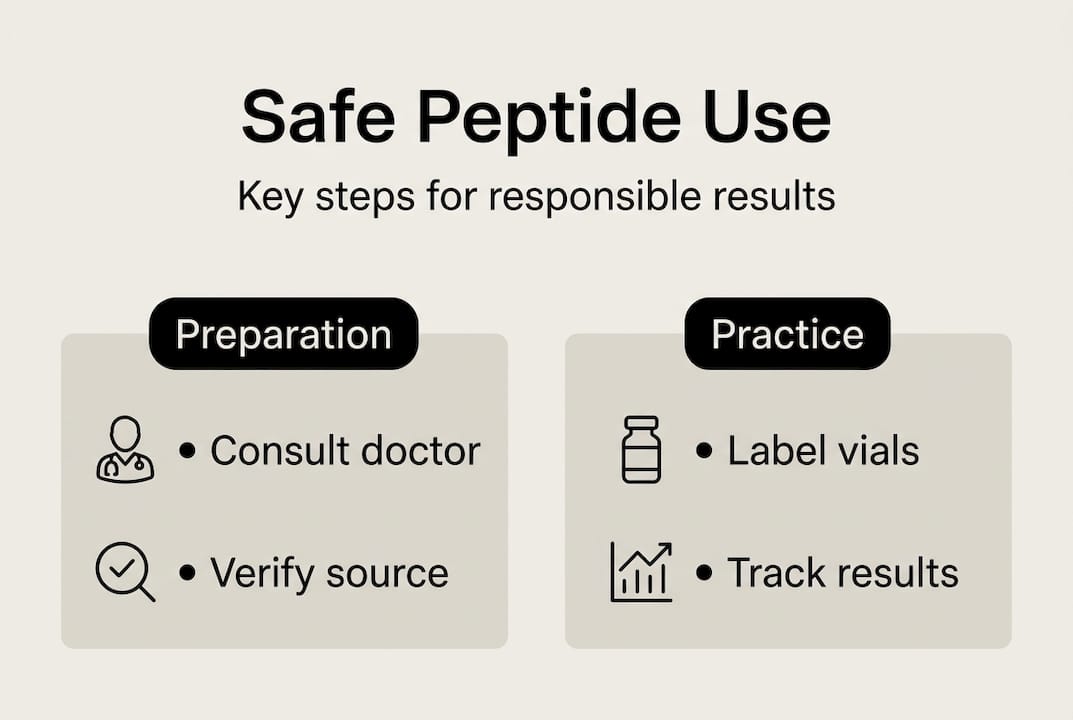
Before anything else, consult a healthcare professional who understands peptide protocols. This is not a formality. They can flag contraindications, review your bloodwork, and give you a baseline to compare against once you start. Understanding the full benefits and risks of peptide therapy before you begin is essential, not optional.
| Preparation step | Why it matters |
|---|---|
| Source verification | Contaminated peptides are a real risk |
| Third-party testing | Confirms purity and concentration |
| Labeling your vials | Prevents mix-ups and dosing errors |
| Reviewing storage needs | Potency degrades without proper storage |
| Documenting your baseline | Lets you measure actual results |
Source quality is non-negotiable. Look for suppliers who provide certificates of analysis (COA) from independent labs. If a supplier cannot produce a COA, that is a hard stop. Knowing how to store peptides safely is equally critical because even a high-quality peptide degrades fast if stored incorrectly.
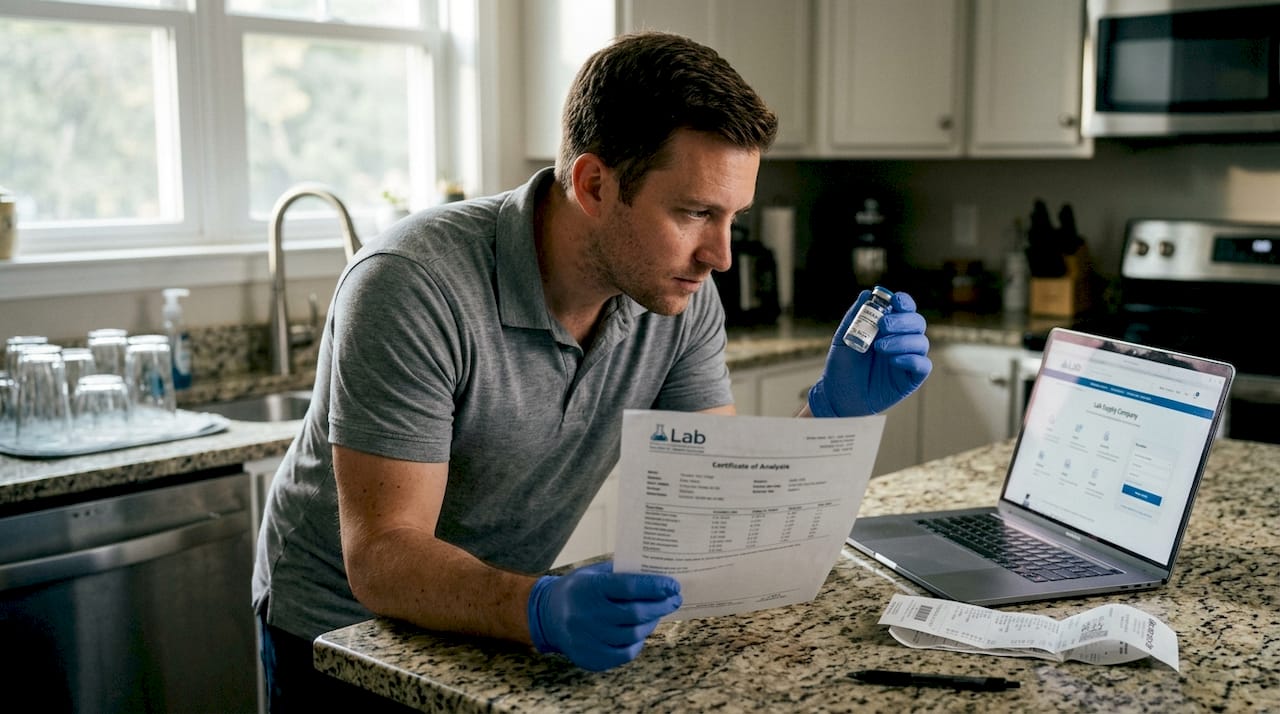
Pro Tip: Label every vial with the peptide name, concentration, reconstitution date, and expiration. A 30-second habit prevents a potentially serious dosing error down the line.
Document everything from day one. Your log should include the peptide name, dose, injection site, time of day, and any observations. This data becomes invaluable if you need to troubleshoot or consult a provider later.
Step-by-step guide to safe peptide usage
With your materials ready and your baseline established, here is how to execute each session safely. Do not skip steps, even when you feel comfortable with the routine.
- Wash your hands thoroughly with soap and water for at least 20 seconds before handling any materials.
- Wipe all vial tops with a fresh alcohol swab and allow them to air dry completely before inserting a needle.
- Calculate your dose precisely. Use the peptide concentration and your target dose to determine the exact volume. Double-check the math every time.
- Reconstitute correctly by injecting bacteriostatic water slowly down the side of the vial. Never shake. Swirl gently until dissolved. Learn more about safely mixing peptides to avoid degradation.
- Draw your dose into a clean insulin syringe, removing any air bubbles carefully.
- Select your injection site. For subcutaneous administration, the abdomen, outer thigh, or upper arm are common choices. Rotate sites to avoid tissue buildup.
- Pinch the skin, insert at a 45-degree angle, and inject slowly. Release the skin before withdrawing the needle.
- Dispose of the needle immediately in your sharps container. Never recap used needles.
- Log the dose, site, and time in your tracker right after administration.
- Refrigerate remaining reconstituted peptide promptly and note the expiration window (typically 2 to 4 weeks for most peptides).
For peptides like BPC-157, which is one of the more studied research peptides for tissue repair, the protocol above applies directly. Reviewing BPC-157 usage details before starting gives you peptide-specific context that general guides cannot provide.
Pro Tip: If you are new to subcutaneous injections, practice the pinch-and-angle technique on a piece of fruit before your first actual dose. It sounds basic, but it builds real muscle memory and reduces hesitation.
Always consult a healthcare professional before beginning any protocol. Even experienced users benefit from periodic check-ins, especially when adding new peptides or changing doses.
Monitor your results and avoid common mistakes
Starting a peptide protocol is only half the work. Monitoring your response and catching errors early is what separates safe, effective use from a frustrating or harmful experience.
Red flags that require you to stop and contact your provider immediately:
- Unusual swelling, redness, or warmth at injection sites that does not resolve within 24 hours
- Persistent headaches or dizziness following administration
- Unexplained fatigue or mood changes
- Signs of allergic reaction: hives, difficulty breathing, or facial swelling
- Any symptom that feels clearly out of the ordinary for your body
Supervision and monitoring are stressed by mainstream medical sources precisely because human data is limited for most research peptides. Your body's response is the most important data point you have.
Common mistakes that undermine safety and results:
- Overdosing because results feel slow. More is rarely better with peptides.
- Skipping reconstitution steps or shaking vials, which degrades the peptide.
- Poor storage practices like leaving peptides at room temperature or exposing them to light.
- Reusing needles or skipping alcohol swabs, which increases infection risk.
- Stacking multiple peptides without understanding interactions or getting professional input.
- Ignoring early warning signs and pushing through discomfort.
For peptides like TB-500, which targets systemic recovery and tissue repair, dosing precision matters even more because the compound works at a systemic level. Reviewing peptides with more research evidence helps you prioritize options where the risk-to-benefit ratio is better understood.
Track your outcomes weekly. Note changes in recovery speed, sleep quality, strength, and any physical symptoms. Compare against your pre-protocol baseline. Adjustments should be small, deliberate, and ideally discussed with your provider before implementation.
The most effective peptide users treat their protocol like a controlled experiment. They change one variable at a time, document everything, and make decisions based on data rather than impatience.
Explore trusted peptide resources and directories
You have the framework for safe peptide use. Now the quality of your resources determines how well you execute it long-term.
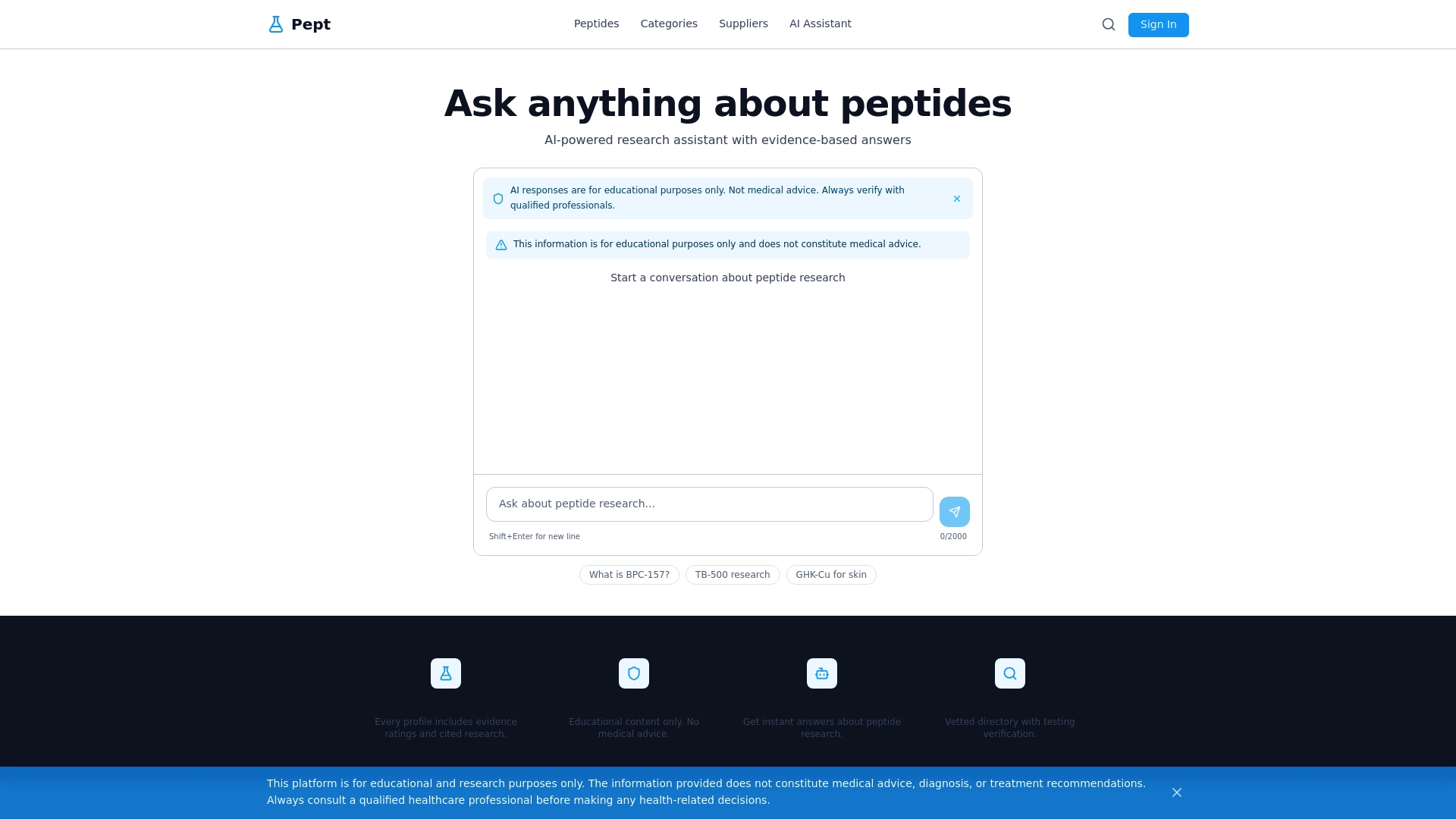
At Pept, we built an education platform specifically for people who want to use peptides responsibly. You can browse peptide options with detailed profiles covering mechanisms, dosing ranges, and safety considerations for each compound. When you are ready to source, our trusted supplier directory connects you with vendors who meet quality and transparency standards. Every resource on the platform is designed to support informed, safe decision-making, not just sales. Whether you are researching your first peptide or refining an existing protocol, having vetted information in one place makes the process significantly safer.
Frequently asked questions
What are the most important steps for using peptides safely?
Consult a healthcare professional first, verify your source with a COA, follow precise reconstitution and dosing steps, and monitor your response consistently throughout the protocol.
Are research peptides safe for human use?
Most research peptides carry higher uncertainty than FDA-approved options because they rely primarily on preclinical data, meaning the full safety profile in humans is not yet established.
What should I do if I experience side effects when using peptides?
Stop use immediately and contact your healthcare provider. Do not attempt to self-diagnose or push through symptoms, especially given the limited human data available for most research peptides.
How can I ensure my peptides are stored safely?
Label each vial clearly, keep reconstituted peptides refrigerated, protect them from light, and follow the peptide-specific storage guidelines to maintain potency throughout your protocol.