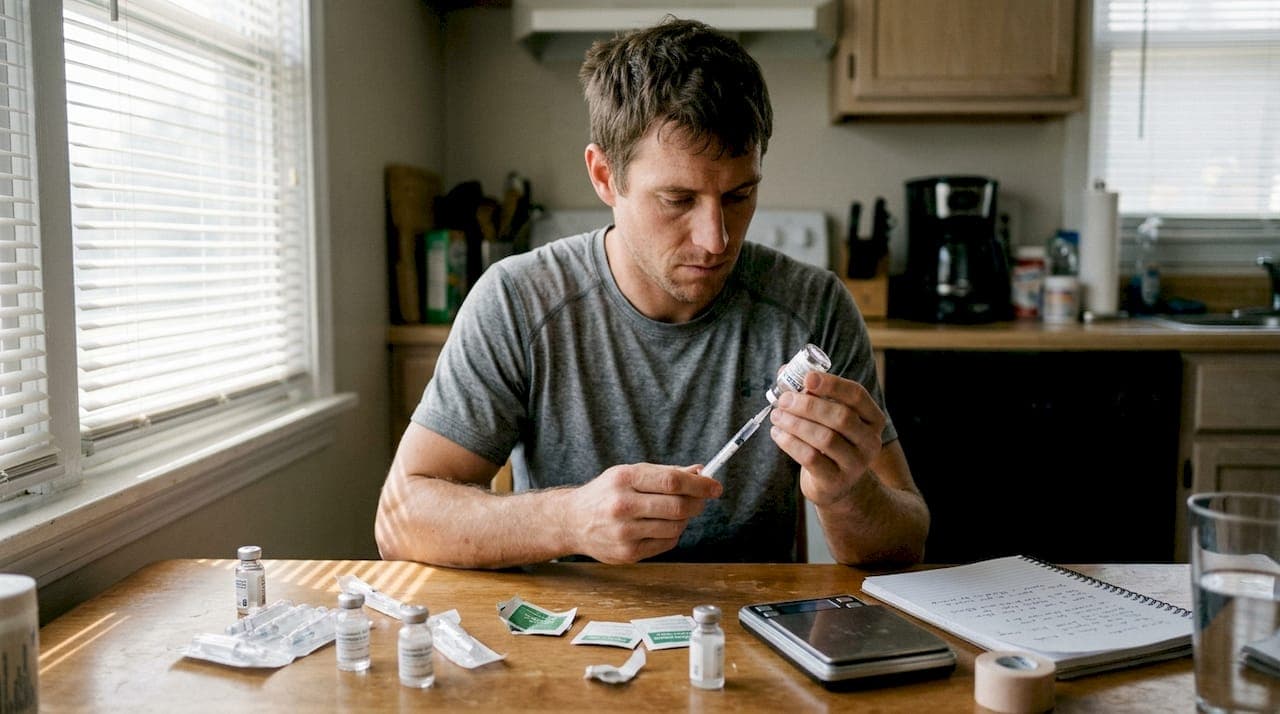
Mixing peptides correctly separates athletes who see real performance gains from those who waste money on degraded compounds. A single mistake during reconstitution can destroy peptide structure, turning your investment into expensive saline. This guide walks you through the exact preparation process used by experienced fitness enthusiasts to maximize peptide effectiveness for muscle recovery and athletic performance. You'll learn the tools required, step-by-step mixing procedures, common errors to avoid, and storage practices that preserve potency.
Table of Contents
- Key takeaways
- What you need: tools and materials to mix peptides
- Step-by-step instructions for mixing peptides safely
- Common mistakes and troubleshooting when mixing peptides
- What to expect: verifying and storing mixed peptides for best results
- Explore trusted peptide suppliers for your fitness journey
- How to mix peptides - frequently asked questions
Key Takeaways
| Point | Details |
|---|---|
| Sterile supplies essential | Successful peptide mixing starts with gathering sterile syringes, bacteriostatic water, alcohol prep pads, and clean vials to maintain sterility and potency. |
| Accurate dilution matters | Choose a dilution that yields the target concentration using the correct volume so dosing remains precise and effective. |
| Step by step adherence | Follow the step by step instructions exactly to protect peptide integrity and prevent contamination. |
| Dissolve and store properly | Allow the powder to dissolve fully and store the reconstituted peptide according to protocol to preserve potency. |
What you need: tools and materials to mix peptides
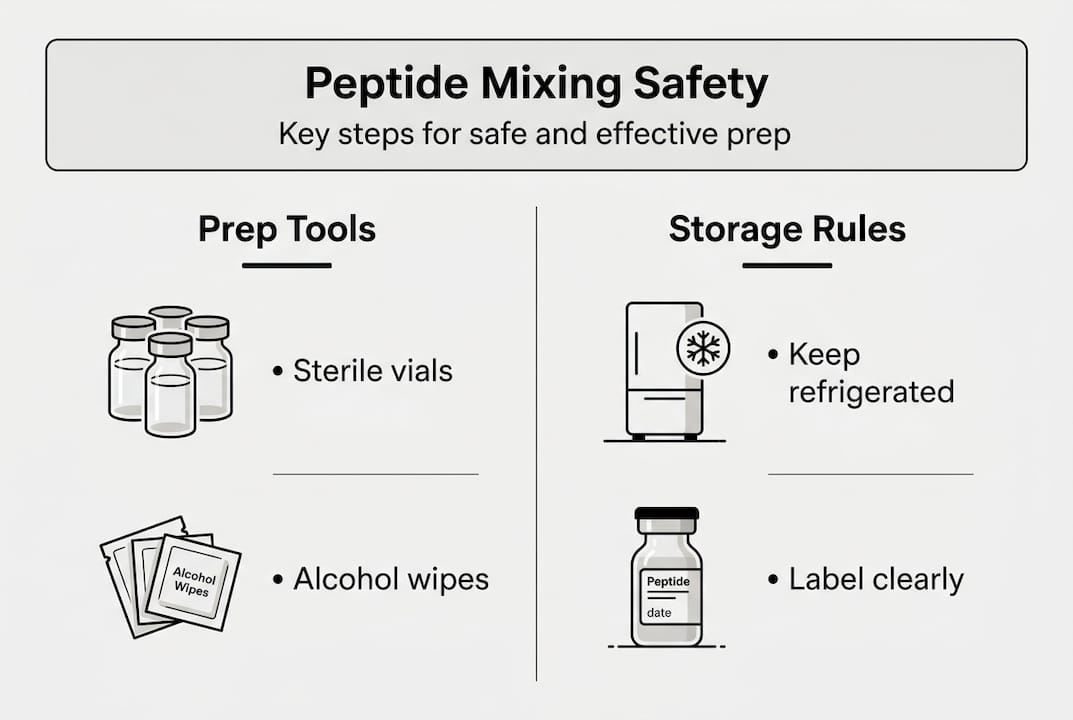
Successful peptide preparation starts with gathering the right equipment. Missing even one item compromises sterility and accuracy, potentially ruining your entire supply.
You need these essential materials:
- Sterile insulin syringes (1mL with fine needles for precise measurement)
- Bacteriostatic water (contains 0.9% benzyl alcohol to prevent bacterial growth)
- Alcohol prep pads (70% isopropyl for sterilizing vial tops)
- Empty sterile vials (if transferring or splitting doses)
- Lyophilized peptide powder (your target compound in freeze-dried form)
Proper peptide preparation requires sterile syringes, bacteriostatic water, and clean vials to ensure safety and potency. Most peptides arrive as lyophilized powder because this form remains stable during shipping and storage. You reconstitute the powder by adding bacteriostatic water, which creates an injectable solution.
The dilution ratio you choose determines final concentration. This table shows common options:
| Peptide amount | Water added | Final concentration | Best for |
|---|---|---|---|
| 5mg | 1mL | 5mg/mL | Standard dosing, easy math |
| 5mg | 2mL | 2.5mg/mL | Lower concentration, larger injection volume |
| 10mg | 2mL | 5mg/mL | Bulk preparation, multiple doses |
| 2mg | 1mL | 2mg/mL | Microdosing protocols |
Higher concentrations mean smaller injection volumes but require more precise measurement. Lower concentrations give you more room for dosing accuracy but use more bacteriostatic water per injection.
Pro Tip: Set up your workspace like a mini lab. Clear a clean surface, wipe it down with alcohol, and lay out all materials before opening any vials. This prevents you from scrambling mid-process with an open vial exposed to airborne contaminants. I keep a small plastic tray dedicated to peptide prep that stays in a drawer between uses.
Choose your dilution based on your dosing protocol. If you need 250mcg per injection and mix 5mg in 2mL, you'll draw 0.1mL per dose. Calculate your target concentration before mixing to avoid measurement errors later. For detailed guidance on maintaining peptide quality after mixing, review proper storage protocols that extend shelf life.
Step-by-step instructions for mixing peptides safely
Peptide reconstitution demands precision. Each step protects compound integrity and prevents contamination that renders your supply useless.
-
Wash your hands thoroughly with antibacterial soap and dry completely. Any bacteria transferred from your hands can colonize the vial.
-
Remove the plastic caps from both the peptide vial and bacteriostatic water bottle. Wipe both rubber stoppers with alcohol prep pads and let them air dry for 30 seconds.
-
Draw your calculated amount of bacteriostatic water into the syringe. For a 5mg peptide vial with 2mL target, pull exactly 2mL. Remove air bubbles by tapping the syringe and pushing the plunger until water reaches the tip.
-
Insert the needle through the rubber stopper of the peptide vial at a slight angle. Aim the needle toward the glass wall, not directly at the powder.
-
Slowly inject the bacteriostatic water down the inside wall of the vial. Let it gently slide down and dissolve the powder naturally. This critical step prevents the forceful stream from damaging peptide bonds.
-
Remove the needle and let the vial sit undisturbed for 3 to 5 minutes. The powder will dissolve completely on its own. You should see a clear solution with no particles floating.
-
If any powder remains after 5 minutes, gently swirl the vial in small circles. Never shake it. Shaking creates bubbles and mechanical stress that breaks peptide chains.
-
Once fully dissolved, the solution should be clear or slightly opalescent. Any cloudiness or particles indicates a problem.
Following a strict mixing protocol ensures peptides maintain their integrity for optimal athletic performance. The most common error here involves injecting water directly onto the powder, which causes foaming and structural damage. Always aim for the vial wall.
Pro Tip: Label your vial immediately after mixing. Write the peptide name, concentration (like 2.5mg/mL), mixing date, and expiration date (typically 28 days from mixing for bacteriostatic water solutions). Use a permanent marker or pre-printed labels. I've seen athletes accidentally inject the wrong peptide because they mixed multiple compounds without labeling. That's dangerous and wastes your supply.
Store the reconstituted vial in the refrigerator immediately. Most peptides remain stable for 28 days when refrigerated at 36 to 46°F. Some compounds degrade faster, so check specific storage requirements for your peptide. Before each injection, inspect the solution for any changes in clarity or color. If you're new to peptide protocols, explore comprehensive preparation guides that cover dosing schedules and expected timelines for results.
Common mistakes and troubleshooting when mixing peptides
Even experienced users make errors that compromise peptide effectiveness. Recognizing these mistakes helps you avoid wasting money and missing performance gains.
Frequent mixing errors include:
- Using tap water or sterile water instead of bacteriostatic water (allows bacterial growth and shortens shelf life)
- Shaking the vial vigorously to speed dissolution (breaks peptide bonds)
- Reusing syringes or needles (introduces contamination)
- Storing mixed peptides at room temperature (accelerates degradation)
- Failing to sterilize vial tops before each needle insertion (bacterial contamination)
- Injecting air into the vial without releasing pressure (causes solution to spray when drawing)
Cloudiness after mixing signals a problem. Clear peptide solutions should never look milky or contain floating particles. This usually means the peptide degraded due to improper mixing technique, contamination, or expired powder. Don't inject cloudy solutions. The peptide structure has likely broken down and won't deliver results.
Concentration problems often stem from measurement errors. If you added 1.5mL instead of 2mL, your entire dosing schedule is now wrong. You'll either underdose or overdose depending on which direction the error went. This is why precision matters. Use insulin syringes with clear measurement markings and double check your math before injecting water.
Vial contamination shows up as visible particles, color changes, or unusual odor. Peptides are odorless when properly prepared. Any smell indicates bacterial growth. Discard contaminated vials immediately. The small financial loss beats the risk of injection site infections.
Many users make dilution errors or contaminate vials, reducing peptide effectiveness. Sterility and accuracy aren't optional. They determine whether your peptides work or fail.
If your peptide won't dissolve after 10 minutes of gentle swirling, the powder may have degraded before you received it. Lyophilized peptides should reconstitute easily. Stubborn powder that stays clumped suggests improper storage during shipping or manufacturing defects. Contact your supplier for a replacement rather than forcing dissolution with heat or aggressive shaking.
Some athletes try to speed reconstitution by warming the vial. Don't do this. Heat denatures peptides just like it cooks eggs. Room temperature bacteriostatic water works perfectly when you give it time. For guidance on regulatory compliance and safety standards, review current peptide regulations that protect users.
What to expect: verifying and storing mixed peptides for best results
Successfully mixed peptides look specific and require careful storage to maintain potency through your entire dosing cycle.
A properly reconstituted peptide solution appears completely clear or very slightly opalescent, like looking through clean water. The liquid should flow normally without thickness or stickiness. No particles, no cloudiness, no color. Your label should show the peptide name, exact concentration, mixing date, and expiration date.
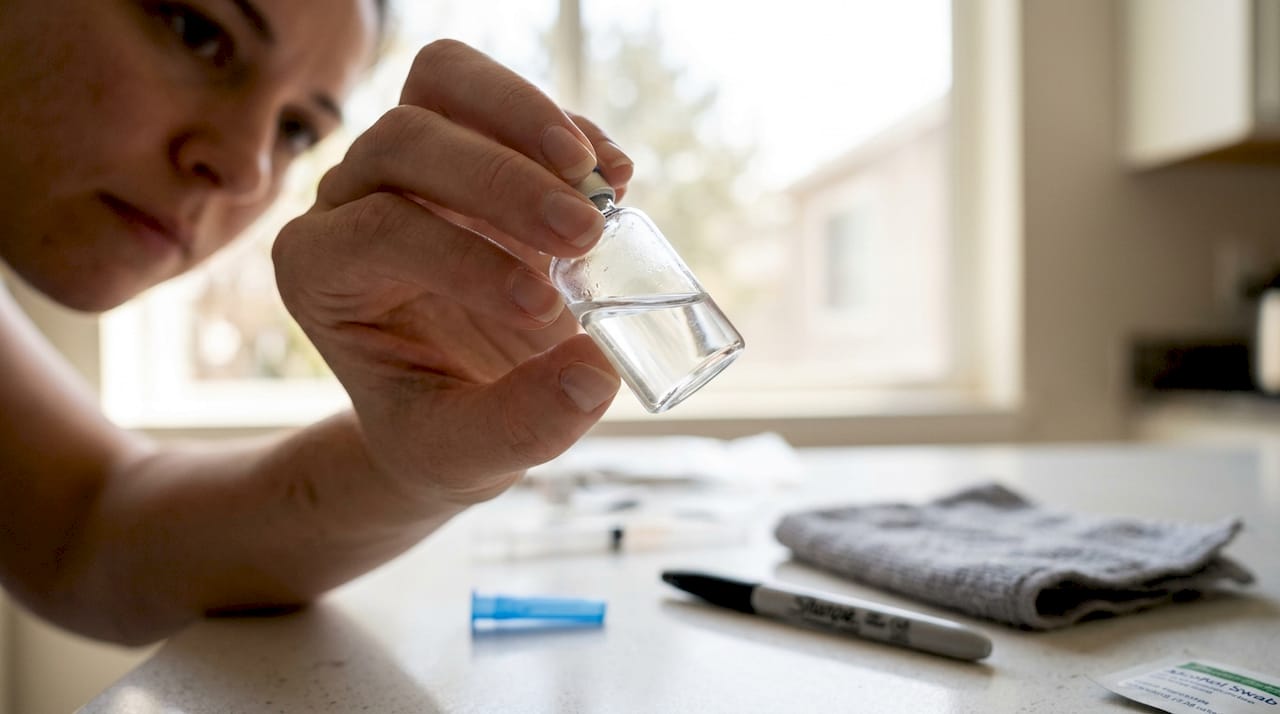
Storage conditions directly impact how long your peptides remain effective:
| Storage factor | Optimal condition | Impact of deviation | Stability duration |
|---|---|---|---|
| Temperature | 36-46°F (refrigerated) | Room temp reduces potency 50% in 7 days | 28 days |
| Light exposure | Dark (opaque container or drawer) | UV light degrades peptides within hours | 28 days |
| Contamination | Sterile technique always | Bacteria multiply rapidly at room temp | Immediate failure |
| Freeze/thaw cycles | Never freeze reconstituted peptides | Ice crystals destroy structure | Single cycle ruins peptides |
Refrigerate your mixed peptides immediately after preparation. Store them in the back of the fridge where temperature stays most consistent, not in the door where it fluctuates. Keep vials in their original box or a small container to block light exposure.
Best practices for maximizing peptide shelf life:
- Wipe the vial top with alcohol before every needle insertion
- Use a fresh syringe and needle for each injection
- Minimize time the vial spends at room temperature
- Never return unused solution to the vial after drawing
- Track injection dates to ensure you finish within 28 days
- Inspect solution before each use for any changes
Correct storage and handling maintain peptide potency and support muscle recovery and performance benefits. Most athletes notice initial effects within 2 to 3 weeks of consistent dosing. Recovery time between workouts typically improves first, followed by strength gains and body composition changes.
Pro Tip: Keep a simple log of your peptide injections. Note the date, time, injection site, and any observations about effects or side effects. This helps you verify the peptide is working and catch any degradation early. If you suddenly stop seeing results halfway through a vial, the peptide may have degraded due to storage issues. Your log provides evidence to identify the problem.
Expect properly stored peptides to maintain full potency for 28 days after reconstitution. Some compounds remain stable longer, but 28 days is the safe standard for bacteriostatic water solutions. After this point, effectiveness drops progressively. Plan your purchase quantities to match your dosing schedule. Buying a 3 month supply that degrades before you use it wastes more money than ordering smaller amounts more frequently.
Monitor your progress with objective measurements like workout performance, recovery time, body composition scans, or strength benchmarks. Subjective feelings matter, but numbers tell you whether your peptides are delivering real results. For comprehensive protocols covering dosing schedules and expected outcomes, explore detailed peptide programs designed for athletic performance.
Explore trusted peptide suppliers for your fitness journey
You now understand how to mix and store peptides correctly, but sourcing quality compounds determines whether proper preparation delivers results. Contaminated or underdosed peptides won't work no matter how perfectly you reconstitute them.
Our platform connects fitness enthusiasts with vetted peptide suppliers who meet strict quality standards for purity and potency. Each supplier in our directory undergoes verification for proper handling, storage, and customer service. You'll find detailed profiles covering product ranges, shipping practices, and user reviews that help you choose confidently.
Browse our comprehensive research peptide directory to compare compounds for your specific performance and recovery goals. Each peptide profile explains mechanisms of action, typical dosing protocols, and expected timelines for results. Whether you're targeting muscle growth, fat loss, injury recovery, or endurance enhancement, you'll find detailed information to guide your selection.
For athletes seeking reliable sources, Royal Peptides consistently earns top ratings for product quality and customer support. Explore their full range and read verified user experiences to make informed purchasing decisions that support your fitness journey.
How to mix peptides - frequently asked questions
How long can mixed peptides be stored safely?
Most reconstituted peptides remain stable for 28 days when refrigerated at 36 to 46°F in bacteriostatic water. Some compounds degrade faster, particularly growth hormone releasing peptides that may lose potency after 14 days. Always check specific storage requirements for your peptide and mark expiration dates clearly on vials. For detailed preservation guidelines, review comprehensive storage protocols that extend peptide shelf life.
What is the best water to use for reconstituting peptides?
Bacteriostatic water is the gold standard for peptide reconstitution. It contains 0.9% benzyl alcohol that prevents bacterial growth, allowing safe storage for up to 28 days. Never use tap water, distilled water, or regular sterile water for peptides you plan to store. These lack antibacterial properties and support rapid bacterial colonization. Sterile water works only if you'll use the entire vial immediately after mixing.
Can I mix different peptides together in one vial?
No, never combine different peptides in a single vial. Each compound has unique stability requirements, degradation rates, and optimal concentrations. Mixing them creates unpredictable interactions that may reduce effectiveness or cause precipitation. Store each peptide separately and draw individual doses when you need to inject multiple compounds. This maintains proper dosing accuracy and preserves each peptide's integrity.
What should I do if the peptide looks cloudy after mixing?
Discard cloudy peptide solutions immediately. Cloudiness indicates the peptide has degraded, become contaminated, or was improperly manufactured. Clear solutions are the only safe option for injection. Cloudy appearance means broken peptide bonds that won't deliver results and may cause injection site reactions. Contact your supplier for a replacement if cloudiness appears immediately after proper reconstitution.
Are there special safety precautions when mixing peptides?
Always use sterile technique as if performing a medical procedure. Wash hands thoroughly, sterilize all vial tops with alcohol before needle insertion, and use fresh syringes for every step. Work in a clean area away from fans or air vents that could blow contaminants onto your materials. Never touch needle tips or allow them to contact non-sterile surfaces. If you accidentally contaminate a needle, discard it and start with a new sterile syringe.