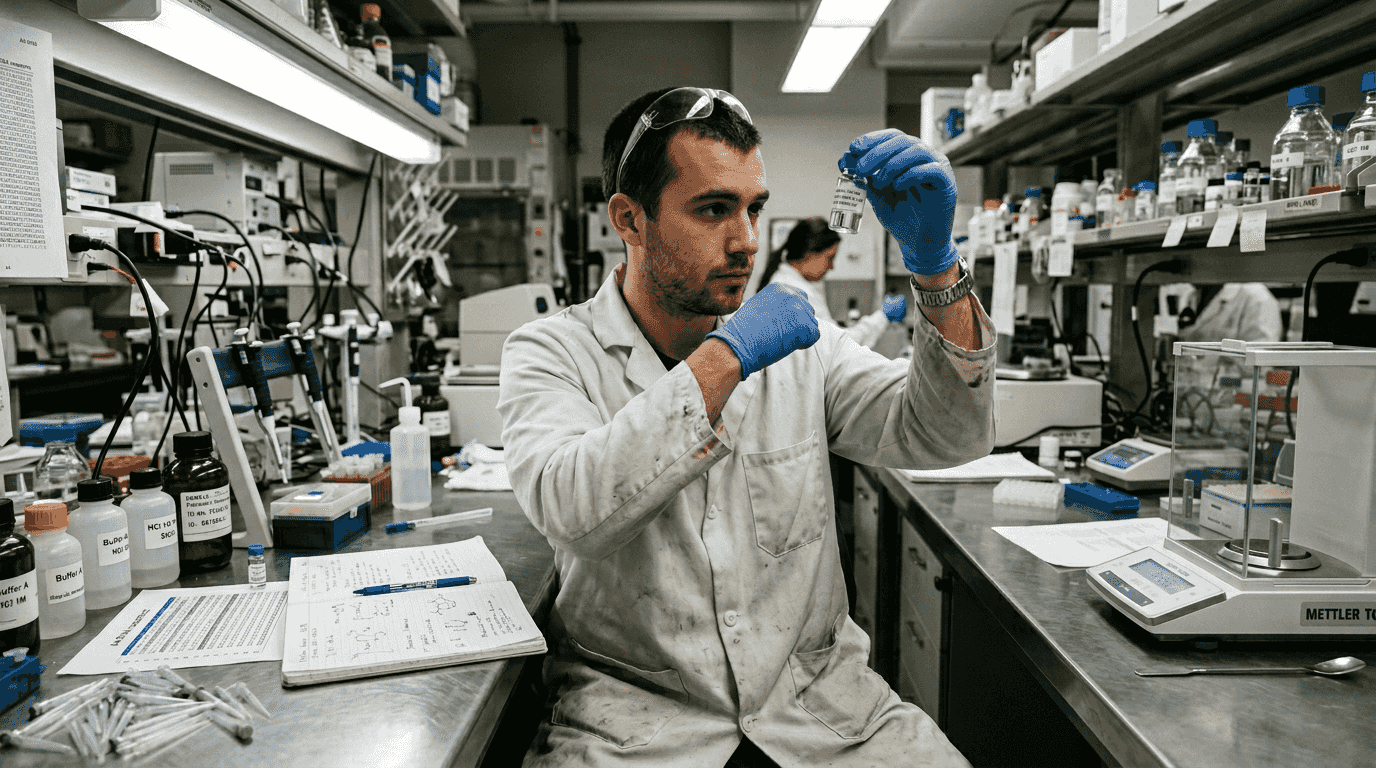
BPC 157 floods fitness forums with bold recovery claims, but human evidence remains surprisingly thin. Athletes seeking faster muscle repair face hype versus reality when evaluating this synthetic peptide. This guide cuts through speculation to deliver science-backed insights on BPC 157's mechanisms, current research status, practical safety considerations, and what evidence actually supports for recovery applications.
Table of Contents
- What Is BPC 157? Definition And Origins
- Mechanisms Of Action: How BPC 157 Works
- Current Clinical Research And Evidence
- Common Misconceptions And Evidence Limits
- Comparison With Other Peptides
- Practical Considerations For Fitness Enthusiasts And Athletes
- Explore Peptides And Trusted Suppliers For Your Research Needs
Key takeaways
| Point | Details |
|---|---|
| BPC 157 is a synthetic peptide | Originally isolated from human gastric juice, studied mainly in animals for tissue repair. |
| Works through multiple pathways | Promotes blood vessel growth, collagen synthesis, and reduces inflammation at injury sites. |
| Limited human validation | Small pilot studies show promise, but large clinical trials only began in 2026. |
| Not FDA approved | Sold on unregulated markets with legal and safety risks for users. |
| Requires cautious approach | Consult professionals, source from vetted suppliers, and follow emerging research closely. |
What is BPC 157? Definition and origins
BPC 157 is a synthetic pentadecapeptide consisting of 15 amino acids arranged in a specific sequence. Researchers first isolated it from human gastric juice in 1993 during investigations into the stomach's protective mechanisms. The name Body Protective Compound 157 reflects its regenerative effects observed in early animal studies.
This peptide does not occur naturally in the human body in this exact form. Scientists created it by isolating and synthesizing a segment of a larger protein found in gastric secretions. The chemical structure allows it to remain stable in various biological environments, making it suitable for research applications.
Understanding this chemical foundation matters because it explains why BPC 157 behaves differently than naturally occurring peptides. Its synthetic nature also contributes to regulatory challenges, as authorities have not approved it for clinical use despite decades of animal research. Athletes exploring recovery options should recognize this investigational status before considering any application.
The peptide directory contains detailed molecular profiles for BPC 157 and related compounds. These profiles help researchers and enthusiasts compare structural differences that influence biological activity. Chemical identity shapes function, so grasping BPC 157's origins provides context for evaluating its potential benefits and limitations.
Pro Tip: Check the amino acid sequence when purchasing BPC 157 to verify authenticity, as counterfeit versions may contain different or incomplete peptide chains that lack therapeutic potential.
Mechanisms of action: How BPC 157 works
BPC 157 promotes tissue repair through multiple interconnected biological pathways. The primary mechanism involves stimulating angiogenesis, the formation of new blood vessels that deliver oxygen and nutrients to damaged areas. This process occurs through activation of VEGFR2 receptors and downstream Akt-eNOS signaling cascades.

Fibroblast proliferation represents another critical pathway. BPC 157 enhances fibroblast activity and collagen synthesis, which directly supports tendon and ligament healing. These cells produce the structural proteins necessary for tissue regeneration, making their activation essential for recovery from musculoskeletal injuries.
The peptide also modulates the nitric oxide system. By influencing NO production, BPC 157 improves vascular function and provides antioxidant protection against cellular damage. This dual effect supports both acute healing and long-term tissue health.
Anti-inflammatory properties complement these regenerative mechanisms. BPC 157 reduces pro-inflammatory cytokines at injury sites, minimizing secondary tissue damage that often delays recovery. Combined with enhanced blood flow and collagen production, this creates favorable conditions for accelerated healing.
Key biological effects include:
- Enhanced blood vessel formation via VEGFR2 signaling
- Increased fibroblast proliferation and collagen deposition
- Improved nitric oxide system function
- Reduced inflammatory markers at injury sites
- Growth hormone receptor upregulation in target tissues
The beginners guide to peptides explains how these molecular pathways translate into practical recovery applications. Understanding mechanism helps predict which injuries might respond best to BPC 157 intervention.
Pro Tip: These mechanisms explain why animal studies show strong effects on soft tissue injuries, but remember that human biology may respond differently, requiring clinical validation before drawing firm conclusions.
Current clinical research and evidence
Animal models dominate BPC 157 research, with rodent studies demonstrating accelerated healing of tendons, ligaments, muscles, and bones. These preclinical investigations established the mechanistic foundations discussed earlier. However, animal results do not guarantee identical human outcomes.
Human evidence remains limited but growing. A pilot study involving intra-articular knee injections showed that 14 out of 16 patients experienced significant pain relief with no reported adverse effects. This small sample size prevents broad conclusions but suggests potential therapeutic value.
The most significant development arrived in 2026 when a Phase 2 clinical trial began evaluating BPC 157 for acute hamstring muscle strain recovery. This study enrolled 120 participants, representing the largest human investigation to date. Results will provide critical safety and efficacy data that current evidence lacks.
Existing trials report minimal adverse effects, but sample sizes remain too small for comprehensive safety profiling. No long-term human studies have examined potential risks from extended use or higher doses. This evidence gap creates uncertainty for athletes considering regular application.
Current research landscape:
- Extensive animal data showing tissue repair benefits
- Small pilot studies in humans with promising initial results
- First large-scale Phase 2 trial underway as of 2026
- No serious adverse effects reported in limited human exposure
- Insufficient data on optimal dosing, frequency, or duration
The BPC 157 research overview tracks ongoing clinical investigations. Monitoring this research helps users make informed decisions based on the latest available evidence rather than outdated assumptions.
Common misconceptions and evidence limits
BPC 157 is not FDA approved for any clinical application. Despite widespread availability through research chemical suppliers, it remains unapproved with usage primarily on non-regulated markets. This regulatory status creates legal ambiguity and quality control challenges.
Animal study results cannot be directly extrapolated to humans. Rodents heal differently than people, metabolize compounds at different rates, and respond to molecular signals through species-specific pathways. Impressive rat tendon healing does not guarantee similar human outcomes.
The miracle cure narrative circulating in fitness communities exaggerates current evidence. BPC 157 shows genuine promise, but characterizing it as a guaranteed performance enhancer or injury prevention tool misrepresents the tentative state of human research. Benefits remain theoretical until larger trials confirm them.
Misinformation amplifies perceived effects while minimizing potential risks. Online testimonials and anecdotal reports lack the rigor of controlled studies. Individual experiences vary widely and cannot substitute for systematic clinical investigation.
Critical misconceptions to address:
- BPC 157 is not medically approved or regulated
- Animal results do not automatically predict human responses
- Current evidence suggests potential, not proven efficacy
- Long-term safety profile remains unknown
- Quality and purity vary significantly across suppliers
The BPC 157 safety profile summarizes known risks and unknowns. Understanding peptide legality in 2026 helps users navigate regulatory complexities. Consulting healthcare professionals before use remains essential given these evidence limitations and legal uncertainties.
Comparison with other peptides
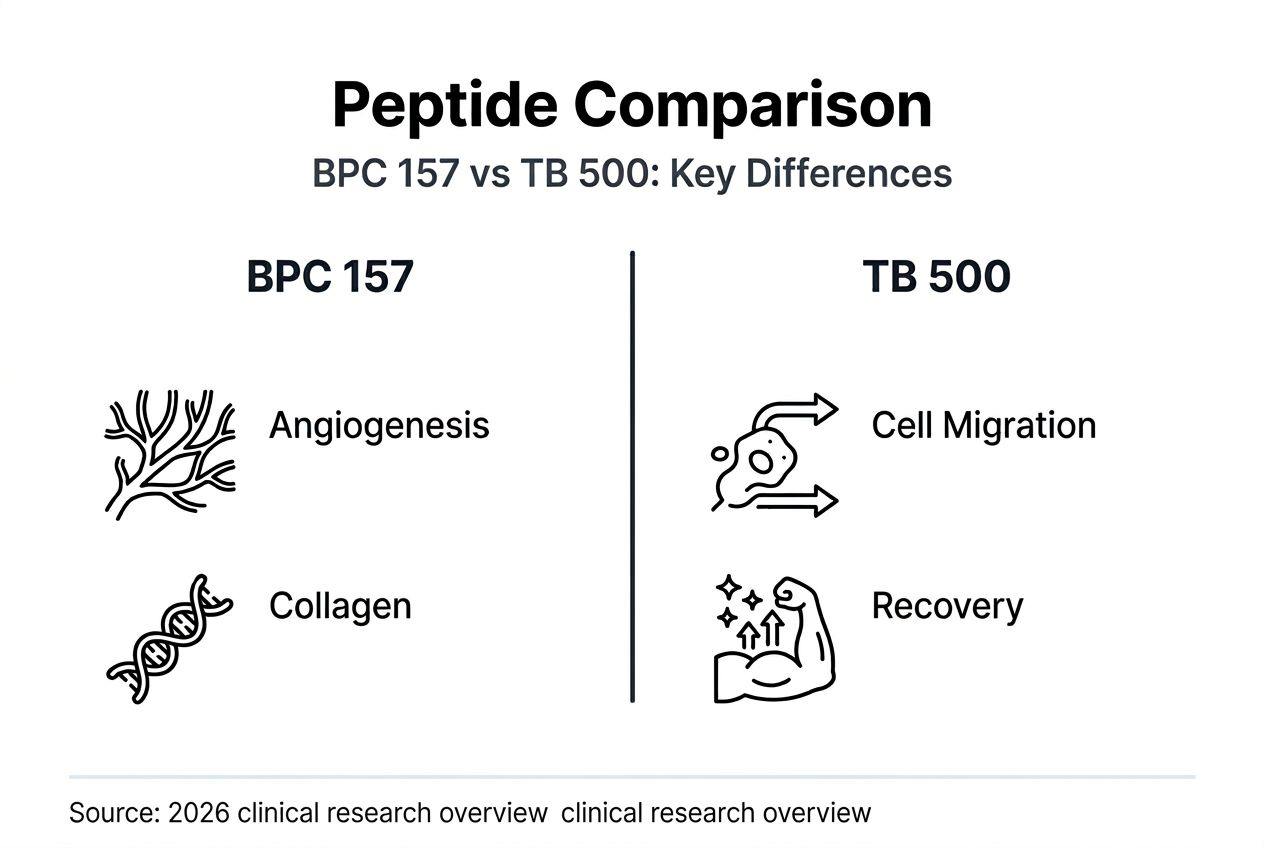
BPC 157 and TB 500 represent the two most discussed recovery peptides among athletes, but their mechanisms differ substantially. BPC 157 primarily drives angiogenesis and tissue protection through fibroblast activation and collagen synthesis. TB 500 enhances cell migration via actin upregulation and exhibits distinct anti-inflammatory properties through different molecular pathways.
These mechanistic differences suggest complementary rather than redundant effects. BPC 157 excels at promoting blood vessel formation and structural protein deposition. TB 500 supports cellular movement to injury sites and modulates inflammation through separate channels. Athletes targeting comprehensive recovery might consider both, though combination approaches require professional guidance.
| Feature | BPC 157 | TB 500 |
|---|---|---|
| Primary mechanism | Angiogenesis, collagen synthesis | Cell migration, actin regulation |
| Anti-inflammatory action | Moderate, indirect | Strong, direct |
| Blood vessel growth | High priority | Secondary effect |
| Tissue structure support | Collagen-focused | Broader cellular repair |
| Human evidence | Very limited | Very limited |
The TB 500 peptide overview provides detailed comparison points. Both peptides lack FDA approval and face similar evidence limitations. Neither has undergone the rigorous testing required to establish standardized protocols or confirm long-term safety.
Athletes should consider injury type when evaluating options. Soft tissue injuries involving tendons or ligaments might theoretically respond better to BPC 157's collagen-promoting effects. Muscle strains with significant inflammation could benefit more from TB 500's anti-inflammatory properties. These remain educated hypotheses pending clinical validation.
Pro Tip: Combining peptides increases complexity and potential for unexpected interactions; always work with healthcare providers familiar with peptide pharmacology when considering multi-compound protocols, and consult peptide protocols for 2026 for current guidance.
Practical considerations for fitness enthusiasts and athletes
BPC 157 remains investigational with no regulatory approval in most jurisdictions. Legal status varies by country, with some nations classifying it as a research chemical while others prohibit importation or possession. Athletes subject to anti-doping testing should assume BPC 157 violates most competitive sports regulations.
Supplier quality determines product safety and efficacy. Unregulated markets create risks of contamination, incorrect dosing, or counterfeit products containing inactive substances or harmful additives. Only purchase from research peptide suppliers with third-party testing certificates and transparent sourcing practices.
Dosing protocols lack standardization because human clinical trials have not established optimal ranges. Animal studies used doses that do not translate directly to human equivalents. Self-experimentation without medical supervision increases risks of adverse effects or ineffective treatment.
Monitoring for side effects remains crucial despite limited adverse event reporting. Unknown long-term consequences make cautious observation necessary. Any unusual symptoms warrant immediate medical consultation and discontinuation until professional evaluation occurs.
Practical safety guidelines:
- Verify legal status in your jurisdiction before purchasing
- Source only from suppliers providing purity testing documentation
- Consult healthcare professionals before starting any protocol
- Start with conservative doses if proceeding despite unknowns
- Track responses systematically to identify patterns or concerns
- Stay current on emerging research to update risk-benefit calculations
Pro Tip: Document your research thoroughly, including supplier information, batch numbers, dosing schedules, and any observed effects; this data proves invaluable if medical consultation becomes necessary and helps advance community understanding of real-world applications.
Explore peptides and trusted suppliers for your research needs
Navigating the peptide landscape requires reliable information and quality sources. Finding vetted suppliers protects against the contamination and counterfeit risks prevalent in unregulated markets. Safety and research integrity depend on product authenticity and purity.
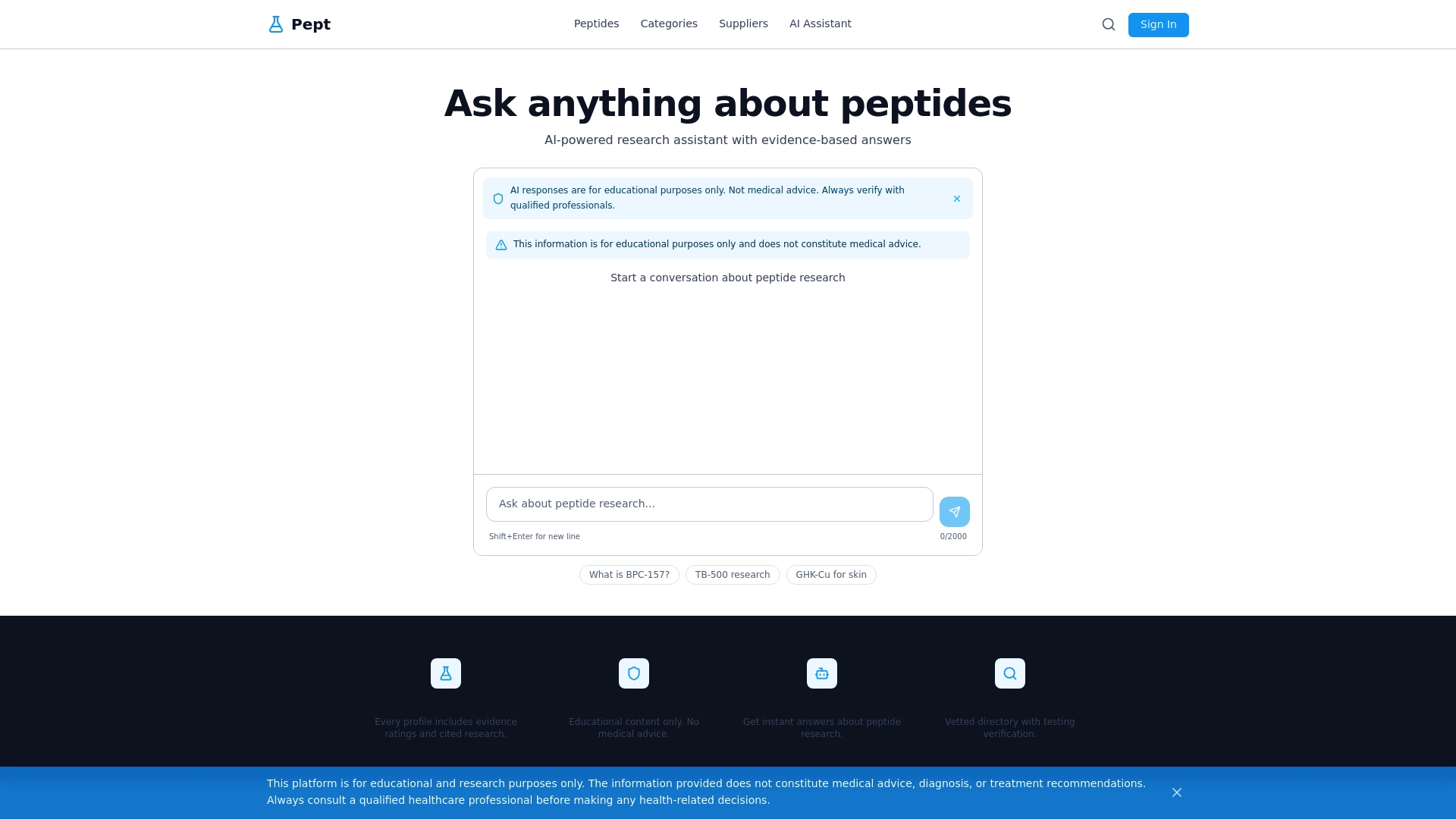
The vetted peptide suppliers directory connects researchers with companies meeting stringent quality standards. Each listing includes testing protocols, customer reviews, and transparency metrics to support informed purchasing decisions. Compare options to find suppliers matching your specific research requirements.
Explore the research peptide directory for comprehensive profiles on BPC 157 and dozens of other compounds. Detailed mechanism explanations, current research summaries, and practical considerations help you understand each peptide's potential applications and limitations.
The peptide education platform provides continuously updated content as new research emerges. Staying informed supports responsible decision-making and helps you adapt strategies based on the latest scientific findings.
FAQ
Is BPC 157 approved by the FDA for muscle recovery?
No, BPC 157 lacks FDA approval for any clinical application. It remains classified as an investigational compound without formal safety or efficacy validation from regulatory authorities. Its use occurs entirely outside approved medical frameworks.
What are the potential side effects of using BPC 157?
Limited human data prevents comprehensive side effect profiling. Small pilot studies and trials report minimal adverse effects, but long-term safety remains unknown due to insufficient research duration and sample sizes. Individual responses may vary unpredictably.
How does BPC 157 differ from other recovery peptides like TB 500?
BPC 157 focuses on blood vessel formation and collagen synthesis for structural tissue repair. TB 500 enhances cell migration and provides stronger direct anti-inflammatory effects through different molecular pathways. These distinct mechanisms may complement each other in comprehensive recovery protocols.
Can athletes legally purchase and use BPC 157 in 2026?
Legal status varies by jurisdiction, with BPC 157 generally unregulated rather than explicitly approved. Most competitive sports organizations prohibit its use under anti-doping policies. Purchase should occur only through vetted suppliers with full awareness of regional legal restrictions and athletic governing body rules.
How long does BPC 157 take to show effects on muscle recovery?
Animal studies suggest tissue repair acceleration within days to weeks, but human timelines remain poorly characterized. Individual factors including injury severity, dosing protocol, and baseline health influence response speed. No standardized treatment duration exists due to limited clinical trial data.