
If you've ever stood in the supplement aisle wondering whether peptides or proteins will better fuel your gains, you're not alone. Fitness enthusiasts often confuse these two compounds, believing peptides are a superior alternative to traditional protein supplements. The truth is more nuanced. While both play important roles in muscle building and recovery, their mechanisms, benefits, and safety profiles differ significantly. Understanding these differences helps you make evidence-based decisions that align with your performance goals and keep you safe from unregulated, risky products.
Table of Contents
- Key takeaways
- Understanding peptides and proteins: structures and absorption
- Comparing peptides and proteins for muscle building and recovery
- Risks and regulatory considerations around experimental peptides
- Practical guidance: choosing peptides or proteins for your fitness goals
- Explore trusted peptide suppliers and educational resources
- Frequently asked questions
Key Takeaways
| Point | Details |
|---|---|
| Peptides absorb faster | Peptides cross intestinal barriers more quickly than proteins, but this faster absorption does not automatically translate into greater muscle gains. |
| Whey surpasses collagen | Whey protein provides a complete amino acid profile and high leucine content that more effectively drives muscle protein synthesis than collagen peptides. |
| Collagen aids connective tissue | Collagen peptides may support connective tissue and benefit older adults, but offer limited muscle hypertrophy benefits for younger athletes. |
| Experimental peptides carry risks | Experimental peptides carry risks due to little proven benefit and unregulated markets. |
| Protein helps when intake low | Protein supplementation boosts strength gains most when daily protein from food falls short. |
Understanding peptides and proteins: structures and absorption
Peptides and proteins are both made from amino acids, but their size and structure create fundamental differences. Peptides consist of short chains containing 2 to 50 amino acids linked together. Proteins are much larger molecules, typically containing hundreds or thousands of amino acids folded into complex three-dimensional shapes. Think of peptides as sentences and proteins as entire chapters in a book.
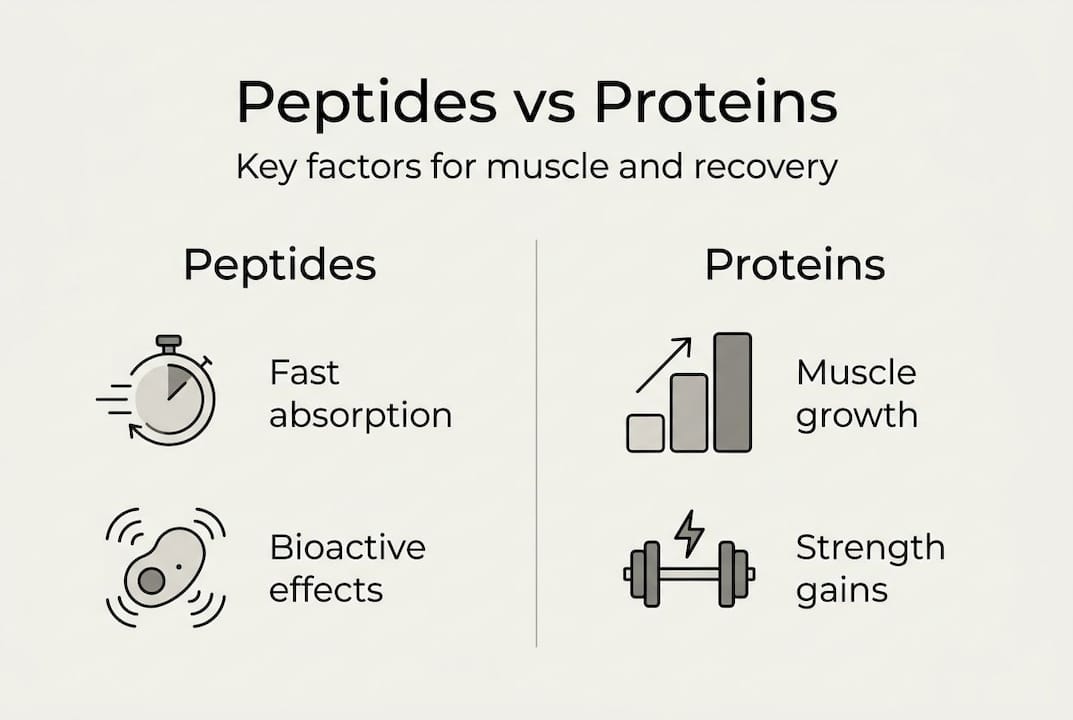
This size difference dramatically affects how your body processes them. Peptides absorb faster and have higher bioavailability because they can cross intestinal barriers more easily. When you consume protein, your digestive system must break it down into smaller peptides and individual amino acids before absorption can occur. This makes protein a slower, more sustained source of amino acids compared to peptides.
Bioactive peptides naturally occur in many foods and show genuine health benefits. These bioactive peptides support various body functions including immune response, blood pressure regulation, and tissue repair. However, synthetic peptides marketed for performance enhancement differ significantly from food-derived peptides in both safety profile and regulatory status.
Key absorption factors:
- Molecular weight determines how quickly compounds enter your bloodstream
- Smaller peptides bypass some digestive steps that proteins require
- Protein digestion releases peptides gradually, providing extended amino acid availability
- Bioavailability measures how much of a substance reaches target tissues
- Natural food sources provide peptides with established safety profiles
Pro Tip: Your body naturally creates peptides during protein digestion, so consuming high-quality whole proteins gives you both immediate peptides and sustained amino acid release without the risks of synthetic peptides.
Comparing peptides and proteins for muscle building and recovery
When it comes to building muscle, not all protein sources deliver equal results. Research shows whey protein outperforms collagen peptides for myofibrillar muscle protein synthesis in resistance-trained individuals. Myofibrillar proteins are the contractile elements of muscle fibers, the ones that grow larger and stronger with training. Whey's complete amino acid profile, especially its high leucine content, triggers the anabolic signaling pathways your muscles need for hypertrophy.

Collagen peptides serve different purposes. While they may support connective tissue health and show some benefits for older adults, they lack sufficient amounts of essential amino acids needed for optimal muscle growth in younger athletes. A network meta-analysis found both collagen and whey effective for strength and fat-free mass gains during resistance training, with collagen ranking superior in some specific comparisons. However, the mechanisms differ. Collagen likely enhances structural proteins in tendons and ligaments rather than directly stimulating muscle fiber growth.
The context of your overall diet matters enormously. Protein supplementation enhances strength gains most significantly when your dietary protein intake falls short of optimal levels. If you already consume adequate protein from whole foods, adding supplements may provide minimal additional benefit. This explains why some studies show dramatic effects while others find modest improvements.
| Protein Type | Primary Benefit | Best For | Mechanism |
|---|---|---|---|
| Whey | Muscle protein synthesis | Hypertrophy, post-workout recovery | High leucine content triggers mTOR pathway |
| Collagen | Connective tissue support | Joint health, older adults | Provides glycine, proline, hydroxyproline for structural proteins |
| Casein | Sustained amino acid release | Overnight recovery, meal replacement | Slow digestion provides prolonged availability |
| Plant-based blends | Muscle support for vegans | Those avoiding animal products | Complete amino acid profile when properly combined |
Evidence-based protein strategies:
- Prioritize total daily protein intake over supplement timing
- Aim for 1.6 to 2.2 grams per kilogram of body weight for muscle building
- Distribute protein across multiple meals for optimal synthesis
- Choose whey or complete proteins immediately post-workout
- Consider collagen if you have joint issues or are over 50
Bioactive peptides from food sources might contribute to recovery through anti-inflammatory and antioxidant effects, but synthetic performance-enhancing peptides lack strong efficacy data in humans. Understanding how peptides work in your body helps you distinguish between evidence-based approaches and marketing hype. The science behind peptide effects reveals that natural sources provide benefits without the risks of experimental compounds.
Pro Tip: If you're under 40 with healthy joints, invest your supplement budget in high-quality whey protein rather than collagen peptides. Save collagen for when connective tissue support becomes a priority.
Risks and regulatory considerations around experimental peptides
The supplement industry aggressively markets experimental peptides like BPC-157, TB-500, and IGF-1 LR3 as performance enhancers, but the reality is alarming. These experimental peptides lack human safety and efficacy data and pose serious health risks including cancer promotion, immune system dysfunction, and tissue damage. Most evidence comes from animal studies or cell cultures, not rigorous human clinical trials.
Compartment syndrome represents one documented risk. This painful condition occurs when pressure builds up in muscle compartments, potentially requiring emergency surgery. Some peptides may also stimulate uncontrolled cell growth, raising cancer concerns. Immune reactions to foreign peptides can trigger inflammation or allergic responses. Without proper human testing, the full spectrum of adverse effects remains unknown.
Regulatory bodies take these risks seriously. The World Anti-Doping Agency (WADA) bans many performance-enhancing peptides, and the FDA has not approved them for human use outside specific medical conditions. Synthetic injectable peptides remain unregulated in most markets, meaning you have no guarantee of purity, concentration, or sterility. Contamination with bacteria, heavy metals, or incorrect compounds poses additional dangers.
Critical safety concerns with experimental peptides:
- Zero long-term human safety data for most performance peptides
- Potential to accelerate existing cancerous or pre-cancerous cells
- Risk of triggering autoimmune responses or chronic inflammation
- Inconsistent dosing and contamination in unregulated products
- Legal consequences for athletes subject to drug testing
- Lack of medical oversight or emergency protocols if reactions occur
"The peptide industry operates in a regulatory gray zone where products marketed for 'research purposes only' end up in human bodies without proper safety testing. Athletes risk their health and careers for compounds with minimal evidence of benefit and substantial evidence of harm." — Sports Medicine Research Review, 2026
Staying informed about peptide regulations in 2026 protects both your health and competitive eligibility. The latest peptide research for athletes consistently shows that traditional, evidence-based approaches deliver better results with known safety profiles. No experimental peptide has demonstrated benefits that outweigh its risks for healthy athletes seeking performance enhancement.
The bottom line is clear. Experimental peptides represent a gamble with your health based on incomplete science and aggressive marketing. Regulatory agencies warn against them, sports organizations ban them, and medical professionals advise against their use. The smart approach prioritizes proven supplements with established safety records.
Practical guidance: choosing peptides or proteins for your fitness goals
Making the right choice between peptides and proteins starts with honest assessment of your current nutrition and specific goals. Follow these evidence-based steps to optimize your supplementation strategy:
-
Calculate your daily protein intake from whole foods. Track everything you eat for three typical days. If you're consistently hitting 1.6 to 2.2 grams per kilogram of body weight from chicken, fish, eggs, dairy, and legumes, you may not need protein supplements at all. Most athletes fall short of optimal intake, making supplementation valuable.
-
Identify your primary fitness goal. For muscle hypertrophy and strength, prioritize whey protein or other complete protein sources. Understanding what peptides are and their benefits helps you recognize that collagen peptides serve different purposes, primarily supporting connective tissue rather than muscle growth.
-
Consider your age and joint health. Athletes over 50 or those with joint issues may benefit from adding collagen peptides alongside their regular protein intake. Combine collagen with vitamin C to enhance collagen synthesis in your body. Younger athletes with healthy joints should focus their budget on whey or plant-based proteins.
-
Avoid experimental, unregulated peptides entirely. Products like BPC-157, TB-500, IGF-1 LR3, and similar compounds lack human safety data, violate anti-doping rules, and may cause serious health problems. No potential benefit justifies these risks when proven alternatives exist.
-
Incorporate peptides from natural food sources. Bone broth, fermented dairy, and certain fish provide bioactive peptides that may support recovery and immune function. These food-derived peptides come with established safety profiles and additional nutrients.
-
Time your protein intake strategically. Consume 20 to 40 grams of protein within two hours after resistance training to maximize muscle protein synthesis. Distribute remaining protein across your other meals rather than loading it all at once.
-
Consult qualified professionals before major changes. Sports dietitians and physicians familiar with athletic nutrition provide personalized guidance based on your health status, training demands, and performance goals. They can identify deficiencies and recommend appropriate interventions.
-
Stay updated on regulatory changes. Peptide regulations evolve as new research emerges and regulatory bodies respond to safety concerns. Following reputable sources keeps you informed and compliant with both health guidelines and competitive rules.
The evidence consistently supports high-quality protein supplements for athletes with suboptimal dietary intake. Whey protein remains the gold standard for muscle building due to its amino acid profile, rapid absorption, and extensive safety record. Collagen peptides fill a niche role for joint support and older athletes but should not replace complete proteins in your nutrition plan.
Pro Tip: Before spending money on any supplement, ensure you're sleeping 7 to 9 hours nightly, training with progressive overload, and eating adequate calories. These foundational factors influence your results far more than any supplement ever will.
Explore trusted peptide suppliers and educational resources

Navigating the peptide and protein supplement landscape requires reliable information and vetted suppliers. Making informed decisions protects your health while helping you achieve your fitness goals safely and legally.
Access a comprehensive directory of trusted peptide suppliers where you can compare products, verify third-party testing, and read detailed supplier profiles. Browse the research peptide directory to understand specific compounds, their mechanisms, and current research status. The peptide education platform provides ongoing content about peptide science, safety considerations, and evidence-based supplementation strategies.
These resources help you distinguish between legitimate supplements with proven benefits and experimental compounds that pose unnecessary risks. Stay informed, prioritize safety, and make choices backed by solid science rather than marketing claims.
Frequently asked questions
Which is absorbed faster: peptides or proteins?
Peptides absorb faster than intact proteins because their smaller molecular size allows them to cross intestinal barriers more easily. Proteins must first be broken down into peptides and amino acids during digestion before absorption can occur. This makes peptides immediately bioavailable while proteins provide a more sustained release of amino acids over time.
Are peptides better than protein supplements for muscle growth?
No, whey protein is more effective than collagen peptides for muscle hypertrophy in most athletes. Whey contains optimal amounts of essential amino acids, particularly leucine, that trigger muscle protein synthesis. Collagen peptides lack sufficient essential amino acids for maximal muscle building, though they may support connective tissue health. Experimental synthetic peptides lack evidence of efficacy and pose serious safety risks.
Are experimental peptides safe and legal for athlete use?
Experimental peptides like BPC-157 and TB-500 are neither safe nor legal for most athletes. They lack human safety data, are banned by WADA, and are not FDA-approved for performance enhancement. These compounds may cause serious health problems including cancer promotion, immune dysfunction, and tissue damage. Athletes should avoid them entirely and focus on evidence-based, legal supplements.
Can I combine collagen peptides with whey protein?
Yes, combining collagen peptides with whey protein is safe and may provide complementary benefits. Use whey protein for muscle building and collagen for joint and connective tissue support. Take them at different times if possible: whey post-workout for muscle recovery and collagen with vitamin C at another time for optimal collagen synthesis. Ensure your total protein intake stays within recommended ranges.
How much protein do I need daily for muscle building?
Most athletes building muscle need 1.6 to 2.2 grams of protein per kilogram of body weight daily. A 180-pound (82 kg) athlete should consume 130 to 180 grams of protein spread across multiple meals. Protein needs increase during calorie restriction or intense training phases. Whole food sources should provide the majority, with supplements filling gaps when dietary intake falls short.