
You've probably heard about peptides for muscle growth or anti-aging, but there's a lot of confusion about what they actually are and how they work. Many people assume all peptides are synthetic lab creations with questionable safety profiles. In reality, bioactive peptides are naturally occurring amino acid chains found in everyday foods and marine sources, offering scientifically backed benefits for muscle recovery, skin health, and overall wellness. This article breaks down what bioactive peptides are, where they come from, how they function in your body, and why they're becoming essential tools for athletes and anyone serious about optimizing health and appearance.
Table of Contents
- What Are Bioactive Peptides And How Do They Work?
- Natural Sources And Safety Benefits Of Bioactive Peptides
- Key Health Benefits: Muscle Recovery And Skin Health
- Optimizing Bioactive Peptide Use: Selection, Dosage, And Quality
- Explore High-Quality Bioactive Peptides With Pept
- FAQ
Key takeaways
| Point | Details |
|---|---|
| Natural signaling molecules | Bioactive peptides are short amino acid chains (2-20 units) that act as biological messengers influencing inflammation, oxidation, and tissue repair. |
| Diverse natural sources | Derived from plants, animals, marine organisms, and microbes, offering varied health functions with superior safety compared to synthetic alternatives. |
| Muscle and skin benefits | Stimulate protein synthesis for faster recovery and promote collagen production for firmer, more youthful skin with UV protection. |
| Sequence determines function | The exact amino acid order dictates specific biological activity, making peptide selection critical for desired outcomes. |
| Quality and purity matter | Third-party testing and transparent labeling ensure effectiveness and safety, as industry standardization remains inconsistent. |
What are bioactive peptides and how do they work?
Bioactive peptides are short chains of amino acids acting as signaling molecules with diverse effects including anti-inflammatory and antioxidant properties. Think of them as molecular messengers that tell your cells what to do. Unlike complete proteins with hundreds of amino acids, these fragments typically contain just 2 to 20 amino acid units, making them small enough to interact directly with cellular receptors and trigger specific biological responses.
The magic lies in their sequence. The exact order of amino acids determines whether a peptide will reduce inflammation, fight oxidative stress, kill harmful bacteria, or stimulate tissue repair. When you consume protein-rich foods or supplements, digestive enzymes break down larger proteins into these bioactive fragments, which then enter your bloodstream and travel to target tissues. Some peptides survive digestion intact, while others form during the breakdown process itself.
Bioactive peptides perform several critical functions in your body:
- Antimicrobial action: Certain peptides destroy bacterial cell walls, offering natural infection defense without antibiotic resistance concerns
- Antioxidant protection: They neutralize free radicals that damage cells and accelerate aging
- Anti-inflammatory effects: Peptides can reduce chronic inflammation linked to muscle soreness, skin aging, and metabolic disorders
- Hormone regulation: Some mimic or modulate hormone activity, influencing growth, metabolism, and recovery
What sets bioactive peptides apart from synthetic compounds is their natural origin and compatibility with human biology. Your body recognizes these sequences because they come from food sources humans have consumed for millennia. This familiarity translates to better absorption, fewer side effects, and more predictable outcomes. Understanding how peptides work gives you the foundation to make informed choices about which types align with your health and fitness goals.
"The biological activity of peptides depends entirely on their amino acid sequence. Change one unit, and you might shift from muscle building to immune support."
Natural sources and safety benefits of bioactive peptides
Bioactive peptides can be derived from terrestrial plants and animals, marine organisms, and microbes offering varied functionalities. This diversity means you're not limited to one source or function. Whey and casein from dairy provide peptides excellent for muscle recovery. Marine sources like fish collagen deliver peptides that support skin elasticity and joint health. Plant proteins from soy, peas, and hemp contain peptides with cardiovascular and metabolic benefits. Even fermented foods harbor microbial peptides with immune-boosting properties.
Each source produces peptides with distinct biological profiles. Whey protein hydrolysates contain branched-chain amino acid-rich peptides that rapidly stimulate muscle protein synthesis. Marine collagen peptides are rich in glycine, proline, and hydroxyproline, the building blocks your skin needs to maintain firmness and hydration. Soy peptides have been shown to support healthy cholesterol levels and blood pressure regulation. This variety lets you target specific health outcomes by choosing the right source.
The safety advantage of bioactive peptides over synthetic alternatives is substantial. Bioactive peptides have superior safety profiles due to structural diversity, biocompatibility, and biodegradability, minimizing toxicity. Your body knows how to process these natural sequences because they closely resemble peptides already present in human tissues and foods. They break down into harmless amino acids through normal metabolic pathways, leaving no toxic residues.
Key safety factors include:
- Biocompatibility: Natural peptides integrate seamlessly with your biological systems without triggering adverse immune responses
- Biodegradability: Enzymes in your body easily break them down, preventing accumulation and long-term toxicity
- Established safety history: Humans have consumed these peptides through whole foods for thousands of years
- Lower side effect risk: Compared to synthetic peptides or pharmaceutical compounds, natural bioactive peptides rarely cause severe reactions when used appropriately
That said, quality and sourcing matter enormously. Contaminated or poorly processed peptide products can introduce allergens, heavy metals, or microbial toxins. Always choose products from manufacturers who provide transparent sourcing information and third-party testing results. Understanding peptide safety and regulations helps you navigate the market and avoid substandard products that could undermine your health goals.
Key health benefits: muscle recovery and skin health
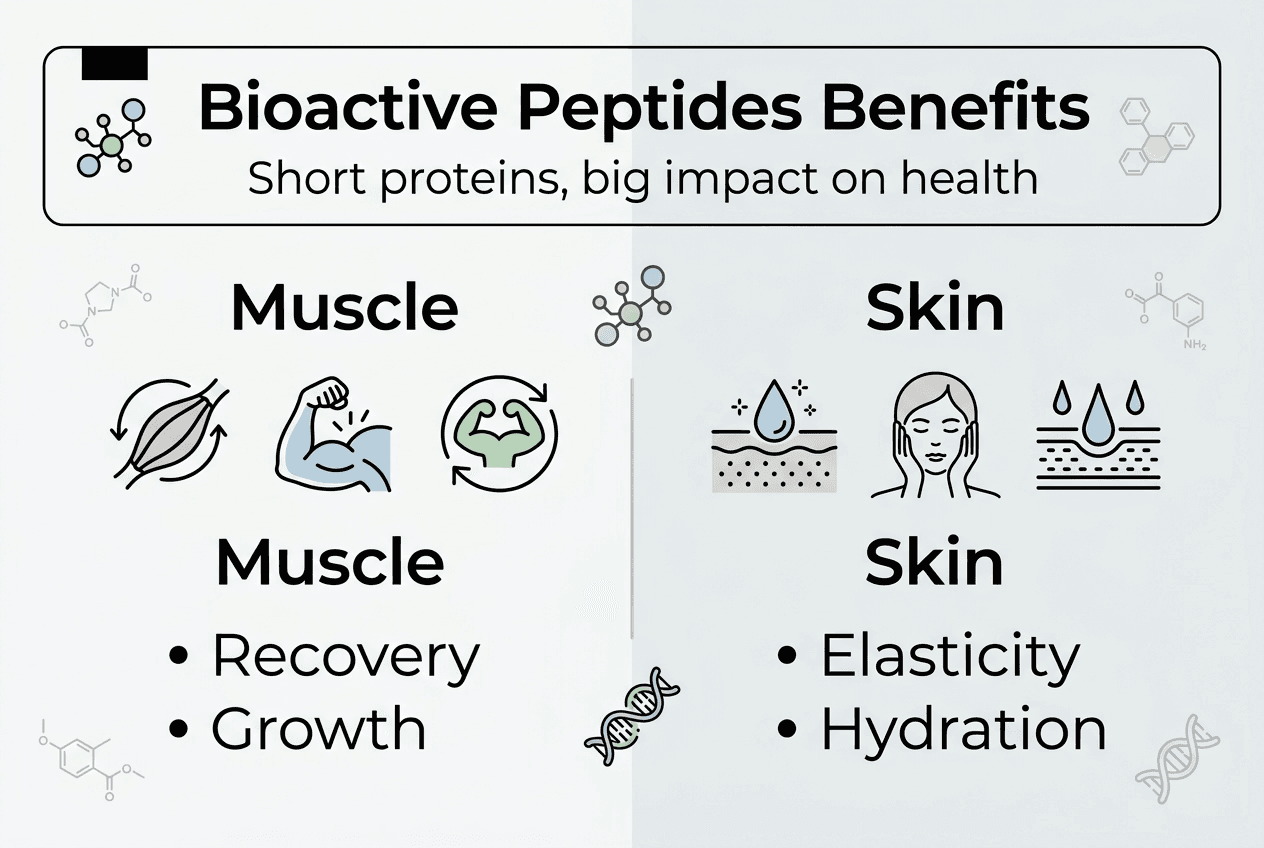
Bioactive peptides improve muscle recovery and growth by stimulating protein synthesis and reducing muscle damage; whey-derived peptides show enhanced recovery over casein. After intense training, your muscle fibers need rapid repair to grow stronger and prevent prolonged soreness. Peptides accelerate this process by activating the mTOR pathway, the cellular switch that initiates protein building. They also reduce inflammatory markers like creatine kinase and lactate dehydrogenase, which spike after muscle-damaging exercise.

Whey protein hydrolysates deliver peptides in pre-digested form, meaning they reach your bloodstream faster than intact proteins. Studies comparing whey peptides to casein or soy show significantly faster amino acid absorption and greater muscle protein synthesis rates in the critical two-hour window post-workout. This rapid delivery matters for athletes and serious lifters who need maximum recovery between sessions. The leucine-rich peptides in whey are particularly potent mTOR activators, making them ideal for muscle building and preservation during calorie restriction.
For skin health, certain peptides enhance collagen synthesis, reduce wrinkles, and protect against UV damage. Your skin's structural integrity depends on collagen and elastin networks that naturally degrade with age and sun exposure. Bioactive peptides signal fibroblast cells to ramp up production of these proteins, effectively reversing visible signs of aging. Collagen peptides also improve skin hydration by increasing hyaluronic acid synthesis, the molecule responsible for moisture retention.
Skin benefits extend beyond aesthetics:
- Wrinkle reduction: Peptides stimulate new collagen formation, filling in fine lines and improving skin texture
- UV protection: Certain peptides act as antioxidants, neutralizing free radicals generated by sun exposure before they damage DNA
- Improved elasticity: Enhanced elastin production helps skin bounce back from stretching and movement
- Faster wound healing: Peptides accelerate tissue repair, reducing scarring and recovery time from cuts or procedures
Different peptides target different pathways. Copper peptides enhance collagen while also promoting blood vessel formation for better nutrient delivery. Matrixyl peptides specifically stimulate types I and III collagen, the forms most depleted by aging. Argireline peptides relax facial muscles similarly to botulinum toxin but without injections. Understanding peptide effects on muscle and skin helps you select products aligned with your specific goals, whether that's faster recovery, anti-aging, or both.
Pro Tip: Combine collagen peptides with vitamin C for maximum skin benefits. Vitamin C is essential for collagen cross-linking, the process that gives the protein its strength and stability.
| Peptide Type | Primary Benefit | Typical Source | Effective Dose |
|---|---|---|---|
| Whey hydrolysate | Muscle recovery | Dairy | 20-40g post-workout |
| Marine collagen | Skin elasticity | Fish | 5-10g daily |
| Casein peptides | Sustained amino acids | Dairy | 20-30g before bed |
| Plant peptides | Cardiovascular support | Soy, pea | 15-25g daily |
Exploring athlete peptide benefits reveals even more applications, from endurance enhancement to injury prevention, making bioactive peptides versatile tools for anyone serious about performance and longevity.
Optimizing bioactive peptide use: selection, dosage, and quality
Efficacy depends on peptide sequence, dosage, and delivery; not all peptides are equally effective. The amino acid order determines which receptors a peptide binds to and what cellular response it triggers. A peptide designed for muscle building won't improve skin health, and vice versa. This specificity means you need to match the peptide type to your goal. Generic "collagen powder" might contain minimal bioactive fragments if processing methods don't optimize peptide formation.
Dosage significantly impacts results. For muscle recovery, research supports 20 to 40 grams of whey protein hydrolysate post-workout to maximize protein synthesis. Skin-focused collagen peptides typically require 5 to 10 grams daily for visible improvements in elasticity and hydration within 8 to 12 weeks. Taking less than the effective threshold wastes money and delivers minimal benefit. Exceeding recommended doses rarely improves outcomes and may cause digestive discomfort, as your body can only process so much protein at once.
Delivery method affects absorption and bioavailability. Oral peptides must survive stomach acid and digestive enzymes to reach the bloodstream. Hydrolyzed peptides have an advantage here because they're already broken into smaller fragments that pass through the intestinal wall more easily. Topical peptides in skincare products face the challenge of penetrating the skin barrier. Look for formulations with penetration enhancers or liposomal delivery systems that improve absorption. Injectable peptides bypass digestion entirely but require medical supervision and carry higher risks.
The supplement industry lacks consistent standardization, creating quality challenges. Standards vary; consumers should seek third-party tested peptides with clear labeling to ensure effectiveness. Many products don't specify peptide concentration, molecular weight distribution, or amino acid profiles, making it impossible to verify you're getting what you pay for. Contamination with heavy metals, microplastics, or allergens is a real concern with poorly manufactured products.
When selecting bioactive peptide products, follow these steps:
- Verify third-party testing: Look for certificates of analysis from independent labs confirming purity and potency
- Check molecular weight: Effective bioactive peptides typically range from 500 to 3,000 Daltons for optimal absorption
- Review amino acid profile: Ensure the product contains the specific peptides claimed on the label
- Assess sourcing transparency: Reputable brands disclose where and how they source raw materials
- Avoid proprietary blends: These hide actual peptide amounts, making dosage verification impossible
- Research the manufacturer: Established companies with scientific advisory boards are more reliable than fly-by-night operations
Pro Tip: Start with a lower dose to assess tolerance, especially if you have digestive sensitivities or allergies. Gradually increase to the effective range over one to two weeks.
Red flags include vague marketing claims like "revolutionary anti-aging formula" without specific peptide identification, prices significantly below market average suggesting diluted or fake products, and lack of contact information or customer service. Understanding peptide terminology helps you decode labels and ask informed questions. Learning about optimizing peptide use through proper timing, stacking, and cycling strategies maximizes your investment and results while minimizing risks.
Explore high-quality bioactive peptides with Pept
Now that you understand how bioactive peptides work and what to look for, finding reliable sources becomes your next priority. Pept simplifies this process by offering a vetted directory of trusted peptide suppliers who meet strict quality and transparency standards. You can browse an extensive research peptide directory covering muscle recovery, skin health, metabolic support, and more, with detailed information about each compound's mechanisms and applications.

Beyond supplier connections, the Pept education platform provides science-backed guides, dosing protocols, and safety information to help you make informed decisions. Whether you're an athlete seeking faster recovery, someone targeting skin aging, or simply exploring peptide benefits for overall wellness, having access to vetted products and educational resources reduces the risk of wasting money on ineffective supplements or encountering safety issues from questionable sources. Pept bridges the gap between scientific research and practical application, giving you the tools to optimize your health and fitness journey with confidence.
FAQ
What is a bioactive peptide?
A bioactive peptide is a short chain of amino acids, typically containing 2 to 20 units, that influences physiological processes when consumed or applied. These molecular fragments act as signaling molecules, binding to specific cellular receptors to trigger responses like reduced inflammation, increased collagen production, or enhanced muscle protein synthesis. Unlike complete proteins, their small size allows direct interaction with cells and tissues. They occur naturally in foods and can be isolated or synthesized for targeted health applications.
How do bioactive peptides help with muscle recovery?
Bioactive peptides accelerate muscle recovery by stimulating protein synthesis through the mTOR pathway and reducing inflammatory markers like creatine kinase that spike after intense exercise. Whey-derived peptides are particularly effective because they deliver branched-chain amino acids rapidly to damaged muscle tissue, often within 30 to 60 minutes of consumption. This fast delivery during the critical post-workout window maximizes repair and growth. Studies show whey peptides produce greater muscle protein synthesis rates compared to casein or intact proteins.
Are bioactive peptides safe compared to synthetic peptides?
Bioactive peptides from natural sources are generally safer than synthetic alternatives because they're biocompatible and biodegradable, breaking down into harmless amino acids through normal metabolism. Your body recognizes these sequences from food proteins consumed throughout human history, reducing the risk of adverse immune reactions or toxicity. Synthetic peptides may accumulate in tissues or trigger unexpected side effects because they don't follow natural metabolic pathways. However, quality and purity still matter; contaminated natural peptides can introduce allergens or toxins, so third-party testing remains essential.
Can bioactive peptides improve skin health?
Yes, certain bioactive peptides significantly improve skin health by stimulating fibroblast cells to produce more collagen and elastin, the structural proteins that maintain firmness and elasticity. Collagen peptides reduce wrinkle depth and improve skin hydration by increasing hyaluronic acid synthesis. Some peptides also protect against UV-induced damage by neutralizing free radicals before they degrade collagen or damage DNA. Visible improvements in skin texture and firmness typically appear after 8 to 12 weeks of consistent use at effective doses of 5 to 10 grams daily.
What should I look for when choosing bioactive peptide products?
Prioritize products with third-party testing certificates confirming purity, potency, and absence of contaminants like heavy metals or allergens. Check for transparent labeling that specifies peptide types, molecular weight, and exact dosages rather than hiding behind proprietary blends. Verify the source of raw materials and choose manufacturers with established reputations and scientific advisory boards. Avoid products making vague claims without identifying specific peptides or those priced suspiciously low, as these often indicate dilution or counterfeit ingredients that won't deliver promised benefits.