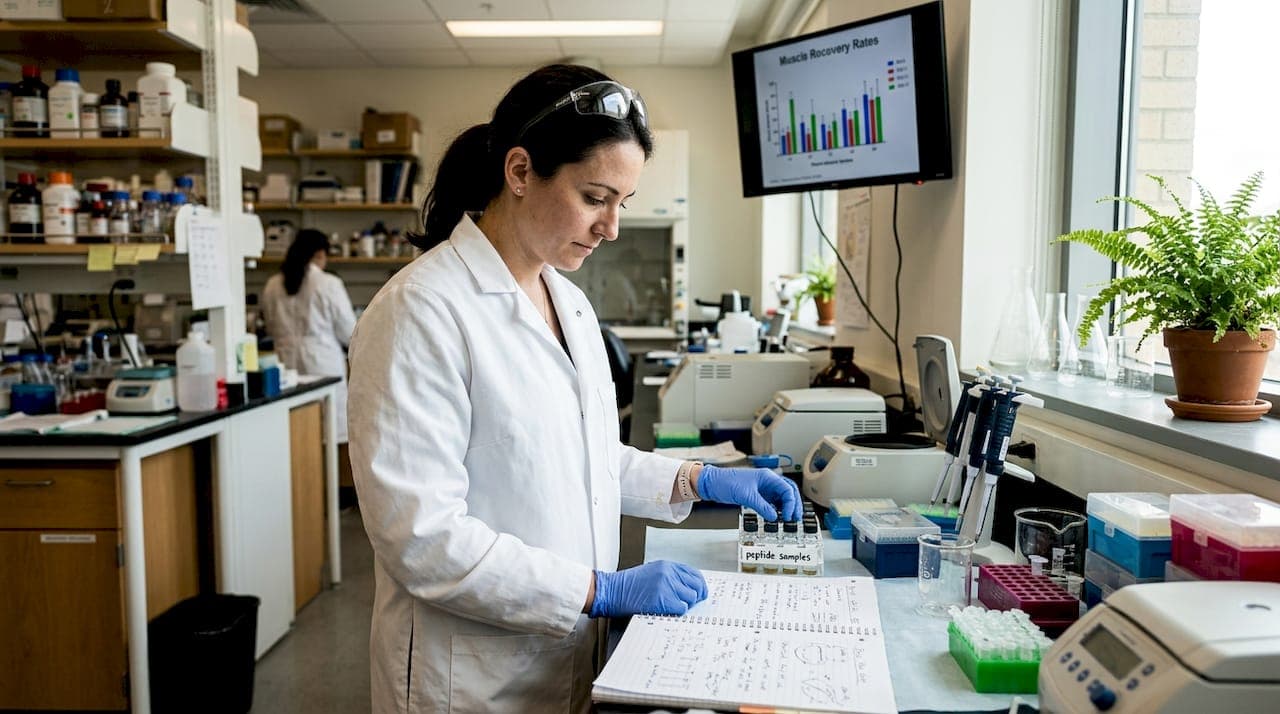
TL;DR:
- Choosing a peptide should align with a clear primary fitness goal and start with low doses.
- Collagen peptides are the safest and most researched option for muscle and joint support.
- Peptides amplify training and nutrition but do not replace proper diet or responsible long-term monitoring.
Choosing the wrong peptide doesn't just waste money. It can stall your progress for months or, worse, introduce health risks you weren't prepared to manage. With dozens of compounds flooding the research peptide market, athletes are under real pressure to pick wisely. The good news is that a structured, evidence-based approach cuts through the noise fast. This article walks you through the core selection criteria, the top peptide candidates backed by research, a side-by-side comparison, and a personalized decision framework so you can build a protocol that actually matches your goals.
Table of Contents
- Core criteria for peptide selection
- Top peptide candidates for fitness goals
- Comparative table: Peptides for muscle, recovery, and performance
- Choosing the peptide strategy for your unique needs
- An expert perspective on peptide selection myths
- Find trusted peptide suppliers and research options
- Frequently asked questions
Key Takeaways
| Point | Details |
|---|---|
| Start with one peptide | Begin with a single peptide for your main goal and monitor progress before expanding protocols. |
| Collagen and recovery | Collagen peptides are best supported for muscle and functional gains, especially in older adults. |
| Evidence over hype | Prioritize peptides with real-world benchmarks and avoid stacks or computational picks until they are proven. |
| Nutrition is foundational | Protein and amino acid nutrition must be in place before using peptides for performance. |
| Monitor safety | Evaluate for oncological risk and unexplained symptoms in long-term peptide protocols. |
Core criteria for peptide selection
Before you even look at a specific compound, you need a clear primary goal. Are you chasing muscle growth, faster injury recovery, or improved body composition? That single answer should drive every decision that follows. Trying to solve three problems at once with your first protocol is one of the most common mistakes athletes make.
Here's a proven framework to anchor your selection:
- Define your primary outcome before researching any compound. Muscle gain, recovery acceleration, and fat loss each point to different peptide classes.
- Start with one peptide at a low dose. As the decision framework at Peptide Journal recommends, start low, monitor with biomarkers for at least 8 weeks before drawing any conclusions or adding compounds.
- Track biomarkers, not just how you feel. IGF-1 levels, recovery scores, and body composition measurements give you real data.
- Avoid stacking early. Combining peptides before you understand how your body responds to one compound makes it impossible to know what's working.
- Audit your nutrition first. If your protein intake is inconsistent or your caloric base is off, no peptide will fix that.
Pro Tip: Think of peptides as conditional amplifiers. A PMC review on peptide use confirms that peptides amplify training and nutrition but do not replace them, and they show the strongest benefit in overtrained or recovering athletes.
Safety awareness is also non-negotiable. Long-term use of certain growth-promoting peptides carries potential oncology risks that many fitness communities underplay. If you're planning extended protocols, periodic bloodwork isn't optional. You can explore muscle and wellness evidence and review safe peptide usage guidelines to build a protocol that's both effective and responsible.
Top peptide candidates for fitness goals
Once you've defined your selection criteria, it's time to look at the evidence-backed candidates. Not all peptides are created equal, and the research behind each one varies significantly.
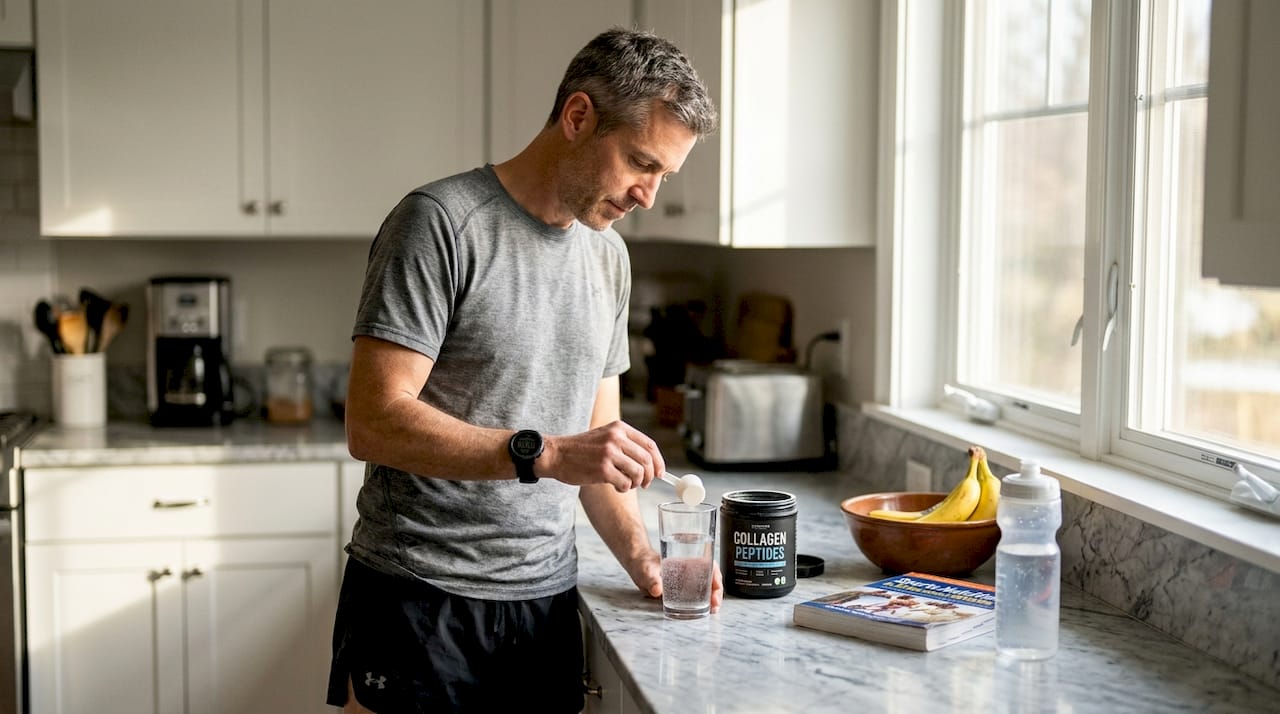
Collagen peptides are the most accessible and best-studied option for most athletes. At 10 to 20 grams per day combined with resistance training, collagen peptides increase muscle mass in older men and support connective tissue integrity across age groups. They're low-risk, widely available, and a logical starting point for anyone new to peptide protocols.
Growth hormone peptides like CJC-1295 and Ipamorelin stimulate the pituitary gland to release more growth hormone. The indirect muscle benefits are real, but it's worth noting that GH peptides boost growth hormone output while direct hypertrophy data in healthy young athletes remains limited. These compounds are better suited for intermediate to advanced users with a clear GH-related deficit.
BPC-157 stands out for injury recovery. It accelerates tissue repair, reduces inflammation, and lowers pain scores in both animal and early human models. Athletes dealing with chronic tendon issues or post-surgery recovery often report meaningful improvements within four to six weeks.
IGF-1 LR3 is the heavy hitter. Preclinical data shows IGF-1 LR3 carries 2 to 3 times the potency of native IGF-1, but direct human hypertrophy trials are still limited. This one belongs in advanced protocols only, and only when you have a solid baseline of experience with simpler compounds.
Key takeaways for this tier of candidates:
- Collagen peptides: best first-choice for muscle support and joint health
- CJC-1295 and Ipamorelin: intermediate options for GH optimization
- BPC-157: top pick for injury and tissue recovery
- IGF-1 LR3: high-potency, limited human data, advanced use only
Pro Tip: Explore widely studied peptides for muscle growth and understand how peptide receptors influence muscle recovery before committing to any compound beyond collagen.
Comparative table: Peptides for muscle, recovery, and performance
After exploring individual candidates, a direct comparison clarifies which options fit different fitness needs.
| Peptide | Primary mechanism | Evidence level | Starting dose | Best for | Key risk |
|---|---|---|---|---|---|
| Collagen peptides | Collagen synthesis, muscle protein support | Strong (human RCTs) | 10 to 20g/day | Muscle, joints, older adults | Minimal |
| CJC-1295 | GHRH analog, GH release | Moderate (indirect) | 100 to 300mcg, 2x/week | GH optimization | Hormonal disruption |
| Ipamorelin | Ghrelin mimetic, GH pulse | Moderate | 100 to 200mcg, 3x/week | GH pulse, recovery | Mild hunger increase |
| BPC-157 | Angiogenesis, tissue repair | Moderate (preclinical) | 250 to 500mcg/day | Injury recovery | Limited human data |
| IGF-1 LR3 | IGF-1 receptor agonist | Limited (preclinical) | 20 to 50mcg/day | Advanced hypertrophy | Oncology risk, hypoglycemia |
A few important points from this comparison:
- Evidence quality matters more than marketing claims. Collagen peptides have the most robust human trial data. IGF-1 LR3 has the most impressive preclinical numbers but the least real-world human confirmation.
- Dosage ranges are starting points, not targets. Always begin at the lower end and assess response before adjusting.
- The tiered evidence approach used in sports nutrition research ranks protein as the non-negotiable base, with creatine as a proven amplifier and HMB as a conditional add-on. Peptides fit into a similar hierarchy.
Key insight: Peptides sit above your nutritional foundation in the performance stack, not below it. If your protein intake isn't dialed in, even the most potent peptide protocol will underdeliver.
For a deeper look at how these compounds compare structurally, the breakdown of peptides vs proteins for muscle recovery is worth reading before you finalize your plan.
Choosing the peptide strategy for your unique needs
With all options laid out, here's how to tailor your peptide strategy to your situation.
Your age, training history, injury status, and budget all shape the right answer. There's no universal protocol, and anyone telling you otherwise is oversimplifying.
For older adults (50+): Collagen peptides are the strongest starting point. They support muscle mass, joint integrity, and connective tissue, all areas where age-related decline accelerates. Pair them with adequate protein (1.6 to 2.2g per kg of body weight) and consistent resistance training.
For younger athletes focused on muscle: GH peptides like CJC-1295 or Ipamorelin may be worth exploring if you've plateaued on training and nutrition alone. But only after at least one full cycle of monitoring your baseline IGF-1 and recovery metrics.
For athletes recovering from injury: BPC-157 is the evidence-backed choice. Track pain scores and functional movement weekly. Peptide-aided healing and recovery is one of the most supported use cases in the current literature.
Here's a practical decision checklist:
- Identify your primary goal (muscle, recovery, or energy).
- Set a realistic budget. Some peptides require refrigeration and precise dosing equipment.
- Establish baseline biomarkers before starting (IGF-1, CRP, body composition).
- Run a single-peptide protocol for 8 weeks minimum.
- Reevaluate using objective data, not just subjective feel.
One thing worth flagging: computational peptide design is emerging as a tool for personalized selection, but it's not athlete-ready yet. Stick to empirically validated options until more real-world human data is published. You can also review clinical applications of peptides and the latest athlete performance insights from 2026 research to stay current.
Pro Tip: If you experience unexplained fatigue, elevated fasting glucose, or unusual tissue changes during a protocol, stop and consult a sports medicine physician. Oncology risk monitoring is not fearmongering. It's responsible use.
An expert perspective on peptide selection myths
Stepping back, it's worth addressing the myths that mislead even experienced athletes. The most persistent one is that stacking multiple peptides from day one accelerates results. It doesn't. It just makes it impossible to know what's helping, what's hurting, and what's doing nothing at all.
Another myth is that newer or more exotic compounds are automatically better. The research doesn't support this. Peptides work best as amplifiers of solid training and nutrition, and oncology risks in long-term use deserve more attention than most fitness communities give them. Chasing the latest designer peptide while ignoring bloodwork is a gamble most athletes don't realize they're taking.
Real-world monitoring beats theoretical potency every time. A well-tracked collagen protocol with consistent biomarker checks will outperform a poorly monitored IGF-1 LR3 cycle in terms of both safety and measurable outcomes. For those using GH peptides, understanding growth hormone peptide safety is essential before starting any protocol.
Find trusted peptide suppliers and research options
Ready to take the next step? Reliable information and sourcing are crucial for practical success. Knowing which peptide to use is only half the equation. The other half is sourcing it from a supplier that meets research-grade quality standards.
At Pept, we've built a platform that connects you with trusted peptide suppliers who meet rigorous quality benchmarks, so you're not guessing about purity or concentration. You can also browse our full research peptides directory to compare compounds, read up on mechanisms, and find sourcing options that align with your protocol. Whether you're just starting with collagen or exploring advanced GH peptides, we have the resources to help you move forward with confidence.
Frequently asked questions
How long does it take to see results from a peptide protocol?
Most athletes notice measurable effects within 8 weeks when they consistently track biomarkers and recovery scores. Committing to 8-week low-dose monitoring before evaluating gives you clean, usable data.
Is peptide stacking safe for beginners?
No. Stacking complicates attribution and increases the chance of side effects you can't trace back to a single compound. Avoiding stacks initially is the safest approach for clearer monitoring and better outcomes.
What is the safest peptide for injury recovery?
BPC-157 has the strongest current evidence for tissue repair and pain reduction in overtrained athletes. Its effectiveness for injury recovery makes it the top recommendation in this category.
Should nutrition or peptides come first for muscle gain?
Nutrition always comes first. Protein and EAA foundations are critical for muscle gain, and peptides only amplify what a solid nutritional base has already established.
Are computationally designed peptides ready for athletic use?
Not yet. Computational design is emerging but lacks the real-world human trial data needed to confidently recommend it for athlete protocols in 2026.