
Peptide cycling is one of the most misunderstood practices in performance fitness, and that gap in knowledge costs athletes real results. Skip the off periods, ignore dosing windows, or buy from an unverified source, and you are not just wasting money. You are risking your health. The good news is that a structured, evidence-informed approach to cycling peptides can meaningfully improve muscle recovery, body composition, and even skin quality. This guide walks you through every stage, from understanding the basics to tracking your outcomes, so you can make smarter decisions with your protocol.
Table of Contents
- Understanding peptides and cycling basics
- Preparations before cycling: Safety, tools, and sourcing
- How to cycle peptides: Step-by-step process
- Troubleshooting and common mistakes in peptide cycling
- Evaluating results: Tracking outcomes and what to expect
- Explore trusted peptide resources and suppliers
- Frequently asked questions
Key Takeaways
| Point | Details |
|---|---|
| Cycle with medical oversight | Consult a physician before starting any peptide protocol, as most research is preclinical and human safety data is scarce. |
| Source from reputable suppliers | Choose trusted vendors with verified purity standards and transparent quality controls for optimal safety. |
| Monitor closely and adjust | Track your progress, note any side effects, and adjust cycle length or dosing as needed based on real-time feedback. |
| Follow cleanliness and storage standards | Maintain strict hygiene and proper storage to preserve peptide efficacy and minimize contamination risks. |
| Legal and compliance checks | Always verify the legal status of peptides in your jurisdiction and ensure you follow all applicable regulations. |
Understanding peptides and cycling basics
Peptides are short chains of amino acids that signal your body to perform specific biological functions. Some trigger growth hormone release, others accelerate tissue repair, and some influence fat metabolism. They are not steroids, but they are powerful enough to require a thoughtful approach.
Cycling means alternating between periods of active peptide use and deliberate rest. This matters because your body adapts quickly. Without breaks, receptor sensitivity drops, your results plateau, and you may increase your risk of side effects. Cycling keeps your system responsive and your outcomes consistent.
Here is a quick breakdown of the most common peptide categories and their primary uses:
| Peptide category | Primary purpose | Common examples |
|---|---|---|
| Growth peptides | Stimulate GH release, build muscle | CJC-1295, Ipamorelin |
| Recovery peptides | Accelerate tissue repair | BPC-157, TB-500 |
| Weight management | Regulate appetite and fat metabolism | AOD-9604, Semaglutide |
| Skin and collagen | Improve skin texture and elasticity | GHK-Cu, Epithalon |
Understanding peptide clinical applications helps you match the right compound to your specific goal rather than guessing. Most peptide research is preclinical, meaning human data is still limited, which is exactly why protocol discipline and medical oversight matter so much.
Key reasons cycling is non-negotiable:
- Prevents receptor desensitization so peptides keep working
- Reduces cumulative side effect risk over long-term use
- Allows your endocrine system to maintain natural rhythms
- Creates measurable windows for tracking real progress
The athlete performance research available in 2026 continues to reinforce that structured cycling outperforms continuous use in nearly every outcome category. Reviewing peptide research evidence before you start gives you a realistic picture of what to expect.
Now that you know why cycling matters, let's detail what you need before starting.
Preparations before cycling: Safety, tools, and sourcing
Getting your setup right before you inject anything is not optional. It is the foundation of a safe protocol.
Materials checklist:
- Sterile vials and bacteriostatic water for reconstitution
- Insulin syringes (typically 29-31 gauge)
- Alcohol swabs for prep and post-injection cleaning
- A sharps disposal container
- A dedicated refrigerator space or insulated storage case
- A logbook or tracking app for doses and observations
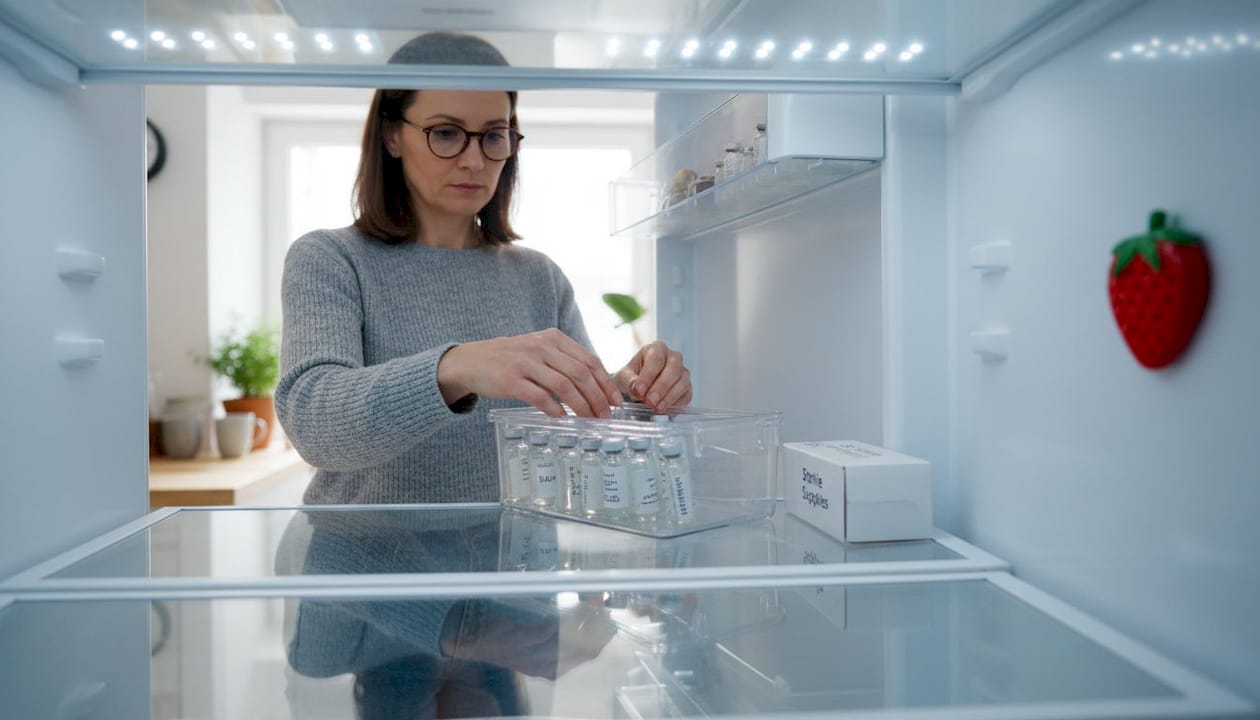
Storage is critical. Most lyophilized (freeze-dried) peptides remain stable at room temperature before reconstitution, but once mixed, they require refrigeration at 36 to 46 degrees Fahrenheit. Keep them away from light and never freeze a reconstituted vial.
Here is a comparison of sourcing options:
| Source type | Pros | Cons |
|---|---|---|
| Compounding pharmacy | Physician-prescribed, quality controlled | Requires prescription, higher cost |
| Vetted research supplier | Accessible, lab-tested options available | Requires due diligence on purity |
| Unverified online vendor | Low cost | High contamination and fraud risk |
Always prioritize reputable compounding pharmacies and physician oversight for safety. Cutting corners on sourcing is the single fastest way to undermine your entire protocol.
Pro Tip: Before ordering, always request a certificate of analysis (COA) from your supplier. A legitimate vendor will provide third-party lab results confirming purity and potency.
Use vetted peptide suppliers to avoid the guesswork. Understanding peptide purity standards tells you exactly what to look for in a COA. Follow peptide storage guidance to protect your investment, and stay current on peptide regulations in your region before purchasing.
With your safety materials and trusted sources established, you're ready to learn step-by-step cycling techniques.
How to cycle peptides: Step-by-step process
A well-structured cycle is the difference between real progress and wasted effort. Here is a practical framework:
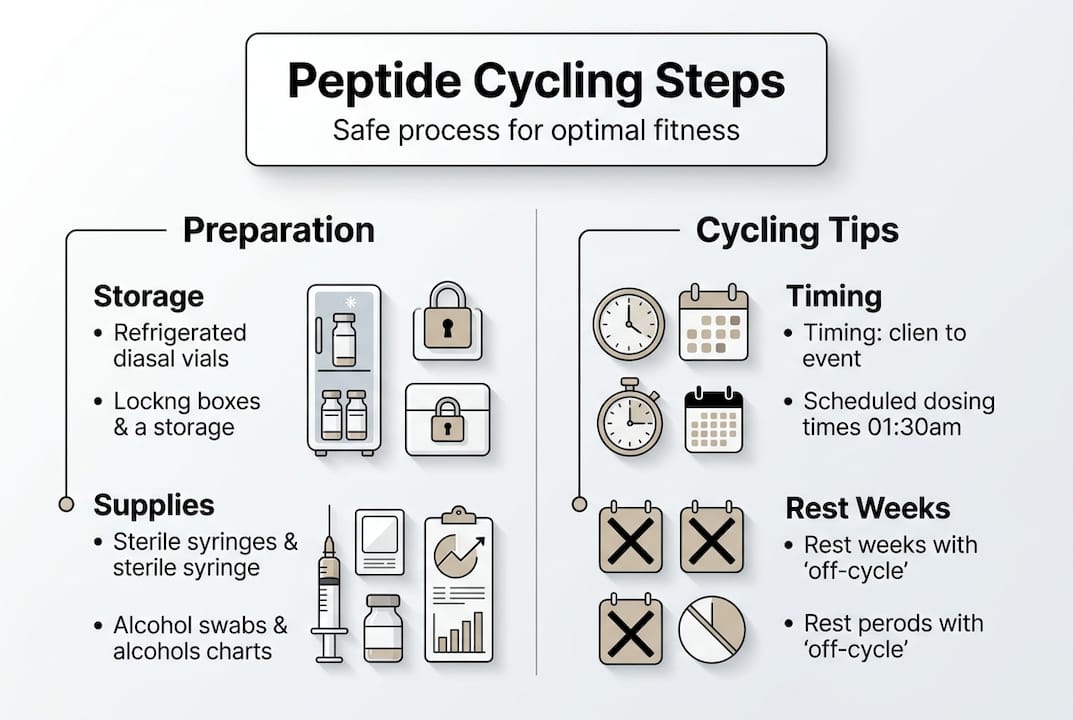
- Define your goal. Are you targeting muscle growth, fat loss, recovery, or skin restoration? Your goal determines which peptide you use and how long your cycle runs.
- Choose your peptide and dose. Start at the lower end of the recommended range. For example, Ipamorelin is commonly started at 100-200 mcg per injection, taken 2-3 times daily.
- Set your cycle length. Most protocols run 8-12 weeks on, followed by 4-6 weeks off. Recovery-focused peptides like BPC-157 may use shorter cycles of 4-6 weeks.
- Schedule your injections. Timing matters. Growth hormone secretagogues work best when taken before sleep or training. Follow the specific timing guidance for your chosen compound.
- Log every dose. Record the time, dose, injection site, and any physical observations. This data is invaluable for adjusting future cycles.
- Monitor weekly. Track body weight, performance metrics, sleep quality, and any side effects. Adjust if needed.
- Complete your off period. Do not skip rest phases. This is when your body consolidates gains and resets receptor sensitivity.
For a muscle enhancement protocol, a common structure is CJC-1295 paired with Ipamorelin for 10 weeks, followed by a 4-week break. For skin restoration, GHK-Cu is often cycled for 6-8 weeks with a 4-week rest.
Medical supervision reduces risk and ensures optimal outcomes, particularly when stacking multiple peptides or adjusting doses mid-cycle.
Pro Tip: Never start two new peptides simultaneously. Introduce one at a time so you can clearly identify what is working and what is causing any reaction.
Review safe cycling steps for protocol-specific guidance, and learn mixing peptides safely before you reconstitute your first vial.
Understanding the stepwise protocol, it's important to recognize and avoid common pitfalls.
Troubleshooting and common mistakes in peptide cycling
Even experienced users make mistakes. Knowing what to watch for keeps your cycle on track.
Most common mistakes and how to fix them:
- Overdosing early. More is not better with peptides. Excess doses accelerate tolerance and increase side effect risk. Stick to the starting range and only increase after 2-3 weeks of stable response.
- Skipping rest periods. This is the most frequent error. Continuous use blunts receptor sensitivity and can suppress natural hormone production. Respect the off phase.
- Buying from unverified sources. Contaminated peptides are a real risk. One bad batch can cause infection, immune reactions, or worse. Always verify supplier credentials.
- Ignoring early warning signs. Fatigue, water retention, tingling in the extremities, or digestive upset are signals to pause and reassess. Do not push through serious symptoms.
- Stacking too aggressively. Combining multiple peptides without understanding their interactions is a recipe for unpredictable outcomes.
Human data is still limited, so prioritize caution and expert guidance at every stage. If something feels off mid-cycle, stopping is always the right call. You can restart with better information.
Pro Tip: Keep a dedicated side-effect log separate from your dose log. Patterns become visible over time and help you and your physician make smarter adjustments.
For a broader view of what can go wrong and how to prevent it, the peptide safety overview is a solid reference.
Once you've addressed troubleshooting, you need to evaluate your success and results.
Evaluating results: Tracking outcomes and what to expect
Results from peptide cycling are rarely overnight. Setting realistic expectations protects your motivation and your health.
What to track and when to expect changes:
- Muscle recovery (weeks 2-4): Reduced soreness, faster bounce-back after training sessions
- Body composition (weeks 4-8): Gradual lean mass increase or fat reduction depending on peptide type
- Sleep quality (weeks 1-3): Many growth peptides improve deep sleep early in the cycle
- Skin texture (weeks 4-10): Collagen-stimulating peptides show visible changes later in the cycle
- Performance benchmarks: Track strength, endurance, and power output every two weeks
Here is a summary of expected timelines by peptide category:
| Peptide type | First noticeable effect | Peak effect window |
|---|---|---|
| Growth peptides | 2-4 weeks | 8-12 weeks |
| Recovery peptides | 1-2 weeks | 4-6 weeks |
| Weight management | 3-6 weeks | 10-16 weeks |
| Skin and collagen | 4-6 weeks | 8-12 weeks |
Most data stems from preclinical research, so real-world feedback from your own body is your most reliable guide. Adjust your next cycle based on what you observed, not just what the research suggests.
Stay current with current peptide research to refine your approach as new findings emerge. The field is moving fast, and protocols that were standard two years ago are already being refined.
Explore trusted peptide resources and suppliers
You now have a complete framework for cycling peptides safely and effectively. The next step is making sure your supply chain matches the quality of your protocol.
At pept.me, we connect fitness enthusiasts and athletes with the education and supplier access they need to cycle with confidence. Browse the vetted supplier directory to find sources with verified purity standards and transparent lab testing. Explore the full peptide directory to research compounds by goal, mechanism, and cycle structure. Whether you are just starting out or refining an advanced protocol, the peptide education platform gives you the research-backed resources to make every cycle count.
Frequently asked questions
How long should a typical peptide cycle last?
Most cycles run 4-12 weeks depending on the peptide type and your fitness goals. Always consult a physician to dial in the right duration for your specific protocol.
What are signs I should pause or stop a peptide cycle?
Pause if you notice fatigue, skin irritation, digestive issues, or a clear plateau in results. Any serious or worsening symptoms require immediate medical attention.
Do I need medical supervision to cycle peptides?
Medical guidance is strongly recommended because most peptide research is still preclinical and human safety data remains limited. A physician helps you dose correctly and catch problems early.
How can I ensure my peptides are safe and pure?
Order from vetted suppliers with transparent quality controls, and always request a certificate of analysis confirming third-party purity testing before use.
Are there legal risks to buying peptides for fitness?
Legal status varies by location and intended use. Always review your local regulations for research peptides and purchase only from compliant, transparent sources.