
You've probably heard peptides described as lab-created chemicals, but that's only half the story. The truth is, peptides are naturally occurring chains of amino acids that your body already uses for countless functions. What makes therapeutic peptides special isn't that they're artificial, it's that peptide synthesis allows scientists to create precise sequences that target specific wellness and fitness outcomes. Whether you're chasing muscle recovery, skin rejuvenation, or weight management, understanding how these compounds are made helps you make smarter choices about what you put in your body.
Table of Contents
- What is peptide synthesis?
- How peptides are made: The step-by-step process
- Comparison of synthesis strategies: Fmoc/tBu vs. Boc and green chemistry
- Why purity and sourcing matter for fitness and wellness peptides
- From lab to results: Peptide synthesis in practice
- Find trusted peptide suppliers and learn more
- Frequently asked questions
Key Takeaways
| Point | Details |
|---|---|
| Peptide synthesis basics | Peptide synthesis joins amino acids into targeted chains using precise lab methods. |
| SPPS efficiency and challenges | Solid-phase peptide synthesis is standard but generates chemical waste, pushing research toward greener options. |
| Purity and cGMP matter | Safety and effectiveness depend on high-purity, cGMP-standard peptides from trusted sources. |
| Real-world applications | Synthesized peptides like BPC-157 and GHK-Cu support muscle recovery and skin health when properly sourced. |
| Choose quality suppliers | Selecting vetted suppliers with transparent lab practices is essential for wellness and fitness outcomes. |
What is peptide synthesis?
Peptide synthesis is the chemical process of forming peptide bonds between amino acids to create short chains, typically up to 50 to 100 amino acids long. Think of it as molecular construction, where each amino acid is a building block snapped into place with precision. This process enables researchers and manufacturers to produce peptides that mimic or enhance natural biological functions, from accelerating tissue repair to boosting collagen production.
For athletes and wellness enthusiasts, this matters because most therapeutic peptides fall into the 5 to 50 amino acid range. These shorter sequences are easier to synthesize, more stable, and can be tailored to deliver specific benefits. A peptide designed for muscle recovery will have a completely different amino acid sequence than one targeting skin elasticity, and synthesis is what makes that customization possible.
The beauty of modern peptide synthesis lies in its flexibility. Labs can produce peptides manually for small batches or use automated synthesizers for larger, consistent runs. This scalability ensures that whether you're a researcher testing a new compound or an athlete sourcing a proven therapy, the quality remains predictable.
Key benefits of peptide synthesis:
- Precise control over amino acid sequence and length
- Ability to create peptides not found in nature
- Consistent quality across production batches
- Customization for specific therapeutic targets
"Peptide synthesis bridges the gap between biological potential and practical application, turning amino acid sequences into targeted wellness solutions."
Understanding how peptides influence health starts with recognizing that synthesis isn't about creating something unnatural. It's about replicating and refining what already works in your body, then delivering it in a form that maximizes results.
How peptides are made: The step-by-step process
Solid-phase peptide synthesis, or SPPS, is the workhorse method behind most therapeutic peptides you'll encounter. Developed in the 1960s, this technique revolutionized how scientists build peptides by anchoring the growing chain to a solid resin bead. This approach allows chemists to add amino acids one at a time, washing away excess reagents after each step without losing the peptide itself.
The process follows a repeating cycle of protection, coupling, and deprotection. Each amino acid arrives with a protective group, typically Fmoc, shielding its reactive amino end. Once attached to the growing chain, that protection is removed, and the next amino acid is added. Side chains on certain amino acids also get temporary protection, usually with tBu groups, to prevent unwanted reactions.
The SPPS cycle in order:
- Deprotection: Remove the Fmoc group using 20% piperidine in DMF, exposing the amino end for the next coupling.
- Washing: Flush the resin with DMF to clear out deprotection byproducts.
- Coupling: Add the next Fmoc-protected amino acid, activated with reagents like HBTU or DIC/HOBt, to form the peptide bond.
- Washing: Rinse again with DMF to remove excess amino acids and coupling agents.
- Repeat: Continue the cycle until the full sequence is assembled.
- Cleavage: Treat the resin with trifluoroacetic acid (TFA) to release the completed peptide and remove side-chain protections.
This methodical approach ensures accuracy. Each amino acid must attach in the correct position, or the final peptide won't function as intended. Automated synthesizers can run these cycles overnight, producing peptides with 95% or higher purity when done correctly.
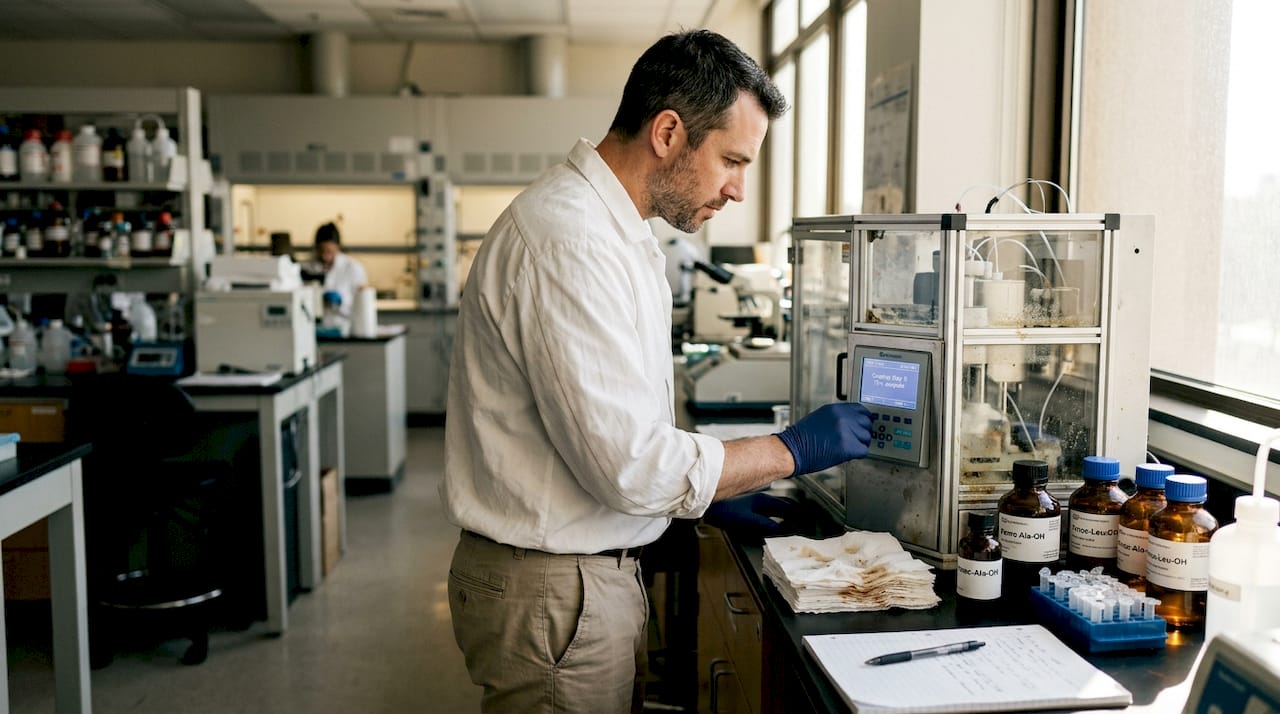
Pro Tip: When evaluating peptide suppliers, ask about their synthesis method and purity testing. SPPS is standard, but the quality of reagents and attention to detail during coupling steps separates mediocre peptides from exceptional ones.
For those diving deeper into the science, facts about peptide synthesis reveal how small variations in technique can impact the final product. Similarly, understanding peptide research for fitness helps you connect lab processes to real-world outcomes.
Comparison of synthesis strategies: Fmoc/tBu vs. Boc and green chemistry
Not all peptide synthesis methods are created equal. The Fmoc/tBu strategy dominates modern SPPS because it uses milder conditions that reduce the risk of errors. Fmoc protects the amino end and is removed with a base like piperidine, while tBu-based groups shield side chains and come off with acid during final cleavage. This combination minimizes racemization, where amino acids flip to the wrong stereochemistry, ruining the peptide's activity.
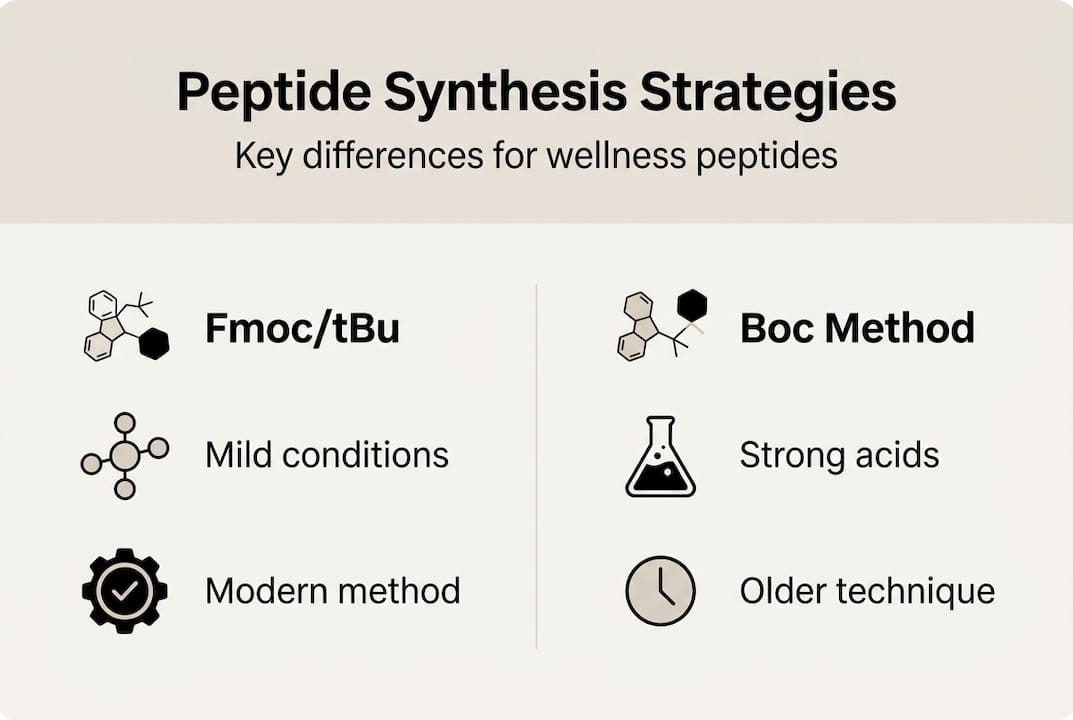
The older Boc method, by contrast, relies on harsher acids for deprotection. While it works, the aggressive conditions increase the chance of side reactions and degradation, especially with sensitive amino acids. For wellness peptides where purity and consistency matter, Fmoc/tBu is the clear winner.
| Synthesis Strategy | Protection Groups | Deprotection Conditions | Advantages | Disadvantages |
|---|---|---|---|---|
| Fmoc/tBu | Fmoc (amino), tBu (side chains) | Base (piperidine), then acid (TFA) | Milder conditions, less racemization, industry standard | Requires careful reagent quality |
| Boc | Boc (amino), Bzl (side chains) | Acid (TFA) for both steps | Simpler chemistry, older method | Harsher conditions, higher error risk |
| Green Chemistry | Varies (NCAs, aqueous methods) | Reduced solvent use, alternative reagents | Lower environmental impact | Still in development, not widely adopted |
Here's the uncomfortable truth: SPPS is not environmentally friendly. Producing just one kilogram of peptide can require 100 to 1,000 kilograms of solvents and reagents, most of which become waste. Researchers are exploring greener alternatives, like using N-carboxyanhydrides (NCAs) or aqueous conditions, but these methods aren't yet practical for large-scale production.
Statistic spotlight: Current SPSS methods generate up to 1,000 times more waste by weight than the final peptide product, highlighting the urgent need for sustainable innovation in peptide manufacturing.
For athletes and wellness users, this means the peptides you use today likely come from a resource-intensive process. While that doesn't diminish their effectiveness, it's worth supporting suppliers who invest in cleaner methods as they become available. The Fmoc/tBu vs. Boc comparison digs deeper into how these choices affect both quality and sustainability.
Why purity and sourcing matter for fitness and wellness peptides
A perfectly synthesized peptide sequence means nothing if it's contaminated with impurities or degraded during storage. Poorly made peptides can contain leftover reagents, truncated sequences, or even entirely wrong amino acids. These flaws don't just reduce effectiveness, they can introduce side effects or allergic reactions that undermine your health goals.
This is where cGMP (current Good Manufacturing Practices) standards become non-negotiable. cGMP-grade synthesis ensures that every batch meets strict purity thresholds, typically 95% or higher, and is free from harmful contaminants. For peptides used in muscle recovery, skin rejuvenation, or weight management, this level of quality control directly impacts how well the compound works in your body.
Why purity matters for your results:
- Efficacy: Impurities dilute the active peptide, reducing its therapeutic effect.
- Safety: Contaminants can trigger immune responses or interact unpredictably with your system.
- Consistency: High-purity peptides deliver predictable results across doses and batches.
- Stability: Pure peptides degrade more slowly, maintaining potency during storage.
"Sourcing peptides from verified suppliers isn't just about legality, it's about ensuring that what you're using matches what the research says it should do."
Before committing to any peptide, demand a certificate of analysis (CoA) from an independent lab. This document should confirm the peptide's identity, purity, and absence of contaminants. If a supplier can't or won't provide this, walk away. The risks aren't worth it.
Pro Tip: Look for suppliers who use third-party testing, not just in-house quality checks. Independent verification removes conflicts of interest and gives you confidence that the peptide meets advertised standards.
For those serious about safe peptide usage, understanding sourcing is as important as understanding dosing. The science behind peptide clinical use and evidence for peptide results only holds up when the peptides themselves are manufactured correctly.
From lab to results: Peptide synthesis in practice
Let's bring this down to earth with peptides you've probably heard about. BPC-157, TB-500, and GHK-Cu are all produced via SPPS, and each one showcases how synthesis translates into real-world benefits. BPC-157, a 15-amino-acid sequence, is popular for soft tissue repair and gut health. TB-500, derived from thymosin beta-4, supports muscle recovery and flexibility. GHK-Cu, a tripeptide bound to copper, is a staple in anti-aging and skin health protocols.
These peptides work because their amino acid sequences interact with specific receptors or pathways in your body. BPC-157 promotes angiogenesis, the formation of new blood vessels, which accelerates healing. TB-500 regulates actin, a protein critical for cell migration and tissue repair. GHK-Cu stimulates collagen production and has antioxidant properties that protect skin cells from damage.
| Peptide | Amino Acid Length | Primary Use | Key Mechanism | Synthesis Method |
|---|---|---|---|---|
| BPC-157 | 15 | Soft tissue repair, gut health | Promotes angiogenesis and tissue regeneration | SPPS (Fmoc/tBu) |
| TB-500 | 43 | Muscle recovery, flexibility | Regulates actin for cell migration | SPPS (Fmoc/tBu) |
| GHK-Cu | 3 | Skin health, anti-aging | Stimulates collagen, antioxidant activity | SPPS (Fmoc/tBu) |
The synthesis process for these peptides follows the same SPPS cycle outlined earlier, but the devil is in the details. A single error during coupling, like incomplete deprotection or contamination, can render the peptide inactive or even harmful. This is why sourcing from cGMP-certified labs is critical.
Actionable steps for choosing peptides:
- Verify the synthesis method: Confirm the supplier uses SPPS with Fmoc/tBu chemistry for modern standards.
- Request a certificate of analysis: Ensure purity is 95% or higher and contaminants are below detectable limits.
- Review scientific evidence: Match the peptide's intended use with published research on its mechanism and outcomes.
- Check storage recommendations: Peptides degrade over time; proper storage (often refrigerated or frozen) preserves potency.
For athletes and fitness enthusiasts, understanding muscle growth peptide research and athlete performance insights helps you connect synthesis quality to the gains you're chasing. A well-made peptide isn't just a product, it's a tool that works because every step of its creation was executed correctly.
Find trusted peptide suppliers and learn more
Knowing how peptides are made is one thing. Finding suppliers who actually follow best practices is another. The peptide market is flooded with vendors making big claims, but not all of them back it up with quality synthesis and transparent testing. That's where platforms like Pept come in, offering a curated directory of research peptide suppliers who meet rigorous standards for manufacturing and verification.
Whether you're exploring peptides for muscle recovery, skin health, or metabolic support, having access to vetted sources removes the guesswork. You can browse research peptides by category, compare supplier credentials, and access educational resources that break down complex science into actionable insights. It's about making informed decisions, not just buying the first product that pops up in a search.

Pept's mission is simple: connect people who want to use peptides responsibly with the information and suppliers they need to do it right. From understanding synthesis methods to evaluating certificates of analysis, the platform provides the tools to navigate this space confidently. Explore Pept education resources to deepen your knowledge and find peptides that align with your wellness and fitness goals.
Frequently asked questions
How is peptide synthesis different from natural peptide production?
Synthetic peptide synthesis occurs in a lab using chemical methods to form peptide bonds, while natural peptides are produced by living cells through biological processes like translation. Lab synthesis allows for precise control over sequence and purity.
What are the main safety risks with improperly synthesized peptides?
Impurities and synthesis errors can reduce efficacy or introduce harmful effects, including allergic reactions or unintended biological activity. Always choose cGMP-certified sources with third-party testing to minimize these risks.
Is peptide synthesis environmentally sustainable?
Current SPPS methods generate 100 to 1,000 kilograms of waste per kilogram of peptide produced, making them resource-intensive. Researchers are developing greener alternatives using NCAs and aqueous conditions, but widespread adoption is still years away.
Can athletes legally use peptides made via synthesis for sports or fitness?
Legality varies by region and intended use. Many peptides are legal for research purposes but not approved for human consumption. Always source cGMP-certified peptides and check relevant regulations, including anti-doping rules if you compete in organized sports.