
TL;DR:
- Measuring peptide effectiveness requires category-specific benchmarks and consistent tracking methods.
- Baseline data like body composition, strength, and photos are essential for accurate assessment.
- Objective metrics and long-term tracking improve reliability amid limited large-scale clinical research.
You invest real time and money into peptide treatments, but when week eight rolls around, you're left wondering: is this actually working? Measuring peptide efficacy is genuinely tricky because results vary by goal, peptide type, and individual biology. Evaluating peptide effects is complex, with many lacking large clinical studies for fitness and aesthetics. Whether you're chasing muscle growth, fat loss, or better skin, this guide walks you through a practical, evidence-informed process for assessing what's actually happening in your body.
Table of Contents
- Understand the fundamentals of peptide assessments
- Prepare for accurate peptide tracking
- Step-by-step: How to assess muscle, weight, and skin results
- Troubleshooting, safety, and interpreting ambiguous results
- What most guides miss about peptide assessment
- Connect with reliable peptide resources
- Frequently asked questions
Key Takeaways
| Point | Details |
|---|---|
| Baseline is everything | Accurate peptide assessment starts with precise pre-treatment measurements and consistent tracking. |
| Evidence over anecdote | Rely on clinical metrics and objective tools instead of personal impressions for maximum reliability. |
| Safety is critical | Monitor for unexpected effects and keep up with evolving research to ensure safe peptide use. |
| Results take time | Expect visible improvements in muscle or skin over 8–12 weeks, not overnight. |
Understand the fundamentals of peptide assessments
Before you can measure results, you need to know what you're measuring and why it's harder than it sounds. What peptides are matters here: they're short chains of amino acids that signal specific biological processes, from stimulating growth hormone release to triggering collagen synthesis. Different peptides target completely different systems, which means there's no single assessment method that covers all use cases.
The three main categories most users focus on are:
- Muscle building: Peptides like CJC-1295 and Ipamorelin stimulate growth hormone and IGF-1, supporting hypertrophy and recovery.
- Weight loss: Peptides like AOD-9604 and semaglutide-adjacent compounds target fat metabolism and appetite regulation.
- Skin enhancement: Topical and oral peptides like Matrixyl and collagen peptides promote elasticity, hydration, and wrinkle reduction.
Each category demands different metrics and different timelines. That's where most self-assessments fall apart. People apply a single standard ("do I look better?") to a process that requires category-specific benchmarks.
Here's a quick comparison of how assessment differs across goals:
| Goal | Primary metric | Secondary metric | Typical timeframe |
|---|---|---|---|
| Muscle growth | Strength output, IGF-1 | Body composition | 8 to 16 weeks |
| Weight loss | Body fat percentage | Waist circumference | 8 to 12 weeks |
| Skin enhancement | Wrinkle depth, elasticity | Hydration, brightness | 8 to 12 weeks |
The challenge is compounded by the fact that many peptides lack large RCTs, especially for fitness applications. Without controlled trial data, you're often relying on smaller studies or self-reported outcomes. That doesn't make assessment impossible. It means you need to be more rigorous, not less. Understanding peptide effects explained by mechanism helps you set realistic expectations before you even start tracking.
Prepare for accurate peptide tracking
The biggest mistake people make is starting a peptide protocol without any baseline data. Without a starting point, you have nothing to compare against, and any perceived change becomes pure guesswork.
Here's what to measure before you begin:
- Body composition: Use DEXA scan, bioelectrical impedance, or caliper measurements for lean mass and fat percentage.
- Strength benchmarks: Log your one-rep max or working weights for key compound lifts.
- Skin condition: Take high-resolution photos in consistent lighting. Note hydration levels if you have a skin moisture meter.
- Lab values: Request IGF-1, fasting glucose, and relevant hormone panels from your doctor.
- Weight and circumference: Morning weight plus waist, hip, and arm measurements.
For tracking tools, a simple training log combined with a spreadsheet works well. Apps like MyFitnessPal or Cronometer help with nutrition context, which matters because peptide outcomes are heavily influenced by diet and training. Photos are underrated. Standardized before/after images taken under the same lighting, same time of day, and same angle are among the most reliable low-cost tools you have.
Here's a recommended tracking schedule based on outcome type:
| Outcome | Check-in frequency | Key tool |
|---|---|---|
| Muscle growth | Every 4 weeks | Strength log, body comp |
| Weight loss | Weekly | Scale, tape measure |
| Skin enhancement | Every 4 weeks | Photos, hydration meter |
| Lab values | Baseline and week 12 | Blood panel |
For skin specifically, oral and topical peptides improve hydration, wrinkles, and elasticity in controlled trials over 8 to 12 weeks. That's your minimum tracking window. Assessing at week four and calling it a failure is a common error. Reviewing safe peptide usage protocols before you begin ensures your tracking plan aligns with responsible use.
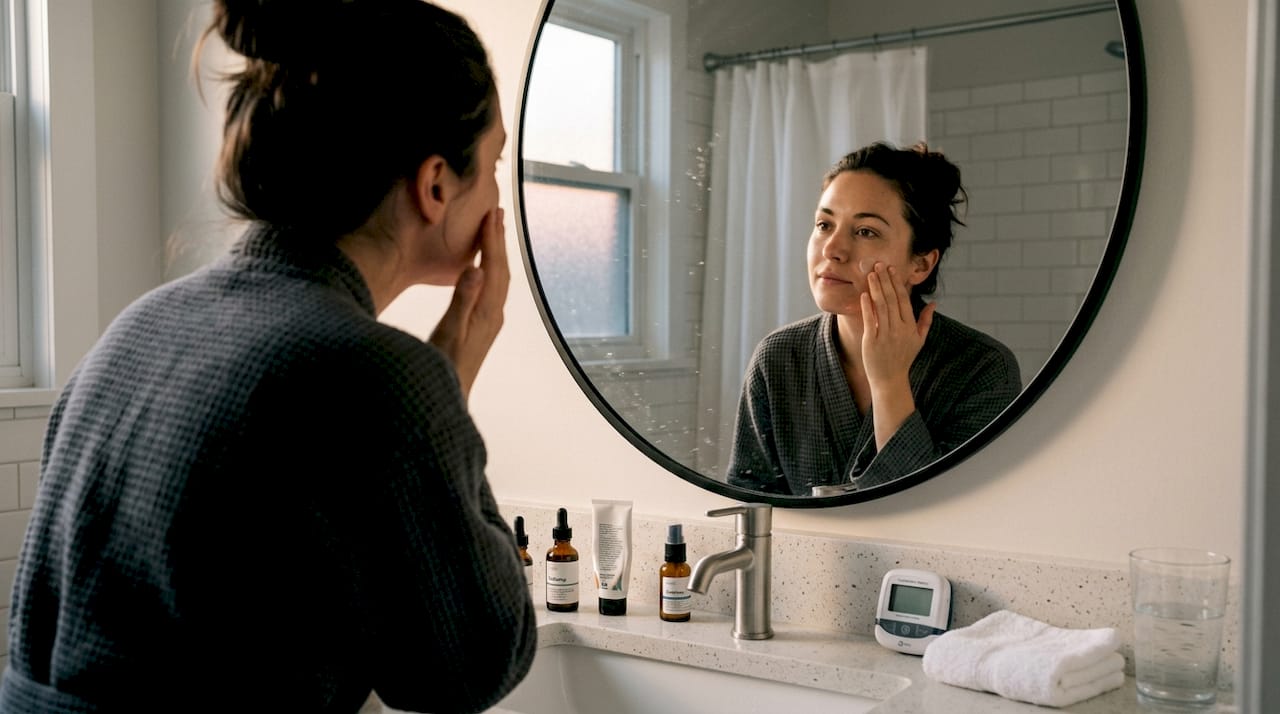
Pro Tip: Take your baseline measurements on three consecutive days and average them. Single-day readings can be skewed by hydration, sleep, or stress. An averaged baseline gives you a far more stable comparison point.
Step-by-step: How to assess muscle, weight, and skin results
With your baseline locked in, here's how to execute structured monitoring across each goal category.
For muscle building:
- Log strength output every training session. Look for progressive overload trends across four-week blocks.
- Retest body composition at weeks four, eight, and twelve using the same method as your baseline.
- Request an IGF-1 blood test at week eight. IGF-1 increases may confirm efficacy when combined with resistance training, giving you a biological marker beyond just how you look or feel.
- Track recovery quality: rate your soreness and sleep quality daily on a simple 1 to 5 scale.
For weight loss:
- Weigh yourself every morning before eating. Use a seven-day rolling average to cut through daily fluctuation noise.
- Measure waist and hip circumference every two weeks. Fat loss often shows in measurements before the scale moves.
- Track energy levels and appetite changes in a daily log. These are often early indicators that a peptide is active.
- Recheck body fat percentage at weeks six and twelve.
For skin enhancement:
- Take standardized photos every four weeks. Same camera, same angle, same lighting, same time of day.
- If you have access to a skin hydration meter, measure three zones: forehead, cheek, and jawline.
- Note texture and firmness subjectively on a 1 to 10 scale each week.
- At week twelve, compare photos side by side. Wrinkle volume, depth, and elasticity are the most reliable skin outcome metrics after peptide treatment.
"The goal isn't perfection in measurement. It's consistency. Imperfect data collected consistently beats perfect data collected once."
For deeper context on what the evidence actually says about each outcome, peptide results evidence across muscle, skin, and wellness is worth reviewing alongside your own tracking data. You can also explore peptide clinical applications to understand how research protocols map to real-world use.
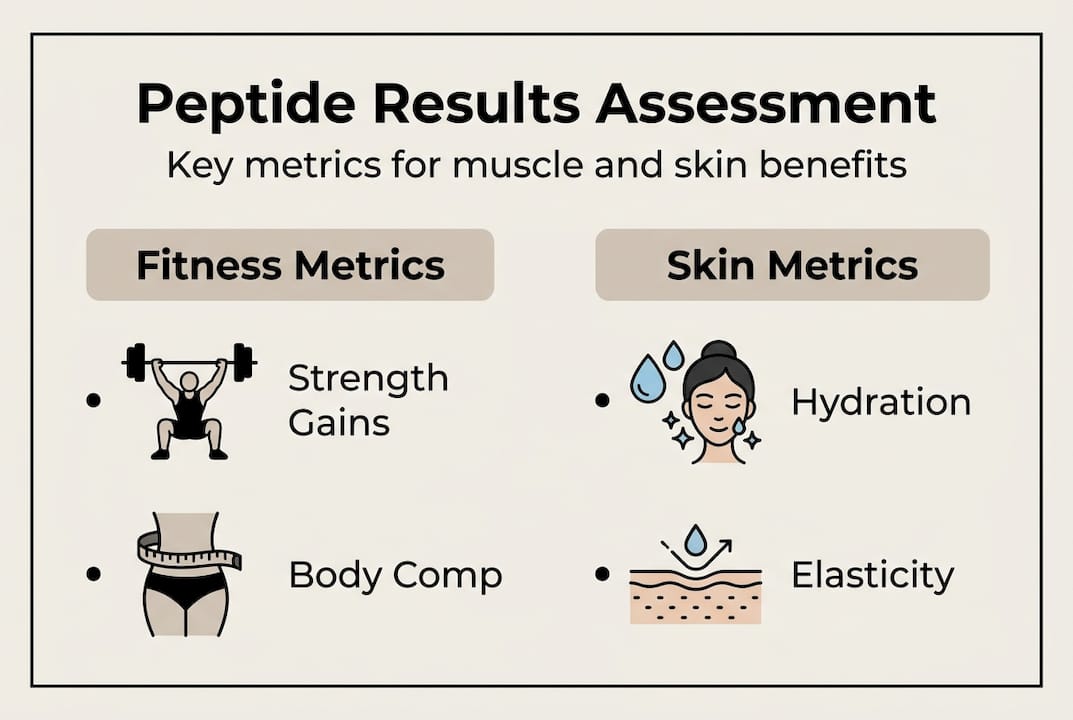
Pro Tip: Pair your peptide tracking with a consistent training and nutrition protocol. Peptides amplify inputs. If your training or diet is inconsistent, your results data becomes impossible to interpret.
Troubleshooting, safety, and interpreting ambiguous results
Even with a solid tracking plan, you'll hit periods where results look flat or confusing. Here's how to work through them.
The most common tracking mistakes include:
- Changing too many variables at once. Starting a new peptide while also changing your diet, sleep schedule, or training program makes it impossible to isolate what's driving any change.
- Expecting linear progress. Biological adaptation is rarely a straight line. Plateaus are normal, especially in weeks five through eight.
- Relying on subjective feel alone. "I feel like it's working" is not data. Pair subjective impressions with at least one objective metric.
- Stopping too early. Eight weeks is a minimum for most outcomes. Quitting at week four gives you incomplete information.
When results look ambiguous, ask these questions before concluding the peptide isn't working: Has your training volume been consistent? Is your sleep averaging seven or more hours? Are you in a caloric range appropriate for your goal?
"Ambiguous results are almost always a signal to audit your inputs before questioning the peptide."
On safety: monitor for side effects actively, since GH-stimulating peptides may not benefit well-trained athletes and efficacy is often anecdotal in that population. Watch for water retention, joint discomfort, tingling, or changes in fasting glucose. These are worth logging and discussing with a healthcare provider.
For a more structured approach to interpreting your data, the peptide research guide covers methodology that bridges research standards with practical self-monitoring. If you're focused on performance, peptide athlete performance insights from 2026 research offer useful context on what's realistic for trained individuals.
What most guides miss about peptide assessment
Here's the uncomfortable truth: most self-assessments are biased toward confirmation. You want the peptide to work, so you notice the days you feel strong and discount the days you don't. This isn't weakness. It's human. But it does mean your subjective tracking will almost always overstate results unless you build in controls.
Clinical research solves this with blinded trials and placebo controls. You can't fully replicate that at home, but you can get closer. Use objective metrics. Lock in your baseline before you start. Commit to a fixed assessment schedule and stick to it regardless of how you feel.
The other thing most guides skip: realistic expectations based on your training status. A beginner will see more dramatic changes than a trained athlete, not because the peptide is more effective, but because beginners have more room to adapt. Calibrate your expectations accordingly.
Reviewing step-by-step peptide results frameworks helps you build a more honest picture of what's achievable and what timeline is actually supported by evidence.
Connect with reliable peptide resources
Tracking your results is only as good as the quality of what you're using and the information guiding your decisions.
At pept.me, we connect you with vetted research peptide suppliers so you're not left guessing about purity or sourcing. You can also browse the full peptide directory to compare peptide types, mechanisms, and documented effects across fitness, body composition, and skin goals. Whether you're just starting out or refining a protocol you've been running for months, having reliable sourcing and up-to-date research in one place makes the difference between guesswork and a process you can actually trust.
Frequently asked questions
How long does it take to see peptide results?
Most clinical studies suggest 8 to 12 weeks for skin improvements and several weeks for muscle outcomes, depending on peptide type and regimen. RCTs for skin peptides typically assess changes over this same 8 to 12 week window.
What is the best way to measure muscle gains from peptides?
Track baseline and post-treatment strength, body composition, and IGF-1 lab values for the most reliable assessment. IGF-1 elevation confirms muscle peptide efficacy when combined with multiple metrics for stronger evidence.
How do I assess peptide skin benefits at home?
Use before/after photos in consistent lighting, a hydration meter if available, and track wrinkle or elasticity changes over 8 to 12 weeks. Skin outcomes are best evaluated by wrinkle volume, hydration, and elasticity measurements.
Are peptide results reliable without large clinical studies?
Many peptide claims are anecdotal, and results are most reliable when tracked objectively with control measurements and consistent methods. Most peptides lack large RCTs, making personal rigor in tracking even more important for interpreting your own outcomes.