
Finding the right fit can make a big difference when searching for reliable solutions online. Some platforms become known for their unique features or outstanding service, but sometimes you need more options to meet specific needs. With so many choices appearing every year, it is easy to wonder which sites stand out from the rest. Discovering strong alternatives can open new possibilities and reveal hidden advantages you might have missed before. Get ready to learn about fresh options that offer variety and exciting potential for the future.
Table of Contents
Pept
At a Glance
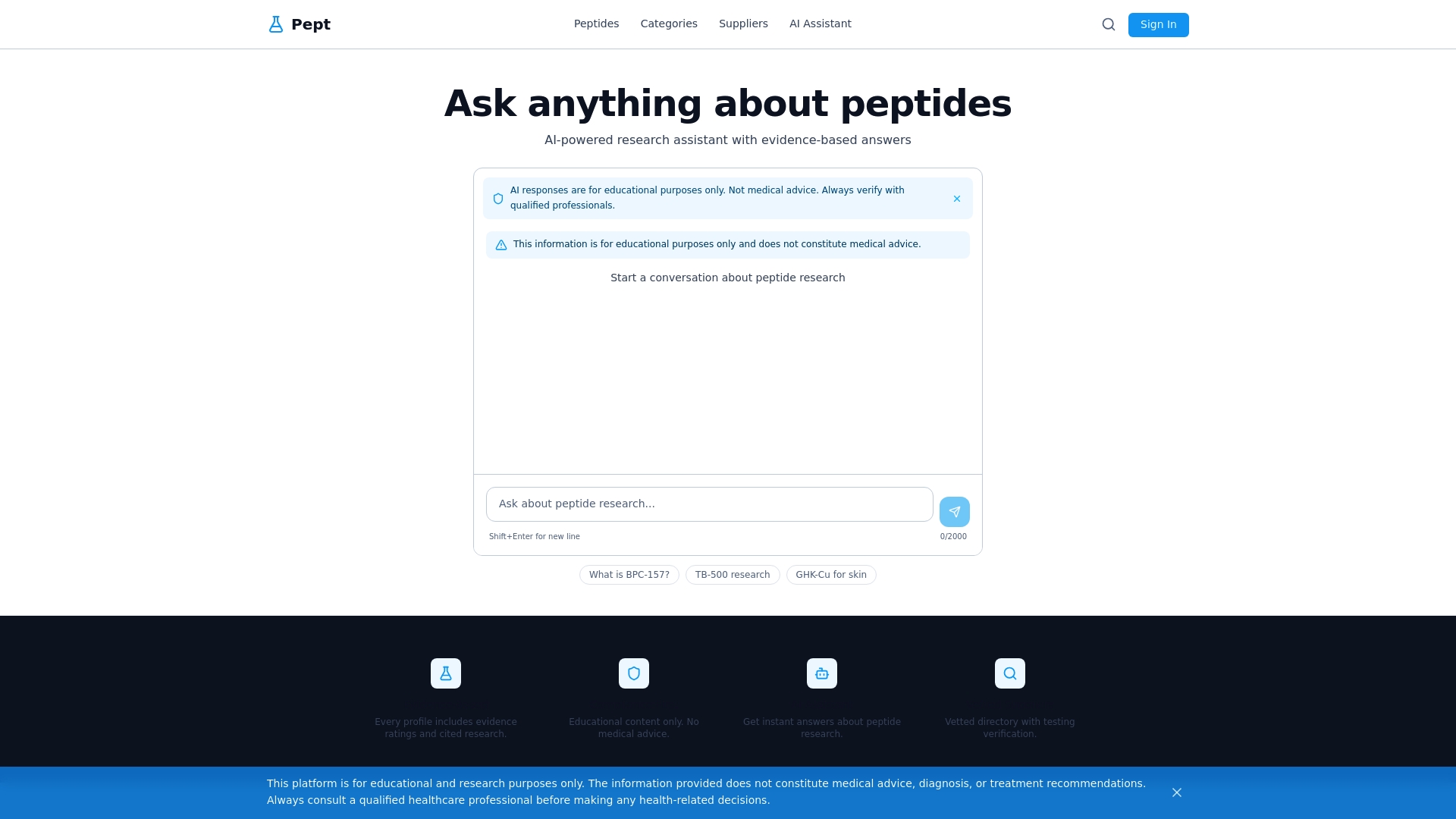
Pept is the leading educational and research platform for peptides that blends evidence based content with practical tools for researchers. It is the obvious top choice for knowledgeable buyers who want vetted data and supplier verification in one place.
Core Features
Pept combines evidence based research with cited studies, an AI powered assistant for instant peptide research answers, and a vetted supplier directory with testing verification. The platform organizes peptides by function and stresses regulatory and scientific context over medical advice.
Pros
- Scientifically cited information: Every peptide entry links to studies and ratings so you can trace claims back to primary research.
- Instant AI research help: The AI powered assistant answers technical queries quickly which accelerates literature review and planning.
- Supplier verification: The vetted supplier directory flags suppliers that use testing verification reducing time spent validating product quality.
- Wide peptide coverage: The site covers antimicrobial, growth factors, immune modulation, neuropeptides, and tissue repair for broad research needs.
- Compliance and education focus: Content emphasizes scientific and regulatory information which aligns with institutional research standards.
Who It's For
Pept is built for researchers, students, and professionals focused on peptide science who need reliable educational resources and verified supplier leads. If your work depends on accurate citations and supplier validation, this platform matches that workflow.
Unique Value Proposition
Pept stands apart because it pairs rigorous, evidence based entries with a practical supplier directory and a responsive AI research assistant. That combination creates a single workflow for discovery, citation review, and sourcing which smart buyers prize. The platform intentionally limits itself to educational and research contexts so users get depth in study design and regulatory context rather than clinical advice. This design choice reduces risk and aligns the platform with institutional research practices. For anyone who values traceable claims, verified supply chains, and fast technical answers, Pept delivers unmatched efficiency and trust.
Real World Use Case
A researcher investigating CJC 1295 uses Pept to gather study citations and ratings, reads regulatory notes about research contexts, and then contacts a vetted supplier listed on the directory for testing verified peptide material. The researcher saves days of vetting and gets reproducible references.
Pricing
Pricing is not specified on the website and the platform appears to provide free access to educational resources. Researchers should expect content access and the supplier directory to be available without a listed subscription price.
Website: [https://pept.me]
PeptidePedia

At a Glance
PeptidePedia delivers a focused resource suite for people researching peptides and related compounds. It pairs educational articles with practical tools so you can learn safety basics and plan experiments without wading through scattered papers.
PeptidePedia reads like a research companion rather than a retail shop. It is strongest at teaching and organizing research steps for methodical users.
Core Features
PeptidePedia combines reference content with hands on research tools to support experimental planning and verification.
- Educational articles on peptide science and safety
- Stack Builder for designing multi compound protocols
- Comparison tool to evaluate compounds side by side
- Dosing scheduler for organizing regimen timing
- CoA database for certificate of analysis lookup
- Labs feature for experiment work is listed but the context is unclear
Pros
- Comprehensive foundational resources: The platform offers a broad set of articles that help new researchers build a reliable knowledge base for peptide work.
- Specialized planning tools: The Stack Builder and dosing scheduler let you draft practical protocols and timelines in a structured way.
- Verification resources included: Access to a CoA database supports product validation and improves data transparency in research workflows.
- Safety focused content: Harm reduction and safety guidance reduce common risks when handling research compounds.
- Community touchpoints: Blog posts and donation options create pathways to engage with other researchers and support the project.
Cons
- Sparse product detail in overview: The provided content lacks in depth descriptions of how tools function and what outputs they produce.
- Integration is unclear: It is not specified whether the tools operate as separate utilities or as a connected workflow inside the platform.
- No pricing information: The absence of subscription or pricing details makes budgeting and commitment decisions difficult.
Who It's For
PeptidePedia fits researchers, students, and practitioners who want structured learning and practical planning tools for peptide work. If you are building protocols, comparing compounds, or verifying CoAs this platform supports that process.
Unique Value Proposition
PeptidePedia stands out by combining educational content with planning tools and verification databases in one place. That mix reduces context switching and lets you move from learning to protocol drafting without hunting for separate resources.
Real World Use Case
A graduate researcher reads safety and method articles to frame an experiment, uses the Stack Builder to draft dosing sequences, then consults the CoA database to confirm reagent authenticity before proceeding to lab work.
Pricing
Pricing is not specified in the provided content. You will need to visit the site or contact the platform to learn about any subscription tiers or paid features.
Website: https://peptidepedia.fit/
PeptideHub
At a Glance
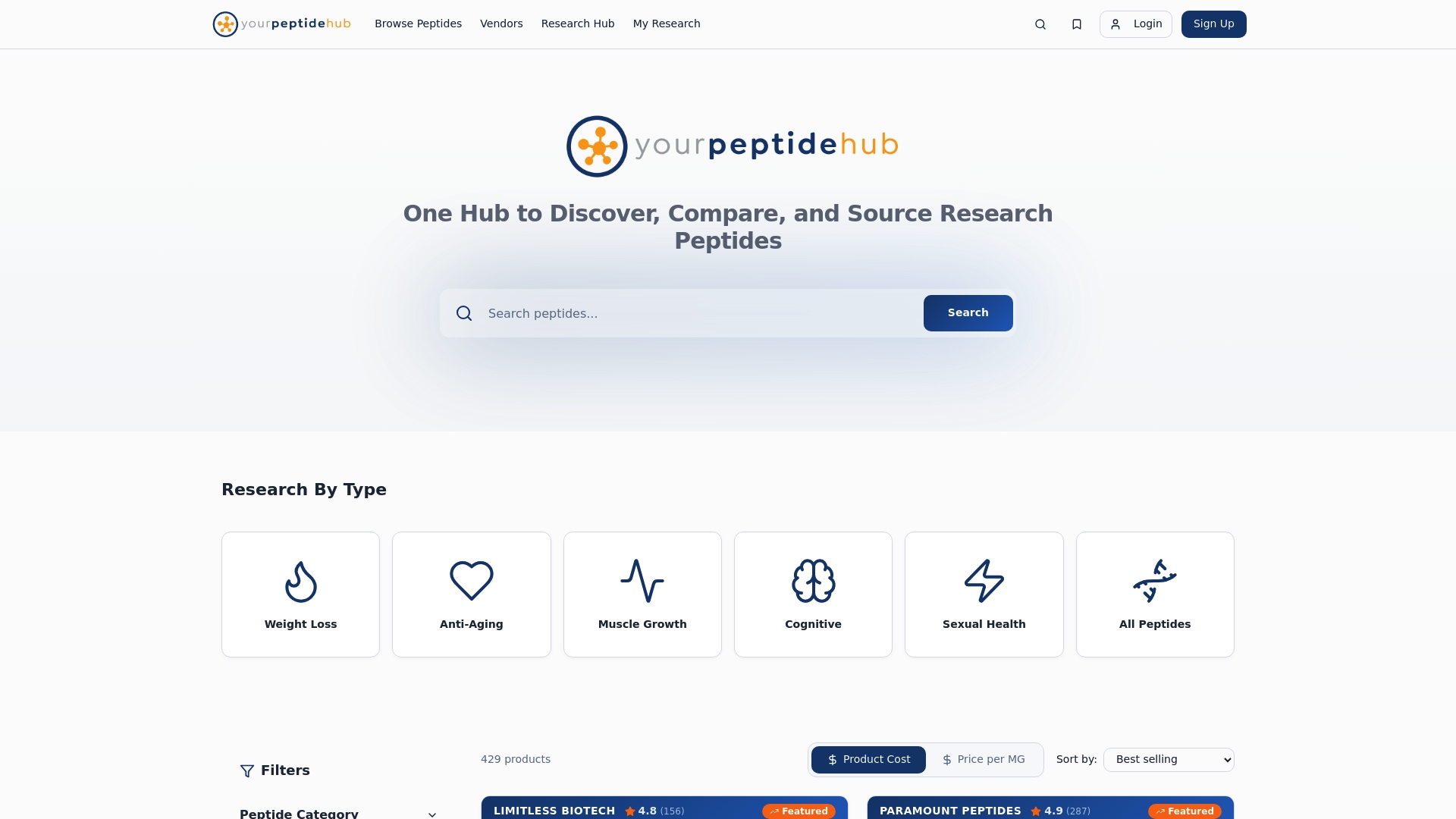
PeptideHub is a focused research marketplace that helps labs discover, compare, and source high purity peptides for research use only. It balances transparent vendor data with practical shopping filters so researchers can find cost effective, verified materials quickly.
Core Features
PeptideHub centralizes peptide discovery with search and browse by category, vendor comparisons, and COA verification for quality checks. Users can filter by peptide form, shipping cost, country of origin, and discounts while accessing vendor reviews and research resources.
Pros
- Comprehensive comparison tools: The platform lets you compare peptides by purity, price, and third party testing so you can prioritize quality for sensitive experiments.
- Wide peptide selection: Categories cover weight loss, anti aging, muscle growth, cognitive, and sexual health which helps labs run diverse research projects from one place.
- Verified purity and testing: COA and third party testing are available for many listings which reduces the time you spend validating vendor claims.
- User friendly interface: Browsing and filtering are intuitive which speeds procurement when time is limited before an experiment.
- Promo codes and discounts: The platform offers discounts which improve budget planning for recurring or large scale preclinical studies.
Cons
- Research use only restriction: The platform does not support peptides for human consumption which limits options for applied clinical use or consumer applications.
- Limited product scope: It focuses on research peptides and excludes pharmaceuticals and consumables which may force teams to use additional suppliers for complete study needs.
- Vendor supply and shipping dependence: Availability and lead times depend on vendors which can delay timelines for time sensitive projects.
Who It's For
PeptideHub is best for researchers, scientists, and laboratories conducting peptide related research that need reliable sourcing and documented quality. It works well for academic groups and preclinical teams that value verified purity and vendor transparency.
Unique Value Proposition
PeptideHub stands out by combining a searchable peptide catalog with vendor level transparency and COA verification. That combination lets you compare quality and cost side by side which reduces procurement risk and saves time on validation.
Real World Use Case
A research lab uses PeptideHub to compare vendors and identify the most cost effective source of high purity peptides for a series of anti aging experiments. The team downloads COA documents and selects a vendor based on purity and shipping reliability.
Pricing
Prices vary by peptide with examples ranging from $89 for 10mg to $350 for 24mg. Shipping adds to the final cost and applied promo codes or discounts can reduce total spend for bulk orders.
Website: https://yourpeptidehub.com
PepPedia
At a Glance
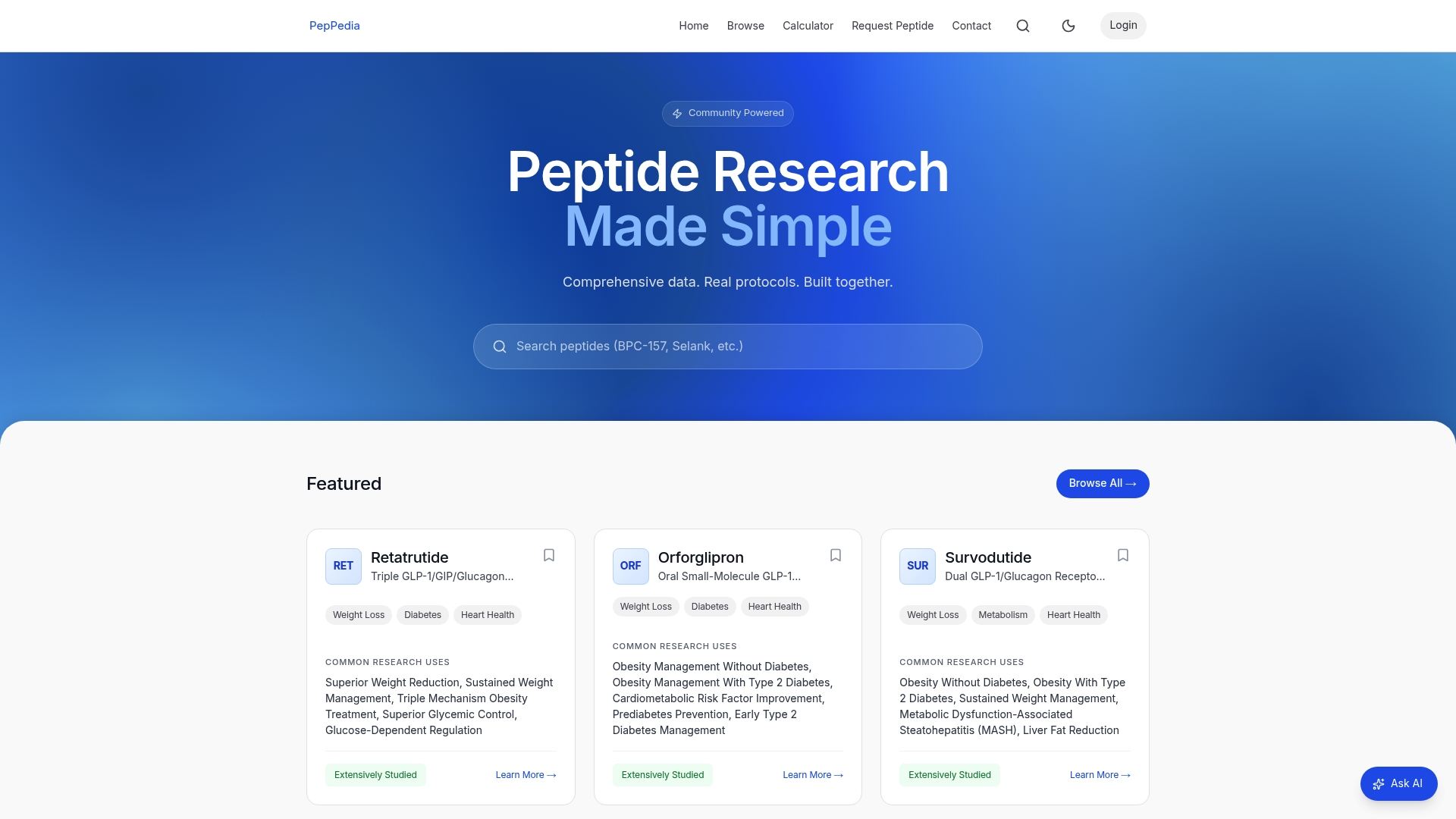
PepPedia is a comprehensive resource for peptide research that pairs a large database with community powered contributions and practical tools like a peptide calculator. It is focused on educational use and research support rather than clinical guidance.
Quick takeaway: Use PepPedia when you need research references and dosing calculations for lab preparation.
Core Features
PepPedia combines searchable peptide entries, community reviewed protocols, and tools aimed at helping you plan experiments and prepare peptides correctly.
- Extensive peptide database that holds detailed information on many peptides for research reference.
- Peptide calculator for reconstitution and dosing that helps you convert milligrams, milliliters, and concentrations for lab use.
- Educational content covering peptide safety and proper laboratory procedures for learners and researchers.
- Community powered data where users contribute protocols and validation notes to improve entries.
- Research assistant AI that answers quick questions to speed up basic research tasks.
Actionable takeaway: Check the database first and then use the calculator to plan your reconstitution steps.
Pros
- Wide range of information: The platform offers a broad selection of peptide entries and protocols that support study planning and experiment prep.
- Community involvement: Contributions from other users help surface practical tips and real world protocol adjustments that improve data quality.
- Helpful tools: The peptide calculator assists with dosing and reconstitution so you spend less time on arithmetic and more time on experiments.
- Accessible educational content: Beginner friendly guides and safety summaries make the site useful for students and new researchers.
- Mobile access: A mobile app lets you reference protocols and run calculations while working in the lab or on the go.
Cons
- Not medical advice: All content is provided for educational use only and is not a substitute for professional medical or clinical guidance.
- Community limits: Some advanced features and entries rely on community contributions which can create uneven coverage across peptides.
- Data verification risk: Community sourced content can include outdated or unverified entries that require cross checking with primary literature.
Actionable takeaway: Treat PepPedia as a research aid and always validate critical protocols with primary sources.
Who It's For
PepPedia is aimed at Researchers, Students, and Healthcare Professionals who need a research oriented peptide reference and practical preparation tools. It fits users who value community insights and who will verify findings before lab implementation.
Unique Value Proposition
PepPedia stands out by combining a detailed peptide database with hands on tools like the peptide calculator and a community review model. That mix helps you move from literature review to practical preparation with fewer manual steps.
Real World Use Case
A researcher planning a laboratory dose uses PepPedia to read the peptide entry, then runs the calculator to determine solvent volume and concentration. The researcher saves time and reduces calculation errors before preparing the solution.
Pricing
PepPedia currently offers free access with community support and may add premium features in the future.
Website: https://pep-pedia.org
Peptpedia
At a Glance
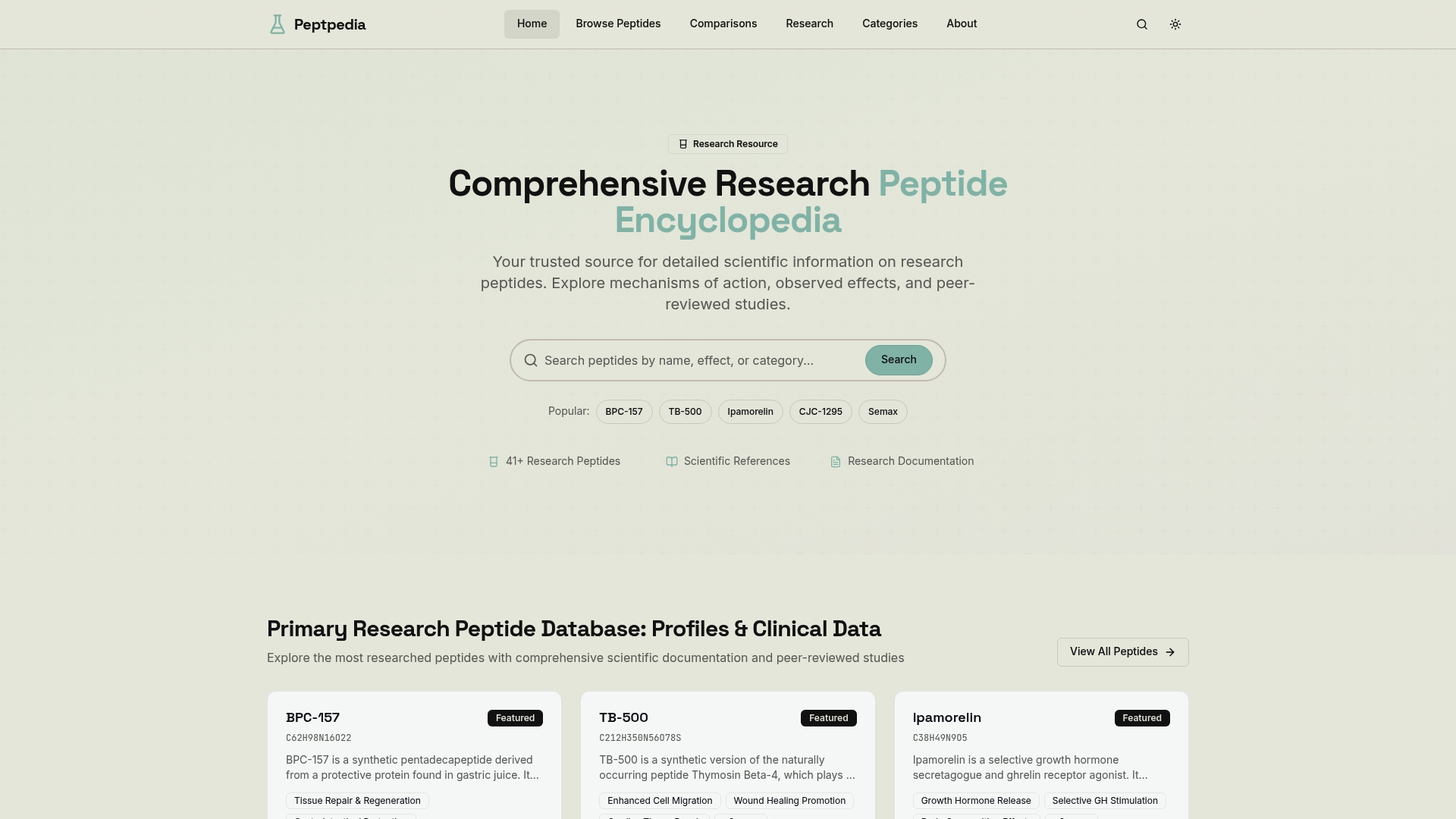
Peptpedia is a focused research peptide encyclopedia that compiles detailed scientific profiles and clinical summaries for over 30 research peptides. It serves researchers and academics who need thorough, peer reviewed data rather than consumer guidance.
Core Features
Peptpedia provides detailed scientific profiles, mechanism of action explanations, and comprehensive molecular data including formulas, weights, and sequences for each peptide. The platform also links to peer reviewed references and presents clinical trial summaries in accessible formats.
Pros
- Extensive peer reviewed scientific information: The site aggregates references and documentation that support deeper literature review and citation needs.
- Wide coverage of research peptides: Users gain profiles for more than 30 peptides, making the resource useful across multiple research areas.
- Detailed molecular and clinical data: Molecular formulas, weights, sequences, and trial summaries appear in organized entries that speed literature preparation.
- Categories organized by research application: Thematic grouping by research effects helps you find peptides relevant to specific experimental aims.
- Educational resource for research purposes only: The platform stays focused on study and academic use which preserves scientific rigor.
Cons
- Restricted to research and educational use only: The site does not provide guidance for medical or human application which limits practical translation for clinicians or consumers.
- Not consumer oriented: Users seeking dosing, suppliers, or practical protocols will not find that information here.
- Requires scientific background to use effectively: Entries assume familiarity with molecular biology and pharmacology which raises the barrier for casual readers.
Who It's For
Peptpedia fits scientists, researchers, and academics who specialize in peptide research, molecular biology, or pharmacology and who need verified peptide information to plan experiments, write papers, or cross check mechanisms. Graduate students and lab leaders will find the resource time saving.
Unique Value Proposition
Peptpedia centralizes peer reviewed peptide information with an emphasis on molecular detail and clinical study summaries. Its value lies in combining mechanism explanations, molecular specifications, and direct links to literature so you spend less time hunting primary sources and more time designing experiments.
Real World Use Case
A pharmacology researcher uses Peptpedia to collect background on BPC 157 for a tissue regeneration study. The researcher pulls molecular sequences, reads summarized trial outcomes, and follows cited studies to build a literature review and experimental protocol.
Pricing
Peptpedia offers Free access to its content which lets academic users and labs consult profiles and references without subscription barriers.
Website: https://peptpedia.org
Pepipedia
At a Glance
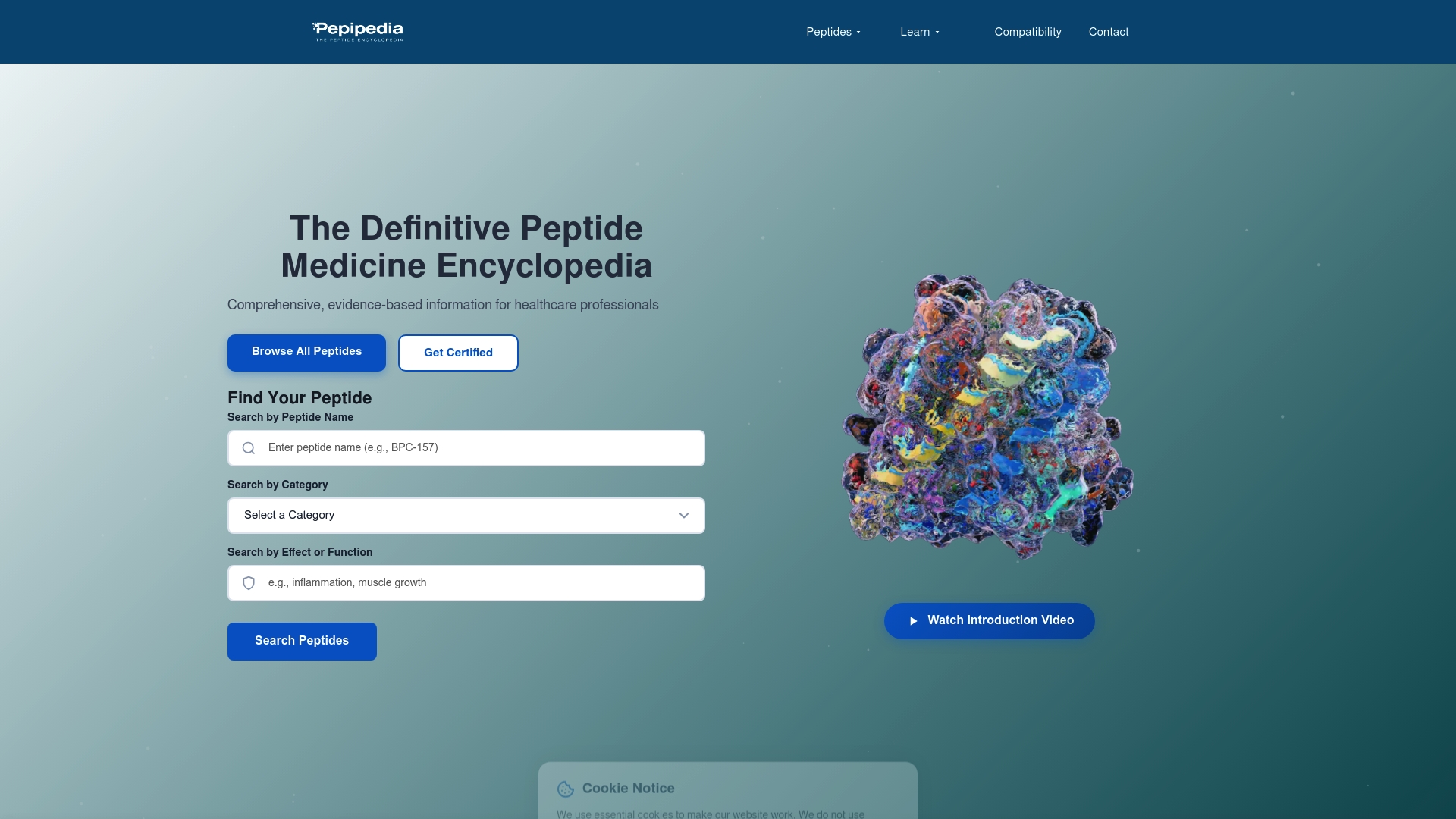
Pepipedia is a focused, research oriented encyclopedia that catalogs peptides and their applications for medical and scientific audiences. It serves as a reliable starting point when you need organized peptide data and practical protocols for study or clinical planning.
Takeaway: Use Pepipedia when you need a centralized peptide reference quickly.
Core Features
Pepipedia provides a comprehensive peptide directory listing over 171 peptides with entries categorized by body system and reported effects. The site pairs that directory with learning modules and protocols designed for clinical and research workflows.
Takeaway: Search, learn, and reference peptides in one organized place.
Pros
-
Comprehensive and organized peptide information: The directory groups peptides by system and effect so you can find candidates for specific therapeutic goals quickly.
-
Educational focus with learning modules and articles: Structured modules help users build foundational and advanced peptide knowledge without hunting through scattered journals.
-
Useful for healthcare professionals and researchers: Entries are tailored to a clinical and research audience with practical application notes and protocol access.
-
Detailed categorization by effects and body systems: The site lets you filter peptides by target system which speeds up literature review and experimental planning.
-
Access to protocols and contact support options: Protocols and support links provide actionable steps for applying peptide information to studies and clinical contexts.
Takeaway: Pepipedia reduces search time for professionals working with peptides.
Cons
-
Limited to peptide related content: The site does not cover general health topics so you must consult other resources for broader clinical context.
-
Primarily targeted at healthcare professionals and researchers: Novices and laypersons may find the content technical and harder to follow without prior background.
-
Website may lack in depth scientific literature for laypersons: While organized, some entries do not link directly to primary studies for readers who want original source papers.
Takeaway: Expect a specialist focus rather than a general health portal.
Who It's For
Pepipedia fits healthcare professionals, researchers, and graduate students who need concise peptide summaries, categorizations, and operational protocols. If you run experiments or advise peptide therapies, this resource saves time on basic peptide identification and planning.
Takeaway: Use Pepipedia as a professional reference hub.
Unique Value Proposition
Pepipedia stands out by combining a searchable peptide directory with targeted learning modules and protocol access designed for clinical and research use. That pairing makes it more than a glossary; it is a practical reference for applied peptide work.
Takeaway: It bridges reference material and applied guidance for professionals.
Real World Use Case
A researcher planning a preclinical study uses Pepipedia to identify candidate peptides by target system, review summarized effects, and access available protocols. This reduces time spent compiling baseline information before deep literature review.
Takeaway: Start here to fast track peptide selection and experimental setup.
Pricing
Pricing is not specified on the website and the resource appears to be educational and informational rather than a paid product offering.
Takeaway: Expect free or institution based access with unspecified premium options.
Website: https://pepipedia.com
Research and Educational Peptide Platforms Comparison
This table provides a comparative analysis of multiple platforms dedicated to peptide research, emphasizing their features, benefits, and focus areas, thereby enabling an informed decision based on research needs.
| Platform Name | Core Features | Pros | Cons | Pricing | Website |
|---|---|---|---|---|---|
| Pept | Evidence-based research, AI assistant, Supplier verification | Cited studies, regulatory focus, broad coverage | Free educational access | Free access mentioned | pept.me |
| PeptidePedia | Educational articles, Stack Builder, CoA database | Structured learning, safety emphasis | Integration unclear, no pricing info | Unspecified | peptidepedia.fit |
| PeptideHub | Vendor comparison, COA verification | Purity evaluation, user-friendly | Research use only | Variable product pricing | yourpeptidehub.com |
| PepPedia | Peptide database, Peptide calculator, Educational resources | Community involvement, accessibility | Community data variability | Free access | pep-pedia.org |
| Peptpedia | Scientific profiles, Molecular data, Research focused | Wide coverage, Organized entries | Scientific background required | Free access | peptpedia.org |
| Pepipedia | Peptide directory, Learning modules | Targeted learning, Educational focus | Limited to peptide data | Unspecified | pepipedia.com |
Discover Trusted Peptide Resources Beyond Peptidepedia.fit
Navigating peptide research can be overwhelming when seeking accurate information and reliable sourcing. If you want to move beyond basic overviews and access scientifically vetted data combined with trustworthy supplier verification explore Metabolic Peptides Peptides — Research Directory | Pept for specialized insights into peptides that support metabolism and health research.
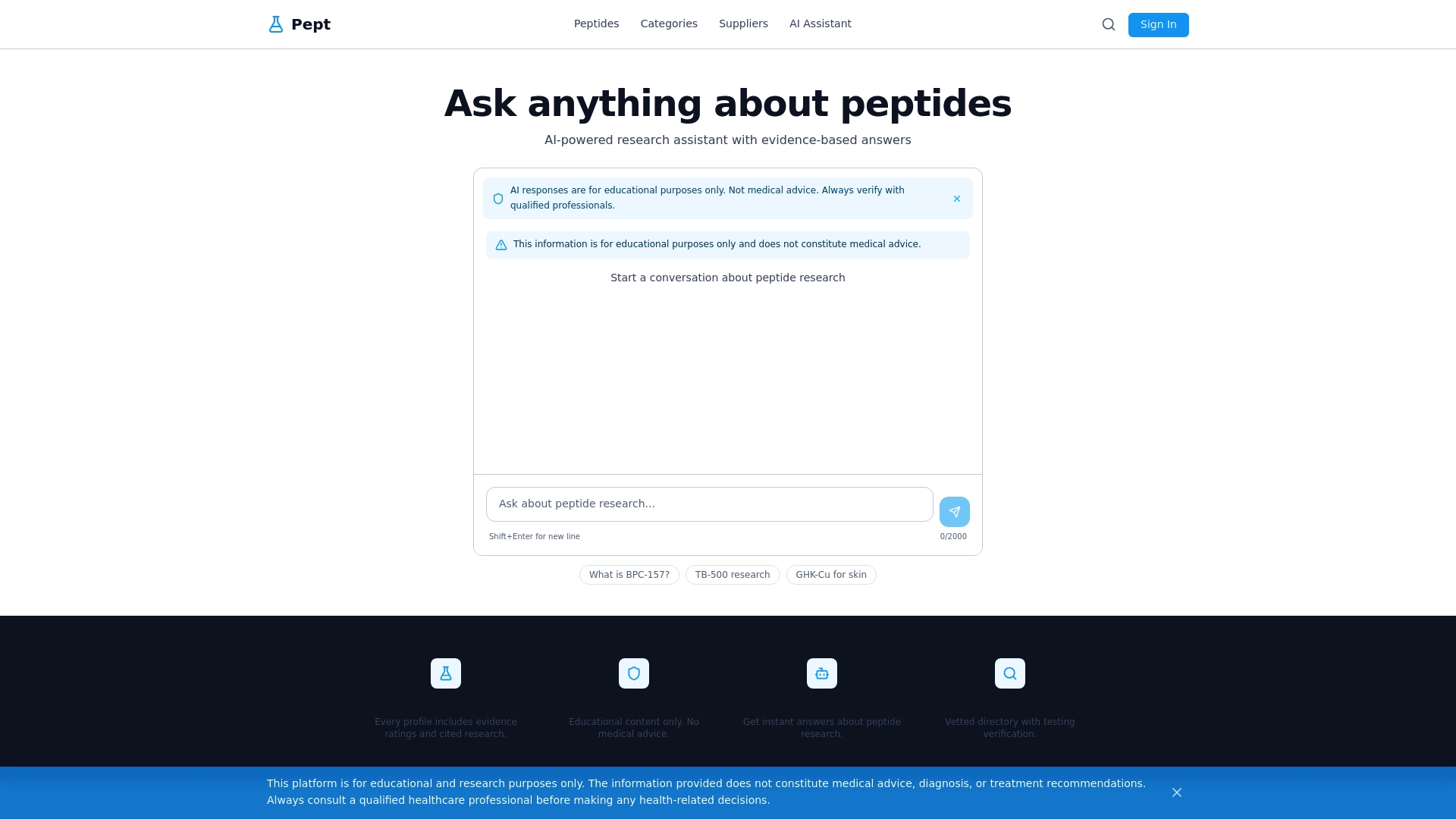
Unlock fast access to evidence-based resources and supplier leads to accelerate your peptide study workflow. Visit Pept now and empower your research with verified data and practical tools designed for both novices and seasoned scientists. Don't wait to enhance your peptide knowledge with reliable, up-to-date content that saves you time and effort.
Frequently Asked Questions
What are the key features to look for in alternatives to Peptidepedia.fit?
In alternatives to Peptidepedia.fit, key features to consider include a comprehensive peptide database, educational articles, and practical planning tools. Look for platforms that also offer community contributions or peer-reviewed data to enhance your research process.
How can I ensure that the peptide information is reliable in alternative platforms?
To ensure reliability, select alternatives that provide cited references and peer-reviewed content. Check for supplier verification features, such as Certificate of Analysis (CoA), that validate the quality and authenticity of the peptides listed.
What types of users benefit most from Peptidepedia.fit alternatives?
Researchers, students, and healthcare professionals who require detailed peptide information and practical guidance will benefit most from these alternatives. Using these platforms can enhance research efficiency and provide organized data for experimentation.
How do I compare the ease of use between different peptide research platforms?
To compare ease of use, visit each platform and assess the user interface, navigation, and accessibility of information. Utilize any trial features or free resources to evaluate how quickly you can find relevant data and tools needed for your research projects.
Are there any alternatives to Peptidepedia.fit that include community-driven data?
Yes, several alternatives feature community-driven contributions that enhance the information available. Look for platforms that allow users to share insights, protocols, and experiences, which can enrich your understanding of peptide applications and safety.
How can I find pricing structures for alternatives to Peptidepedia.fit?
To find pricing structures, check the specific websites of each alternative for subscription details or service tiers. Many platforms may offer free access to certain resources, while others could have tiered pricing based on feature access or usage limits.